
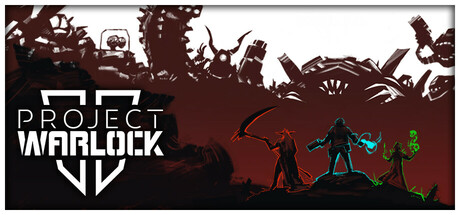
Project Warlock II
Three disciples, 36 levels, more guns than you can reasonably cycle through, and a magic system that finally gets out of its own way. Episode 1 alone makes a case for the price; the later chapters complicate that argument.
GamerScout Verdict
Worth it for boomer shooter fans who want RPG-lite progression, though the quality dips after a strong Episode 1.
Compare Prices(3 stores)
Every store in this table quotes us in euros, so the EUR figure is the price the seller actually set, not our arithmetic — which is why EUR is also the currency we rank in. We only list an offer here when the store gives us its price in euros, so nothing in this table is a number we invented.
Pick USD, PLN, GBP, CAD or AUD in the header and we convert from EUR at the European Central Bank reference rate — converted amounts are prefixed with ~. Your bank or the store may apply a different rate at checkout. We never hide offers based on where you are: everyone sees this whole table.
We may earn a commission when you buy games through links on this page — at no extra cost to you. It never affects our rankings or verdicts.
Price History
Screenshots & Media
About Project Warlock II
My first hour with Project Warlock II felt like exactly the handshake I wanted: fast, loud, and just a little bit evil. Buckshot Software spent three years in early access, reworked Palmer's chapter at least once, listened to player backlash, and shipped a full-release boomer shooter that, at its best, understands why the genre clicked in 1994 while adding just enough modern scaffolding to keep it from feeling like an artifact. The structural idea is generous on paper. Three distinct campaigns, one per chapter, each starring a different disciple of the original Warlock. Palmer leads with dual guns, ice, and fire magic. Urd anchors the middle chapter with her own bag of tricks, including an agility spell that changes how she feels in the arena. Kirsten closes things out with summoning abilities, a Nailgun that ricochets off walls, a Lava Streamer, and a Demonic Hammer that is as absurd as it sounds. Each character earns upgrades from stats and perks points found scattered across levels, spent at the HUB between missions, branching into over 20 usable weapons per character. The magic system was overhauled from the original game to use cooldowns rather than pulling from a shared mana pool, which liberates spells from being a resentful budget line item and makes combat feel more layered when it clicks. The levels are the centrepiece argument. Gone are the flat, corridor-maze maps of the first game. These arenas stack vertically, multi-floor structures with platforms, interconnecting walkways, and geometry that pushes the 2.5D sprite aesthetic in directions it was never quite asked to go before. Enemy variety is real: Ghouls swarm, Turbo Knights lumber, Cacobots strafe from above, Pigdemons soak punishment. Over 35 enemy types across the full game means the roster stays fresh longer than you might expect. The visual signature, 3D geometry paired with 2D sprite enemies, is a deliberate aesthetic choice, and some players find the 3D-rendered sprites sitting slightly awkwardly against the crisp pixel geometry. It is not a dealbreaker, but it is a texture worth knowing about before you buy. Where the game is honest about its own seams: the quality slope across the three chapters is noticeable. Episode 1 is polished and confident, with level design that rewards exploration and a weapon roster that feels purposeful. Episode 2 sprawls in ways that occasionally outstay their welcome. Episode 3 swings the other direction, short and focused to the point where some levels can be cleared very quickly, which feels like a pacing compromise born from a long and complicated development. Community conversations around launch also flagged some bugs, including a collision issue that caused players to fall through geometry, though Buckshot addressed this in post-launch patches. The soundtrack, improved over early access, still draws mixed feelings from some corners, leaning more toward functional heavy metal loops than genuinely memorable compositions. For fans of boomer shooters who have already cleared Dusk, Amid Evil, and the Ion Fury campaign and want something with a more RPG-flavoured progression spine, Project Warlock II earns its place in the rotation. The Realmshift mode, which lets you run any character through any chapter, extends the replay value meaningfully for those who want it. Come in for Palmer, stay for Kirsten.

Indie & narrative
Tags
System Requirements
Minimum
- OS
- Windows 10
- Memory
- 4 GB RAM
- DirectX
- Version 12
- Storage
- 6 GB available space
- Graphics
- GeForce GTX 960 6GB / AMD RX 570 4GB or newer
- Processor
- Intel Core i5 7600K / AMD Ryzen 3 1300X or newer
- Sound Card
- Integrated or dedicated compatible soundcard
Recommended
- OS
- Windows 10
- Memory
- 8 GB RAM
- DirectX
- Version 12
- Storage
- 6 GB available space
- Graphics
- GeForce GTX 1070 8GB / AMD Radeon RX 5700 8GB or newer
- Processor
- Intel Core i5-9600K gen / AMD Ryzen 5 2600 or newer
- Sound Card
- Integrated or dedicated compatible soundcard
Keep exploring
Community Discussion
Be the first to comment on Project Warlock II.
Reviews & Ratings
No ratings available
Game Info
- Developer
- Buckshot Software
- Publisher
- Retrovibe
- Release Date
- May 28, 2025
