Pix the Cat
Score-chasing panic wrapped in neon and baby ducks: Pastagames distilled the best parts of two arcade legends into something that quietly eats your afternoon.
GamerScout Verdict
Built for leaderboard obsessives who can forgive occasional control lag in exchange for one of the most replayable arcade loops on PC.
Compare Prices(6 stores)
Every store in this table quotes us in euros, so the EUR figure is the price the seller actually set, not our arithmetic — which is why EUR is also the currency we rank in. We only list an offer here when the store gives us its price in euros, so nothing in this table is a number we invented.
Pick USD, PLN, GBP, CAD or AUD in the header and we convert from EUR at the European Central Bank reference rate — converted amounts are prefixed with ~. Your bank or the store may apply a different rate at checkout. We never hide offers based on where you are: everyone sees this whole table.
We may earn a commission when you buy games through links on this page — at no extra cost to you. It never affects our rankings or verdicts.
Price History
Screenshots & Media
About Pix the Cat
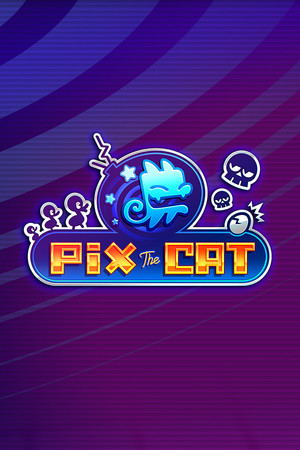
I keep coming back to Pix the Cat the same way I compulsively replay a favourite song: not because it's long, but because it's precise. French studio Pastagames spent over three years building what looks at first like a cute trifle and quietly delivered one of the tightest score-attack games on PC. The core loop sits in the overlap between Pac-Man and Snake: you guide Pix through grid-based mazes, hatching eggs into a trail of ducklings that strings behind you, then depositing the whole convoy at target circles for points. Collect every duckling before you drop them off and you land a perfect combo. Chain perfects together and your speed climbs until the screen erupts into Fever mode, a neon cacophony where skull enemies become headbutt targets worth massive points. The genius is how each level bleeds directly into the next through a portal, meaning you are never really between runs. There is no breath to catch. The four modes are each worth your time for different reasons. Arcade is the centrepiece and the main Grid of Infinity is where the score-chasing obsession lives; the wall-grinding speed bonus for crisp early turns rewards players who invest in learning layouts rather than improvising. Laboratory strips out the timer and replaces it with a move-count puzzle: Pix slides until hitting a wall, and you must collect everything before depositing a single cell. It is slower, more methodical, and genuinely satisfying in a completely different register. Nostalgia mode wears an early black-and-white cartoon aesthetic that is quietly gorgeous, and its 70 levels introduce their own wrinkles, including the unsettling treat of controlling three cats simultaneously across three separate mazes. Arena, the local multiplayer mode for up to four players, is chaotic Bomberman-flavoured chaos: collect eggs as ammo, fire missiles, lay mines, and watch eliminated players resurrect as ghosts that can still haunt survivors. Without bots available, Arena lives or dies by whether you have bodies in the room, so solo players should weight it accordingly. The honest knock on this game, and it is consistent across virtually every platform it has shipped on, is the controls. At high speeds the directional input occasionally lags or misfires, turning a cleanly executed run into a broken combo through no real fault of your own. On PC with a controller, the d-pad tends to behave more reliably than an analog stick, and learning that early saves genuine frustration. It does not ruin the game, but in something so reliant on precision it sits as a genuine, nagging flaw rather than a minor footnote. The other structural oddity is that Laboratory mode is locked behind 750,000 Arcade points and Nostalgia behind a million, which feels like an unnecessary gate for players who might prefer the puzzle-oriented side of the package from the start. What carries it past those friction points is Pastagames' unmistakable craft. Each mode has its own fully realised visual identity: neon disco for Arcade, crackly film grain for Nostalgia, clean geometry for Laboratory. The soundtrack is pumping and infectious in the Arcade stages, shifting register beautifully across modes. Unlockable announcer voice packs, Doctor Doom, Mr. Frog, Lady Bot, add absurd personality to extended sessions. There is also a Ghost Mode letting you race the recorded best runs of yourself or others, which is a surprisingly powerful tool for actually improving. Pastagames tested this on a custom-built arcade cabinet in bars and game conventions before launch, and that origin story shows in how instinctively the score feedback is tuned. This is a game that understands what makes players hit restart. If you need a hundred hours of content or a deep narrative to feel a purchase is justified, Pix the Cat will feel thin. But if you have ever burned two hours trying to crack the leaderboard of one single Pac-Man stage, this is built precisely for you. It plays well in short sessions, it plays well in long ones, and it has the rare quality of feeling like it was made by people who genuinely love the games it is honouring rather than just referencing them for marketing.

Indie & narrative
Tags
System Requirements
Minimum
- OS
- WINDOWS XP/VISTA/7/8
- Memory
- 2048 MB RAM
- Network
- Broadband Internet connection
- Storage
- 1 GB available space
- Graphics
- 256 MB 100% OPENGL 3.0 COMPATIBLE AMD RADEON HD 5000 SERIES/NVIDIA GEFORCE 9000 SERIES/INTEL HD 4000 SERIES OR HIGHER
- Processor
- AMD/INTEL DUAL-CORE 2.2 GHZ
- Sound Card
- OPENAL COMPATIBLE
Keep exploring
Community Discussion
Be the first to comment on Pix the Cat.
Reviews & Ratings
Game Info
- Developer
- Pastagames
- Publisher
- Focus Entertainment
- Release Date
- Jan 29, 2015