
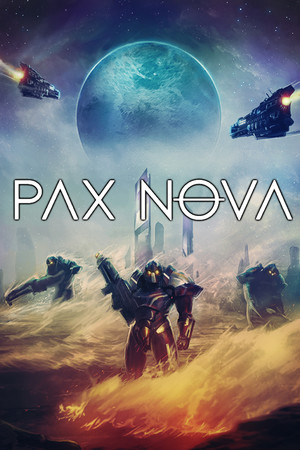
Compare Pax Nova prices across 50+ stores and find the best deal. Developed by Grey Wolf Entertainment. Published by Iceberg Interactive. Released on 4/28/2020. Available on PC. Genres: Indie, Strategy.

Scratch the surface of a Civ-in-space concept and you find a mixed-review 4X with genuine ideas buried under AI problems and a tutorial that barely exists. Worth your time at the right price point.

My spreadsheet instinct says to open with the numbers, so here they are: a Mixed Steam rating sitting around 53-56%, no Metacritic score, and a concurrent player count that has flatlined years after launch. That summary sounds brutal. The real picture is a bit more complicated, and if you have any patience for rough-edged 4X games, it is worth understanding what Pax Nova actually is before writing it off. The core concept is a dual-layer sci-fi 4X where you start on the surface of a colonized planet and eventually earn your way into space. Landing on a new world, you build district-based cities that require careful tile placement, since pollution, citizen capacity, and proximity rules all interact in ways that genuinely reward thoughtful planning. The horizontal city-building system, where each district placement has a citizen cost and specific adjacency considerations, is actually one of the more interesting takes on city management in the budget 4X space. Unit customization adds another layer: rather than a static upgrade tree, you slot new weapons and armor unlocked through tech research onto your existing unit chassis. Kinetic, explosive, artillery, beam, and phaser weapon types each serve a different combat purpose on paper, and you can field anything from armored cavalry to, with enough research, customized mechs. Fifteen preset factions cover the usual archetypes, militarists get outpost bonuses, eco-oriented factions suppress pollution growth, and so on, with a custom faction creator available if none of them fit your preferred approach. Diplomacy and a light Edicts and Paths system add modest political texture. The ambition is there. The execution has real holes. The tutorial is effectively absent, which matters less for genre veterans than it does for newcomers who will genuinely struggle to understand why their city economy stopped growing or why their units are not firing at targets in range. Unit pathfinding is weak, and late-game planetary maps can become congested when your own ground forces block each other on hex tiles. The AI is the biggest strategic concern: while post-launch patches improved it meaningfully, some AI factions still stall out and fail to expand beyond their starting planet, which collapses mid-game tension. When that happens, military victory becomes a rote exercise in building more units than the AI can process, not an actual decision tree. The space layer, which should be the crowning arc of a run, ends up feeling thinner than the planetary layer it is supposed to transcend. Space travel is more transit hub than strategic depth, and large-scale fleet battles feel undercooked next to what you can do on the ground. Here is the reframe I would offer to someone sitting on the fence: Pax Nova is not a 200-hour Paradox campaign. It is closer to a 30-to-40 hour run that asks you to manage pollution budgets, research eras, and multi-planet logistics at a pace that feels accessible rather than overwhelming. The Edicts and Paths systems give you light ideological flavor without demanding mastery. If you come from Civ or lighter 4X territory and want a sci-fi setting with a genuine multi-planet scope, this fits that slot at a sub-five-dollar price point better than most alternatives. If you come in expecting Masters of Orion-level strategic depth or tight late-game AI competition, you will hit the ceiling fast. The Workshop support is present for those willing to look, though community mod output for this title has been modest. Replayability is limited by the faction asymmetry not being wide enough to meaningfully change how you approach each run. The honest assessment is that Pax Nova had more going for it at launch than its Steam score suggested, found a small dedicated audience, and then largely ran out of post-launch support momentum. What remains is a budget 4X with a handful of smart ideas, a city-building layer that actually works, and enough science-fiction atmosphere to make the first 20 turns feel genuinely engaging. Just go in knowing the late game is where the cracks show. Diego, Scout Team

Pax Nova
IndieStrategy

Pax Nova

Apr 28, 2020Grey Wolf EntertainmentIceberg Interactive
GamerScout Says

Scratch the surface of a Civ-in-space concept and you find a mixed-review 4X with genuine ideas buried under AI problems and a tutorial that barely exists. Worth your time at the right price point.

PC
Best Price Available
0.00
at N/A
Historical low: $2.61

Compare Prices(0 stores)

Loading prices...

We may earn a commission when you buy games through links on this page — at no extra cost to you. It never affects our rankings or verdicts.

Screenshots & Media

Screenshot

About Pax Nova

My spreadsheet instinct says to open with the numbers, so here they are: a Mixed Steam rating sitting around 53-56%, no Metacritic score, and a concurrent player count that has flatlined years after launch. That summary sounds brutal. The real picture is a bit more complicated, and if you have any patience for rough-edged 4X games, it is worth understanding what Pax Nova actually is before writing it off. The core concept is a dual-layer sci-fi 4X where you start on the surface of a colonized planet and eventually earn your way into space. Landing on a new world, you build district-based cities that require careful tile placement, since pollution, citizen capacity, and proximity rules all interact in ways that genuinely reward thoughtful planning. The horizontal city-building system, where each district placement has a citizen cost and specific adjacency considerations, is actually one of the more interesting takes on city management in the budget 4X space. Unit customization adds another layer: rather than a static upgrade tree, you slot new weapons and armor unlocked through tech research onto your existing unit chassis. Kinetic, explosive, artillery, beam, and phaser weapon types each serve a different combat purpose on paper, and you can field anything from armored cavalry to, with enough research, customized mechs. Fifteen preset factions cover the usual archetypes, militarists get outpost bonuses, eco-oriented factions suppress pollution growth, and so on, with a custom faction creator available if none of them fit your preferred approach. Diplomacy and a light Edicts and Paths system add modest political texture. The ambition is there. The execution has real holes. The tutorial is effectively absent, which matters less for genre veterans than it does for newcomers who will genuinely struggle to understand why their city economy stopped growing or why their units are not firing at targets in range. Unit pathfinding is weak, and late-game planetary maps can become congested when your own ground forces block each other on hex tiles. The AI is the biggest strategic concern: while post-launch patches improved it meaningfully, some AI factions still stall out and fail to expand beyond their starting planet, which collapses mid-game tension. When that happens, military victory becomes a rote exercise in building more units than the AI can process, not an actual decision tree. The space layer, which should be the crowning arc of a run, ends up feeling thinner than the planetary layer it is supposed to transcend. Space travel is more transit hub than strategic depth, and large-scale fleet battles feel undercooked next to what you can do on the ground. Here is the reframe I would offer to someone sitting on the fence: Pax Nova is not a 200-hour Paradox campaign. It is closer to a 30-to-40 hour run that asks you to manage pollution budgets, research eras, and multi-planet logistics at a pace that feels accessible rather than overwhelming. The Edicts and Paths systems give you light ideological flavor without demanding mastery. If you come from Civ or lighter 4X territory and want a sci-fi setting with a genuine multi-planet scope, this fits that slot at a sub-five-dollar price point better than most alternatives. If you come in expecting Masters of Orion-level strategic depth or tight late-game AI competition, you will hit the ceiling fast. The Workshop support is present for those willing to look, though community mod output for this title has been modest. Replayability is limited by the faction asymmetry not being wide enough to meaningfully change how you approach each run. The honest assessment is that Pax Nova had more going for it at launch than its Steam score suggested, found a small dedicated audience, and then largely ran out of post-launch support momentum. What remains is a budget 4X with a handful of smart ideas, a city-building layer that actually works, and enough science-fiction atmosphere to make the first 20 turns feel genuinely engaging. Just go in knowing the late game is where the cracks show. Diego, Scout Team

Tags

singleplayerachievementstrading-cardsworkshoptier:sub-5Dual-Layer 4XUnit CustomizationDistrict-Based CitiesFaction CreatorWeak TutorialBudget 4XMulti-Planet ColonizationEdicts System

Steam Deck & Linux

ProtonDB Gold

Runs great on Linux after minor tweaks. Based on 9 ProtonDB community reports.

System Requirements

Minimum

OS
Windows Vista, 7, 8 , 10 - 64 bit
Memory
6 GB RAM
DirectX
Version 9.0c
Graphics
1 GB NVIDIA GeForce GTX 460 or equivalent
Processor
3.0 Ghz Intel Core i3 or equivalent
Additional Notes
System requirements may be subject to change.

Recommended

OS
Windows Vista, 7, 8 , 10 - 64 bit
Memory
8 GB RAM
DirectX
Version 9.0c
Graphics
1 GB NVIDIA GeForce GTX 660 or equivalent
Processor
4.0 Ghz Intel Core i5 or equivalent
Additional Notes
System requirements may be subject to change.

Community Discussion

Be the first to comment on Pax Nova.

Reviews & Ratings

No ratings available

Game Info

Developer
Grey Wolf Entertainment
Publisher
Iceberg Interactive
Release Date
Apr 28, 2020

Price Alert

Get notified when the price drops below your target!

Create Alert

Price History

2026-06-102.61(lowest)

More from Grey Wolf Entertainment

Buy smarter: helpful guides

Looking for more? See games like Pax Nova

Frequently asked questions about Pax Nova

How much does Pax Nova cost?

Pax Nova pricing changes often and varies by store, edition and region. The live price table on this page compares the cheapest in-stock key and store offers across 50+ verified shops, so you always see the current lowest price before you buy.

Where can I buy Pax Nova cheapest?

Compare Pax Nova prices across every verified store in the price table on this page. We list the cheapest in-stock key and store offers, updated regularly, so you always see the best current deal before you buy.

What platforms is Pax Nova available on?

Pax Nova is available on PC.

When was Pax Nova released?

Pax Nova was released on 28 April 2020.

Who developed Pax Nova?

Pax Nova was developed by Grey Wolf Entertainment and published by Iceberg Interactive.