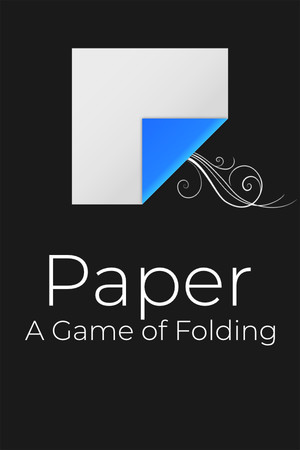
Paper - A Game of Folding
Sixty-plus hand-crafted puzzles built around one genuinely novel idea: click-and-drag paper folding with a percentage score that rewards precision over speed. A quiet solo project that earns more than its shelf space.
GamerScout Verdict
Best for patient puzzle players who want a quiet spatial challenge and do not need assists or story hooks to stay engaged.
Compare Prices(3 stores)
Every store in this table quotes us in euros, so the EUR figure is the price the seller actually set, not our arithmetic — which is why EUR is also the currency we rank in. We only list an offer here when the store gives us its price in euros, so nothing in this table is a number we invented.
Pick USD, PLN, GBP, CAD or AUD in the header and we convert from EUR at the European Central Bank reference rate — converted amounts are prefixed with ~. Your bank or the store may apply a different rate at checkout. We never hide offers based on where you are: everyone sees this whole table.
We may earn a commission when you buy games through links on this page — at no extra cost to you. It never affects our rankings or verdicts.
Price History
Screenshots & Media
About Paper - A Game of Folding
My first instinct with a one-person Steam release from 2019 with almost no review coverage is to play it before I write a word, and what struck me here is how specific and committed the core mechanic is. You are given a flat sheet of simulated paper and a target silhouette. You fold the paper, edge by edge, trying to match that shape as closely as possible, and the game returns a percentage accuracy score when you commit. There are no timers, no lives, no narrative wrapper. Just you, the paper, and a quiet question about whether spatial logic is something you actually have. The fold interaction itself feels considered. You click and drag an edge or corner, the paper responds, and layers accumulate the way real paper does when you stack folds on top of one another. That physical plausibility, even in a 2D minimalist context, is the whole argument for the game. Over sixty hand-crafted levels push the complexity gradually. Early puzzles are almost meditative, the kind you solve in one or two moves and feel quietly satisfied by. Later levels, particularly in the creatures and aircraft groupings, ask you to plan sequences of folds without good reference points, and the margin for error on some final folds is genuinely narrow. A handful of community members noted that certain late-game shapes have alignment issues at their boundaries, which can make chasing a perfect score feel like fighting the geometry rather than solving the puzzle. That is a real rough edge worth knowing about before you invest in perfectionist runs. The soundtrack is described as semi-procedural, and it behaves accordingly: ambient, low-key, the kind of thing that dissolves into background texture rather than demanding attention. That suits the pacing here. This is a game that wants your focus on the paper, not on anything else, and the sound design seems to understand its own job. The UI is stripped back to almost nothing, which reads as intentional craft rather than laziness. When the whole premise is a sheet of paper against a white field, ornamentation would be noise. Where the game falls short is in its lack of assistive tools. The sequel, Paper 2, introduced snapping mechanics, grid overlays, and visual feedback showing precisely where a fold diverges from the target. None of that is here. For casual players, the absence of a grid or angle snap means some folds feel imprecise by default, and whether the game scores you charitably or harshly on a borderline fold can feel inconsistent. It is also a very short experience if you are not chasing high accuracy on every level, and there is no sandbox or freestyle mode for players who want to just fold without a target. Still, there is something I genuinely respect about a game this focused. Bryce Summer built a single, concrete mechanic and made sixty levels out of it without padding. For a certain kind of puzzle player, the one who finds meditative joy in spatial problems and does not need a story or a progression system to stay engaged, this is a calm, unhurried hour or two with a premise nobody else was doing in quite this way on PC.

Indie & narrative
Tags
System Requirements
Minimum
- OS
- Windows 7 SP1+
- Memory
- 4 GB RAM
- DirectX
- Version 10
- Storage
- 512 MB available space
- Graphics
- Graphics card with DX10 (shader model 4.0) capabilities
- Processor
- SSE2 instruction set support
Keep exploring
Community Discussion
Be the first to comment on Paper - A Game of Folding.
Reviews & Ratings
No ratings available
Game Info
- Developer
- Bryce Summer
- Publisher
- Bryce Summer
- Release Date
- Oct 7, 2019