Order of Battle: World War II
Free to PlayFree entry point, deep hex-grid wargaming, and a sprawling DLC catalogue covering every major WWII theatre - if you can tolerate the a la carte pricing model, the tactical reward is real.
GamerScout Verdict
Best for Panzer General fans and WWII history buffs who can stomach a la carte DLC pricing in exchange for serious tactical depth.
Compare Prices(2 stores)
Every store in this table quotes us in euros, so the EUR figure is the price the seller actually set, not our arithmetic — which is why EUR is also the currency we rank in. We only list an offer here when the store gives us its price in euros, so nothing in this table is a number we invented.
Pick USD, PLN, GBP, CAD or AUD in the header and we convert from EUR at the European Central Bank reference rate — converted amounts are prefixed with ~. Your bank or the store may apply a different rate at checkout. We never hide offers based on where you are: everyone sees this whole table.
We may earn a commission when you buy games through links on this page — at no extra cost to you. It never affects our rankings or verdicts.
Price History
Screenshots & Media
About Order of Battle: World War II
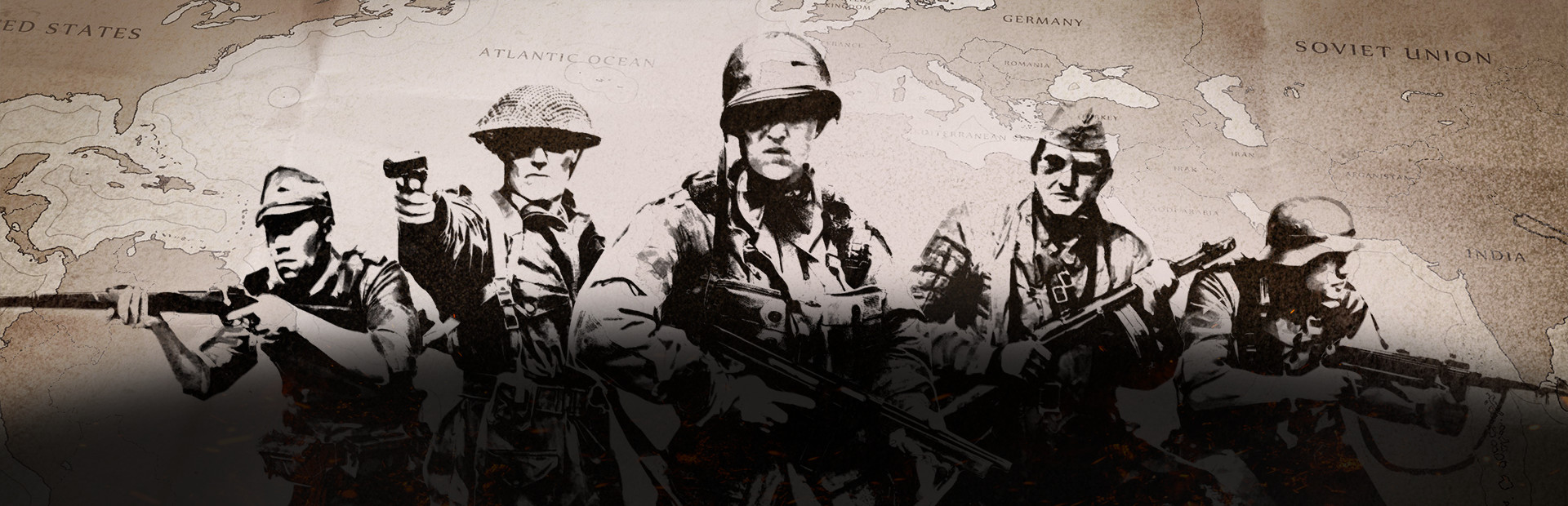
I have a spreadsheet tracking every Panzer General successor released since 1994, and Order of Battle: World War II sits near the top of that list for one simple reason: it commits to being a playable wargame before it commits to being a simulation. The hex-grid, turn-based fundamentals are tight, the UI is cleaner than most genre rivals, and the supply and front-line systems add genuine strategic texture without burying newcomers in documentation. Units need to stay in supply to fight at full efficiency, meaning encirclements and logistics management matter - not as flavour, but as the actual path to winning scenarios. Commanders (Generals, Pilots, Captains) attach to specific units and provide range-based bonuses, and a specialisation system lets you steer each campaign toward a distinct playstyle. The result sits closer to Advance Wars than Hearts of Iron, which is exactly the right lane for a free-to-play entry point. The free base game includes the Boot Camp tutorial and a first scenario sampler from every DLC campaign - which is a legitimately generous on-ramp. Boot Camp is three sizable training missions that cover the basics, and I would argue newcomers to the genre should stop worrying about the genre's reputation for opacity and just play them. Buying a single DLC also unlocks the scenario editor and full multiplayer (Hotseat or PBEM++ up to four players), so the barrier to getting the full feature set is low. Where things get complicated is the DLC catalogue itself. The game has expanded into over fifteen campaigns spanning the Pacific, Eastern Front, North Africa, Kriegsmarine operations, Finland's Winter War, Japan's invasion of China via Morning Sun, and the Allied trilogy culminating with the Normandy landings. That breadth is impressive, and the a la carte structure means you only pay for the theatres you actually want. Quality across those campaigns is uneven, and that is the honest caveat. The original Pacific campaigns - U.S. Pacific and Rising Sun - are the standouts: large, branching affairs where performing ahead of schedule or completing bonus objectives opens ahistorical paths, including a Japanese invasion of Australia. Later DLC packs feel more constrained by comparison, with smaller maps and fewer opportunities to deviate from the historical script. The Eastern Front via Panzerkrieg covers Sevastopol, Stalingrad, and Kursk, but some players find the unit count too limited to convey the scale those battles deserve. Morning Sun, covering Japan's 1937 invasion of China, is a rarity in the genre and interesting for that reason alone, even if it is not the most mechanically adventurous pack. Campaign-to-campaign unit carryover adds some continuity - Morning Sun exports into Rising Sun, Blitzkrieg chains into Panzerkrieg - which rewards players who plan their DLC purchases as a linked progression rather than isolated purchases. The AI is competent on standard difficulties and will pressure supply lines and use terrain intelligently on the higher settings. On console it can stutter noticeably during the AI processing turn on larger maps, which is a real annoyance. On PC that problem largely disappears. The scenario editor and Moddable tag are genuine value multipliers; the community has produced scenarios that plug gaps the official DLC hasn't covered yet. Visual presentation is functional rather than impressive - 3D animated units on a 2D grid - but the sound design and historical briefings do solid work grounding each scenario in its context. For someone completely new to this subgenre, the free base game plus one DLC (U.S. Pacific is the recommended starting point from the community) is a low-risk introduction to a style of wargaming that has produced some of the most replayable PC strategy titles ever made. For veterans of Panzer Corps or Unity of Command, this sits comfortably in that company, with the caveat that fully exploring the catalogue requires meaningful ongoing investment. Budget accordingly, prioritise the theatres you care about historically, and you will find a well-maintained game with over a decade of post-launch content behind it.

Strategy & simulation
Tags
System Requirements
Minimum
- OS
- 8 / 10 (the game runs on Windows 7 but no support will be provided)
- Memory
- 2 GB RAM
- DirectX
- Version 9.0c
- Storage
- 1 GB available space
- Graphics
- 512 Mb DirectX 11 video card with shader model 2.0
- Processor
- Pentium 4 or equivalent
- Sound Card
- DirectX compatible sound card
DLC & Add-ons for Order of Battle: World War II3
Expansions, DLC packs and add-on content for this game. Click any item to see store offers.


Keep exploring
Community Discussion
Be the first to comment on Order of Battle: World War II.
Reviews & Ratings
Game Info
- Developer
- The Artistocrats
- Publisher
- Slitherine Ltd.
- Release Date
- Apr 30, 2015