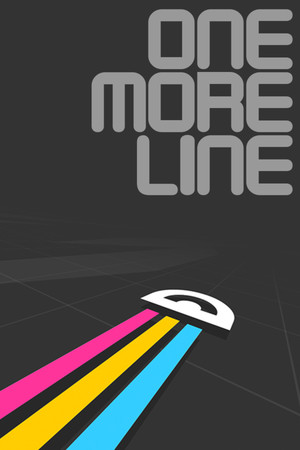
One More Line
One button, zero margin for error, and a space-disco soundtrack that makes you feel like you could do it forever, right up until you can't.
GamerScout Verdict
Best for score-chaser fans who want a couch-friendly arcade pick-up with a genuinely clever swing mechanic under its tiny hood.
Compare Prices(4 stores)
Every store in this table quotes us in euros, so the EUR figure is the price the seller actually set, not our arithmetic — which is why EUR is also the currency we rank in. We only list an offer here when the store gives us its price in euros, so nothing in this table is a number we invented.
Pick USD, PLN, GBP, CAD or AUD in the header and we convert from EUR at the European Central Bank reference rate — converted amounts are prefixed with ~. Your bank or the store may apply a different rate at checkout. We never hide offers based on where you are: everyone sees this whole table.
We may earn a commission when you buy games through links on this page — at no extra cost to you. It never affects our rankings or verdicts.
Price History
Screenshots & Media
About One More Line
I have a soft spot for games built from a single mechanic so tight you can feel the intention in every frame. One More Line is exactly that kind of thing. You hold a button to grapple your little space creature onto the nearest orbital node, swing around it in a circle, then release at precisely the right angle to slingshot toward the next one without smashing into a wall. That is the entire game. It sounds thin until you play it, and then the next twenty minutes evaporate. The physics underneath are genuinely clever. Latching onto a node from far away puts you into a wide, slow arc, while hooking up close sends you into a tiny, violent spin. The real trick that makes the whole thing click is the wall-pass rule: while you are tethered and orbiting, you can swing clean through the corridor walls without dying. Let go mid-pass, though, and you are dead. That one design wrinkle turns what could have been a pure reflex test into something with actual spatial reasoning attached to it. You start reading the node layout ahead, planning your swing radius, gambling on whether a tight orbit buys you a better exit angle. The community has flagged a recurring frustration that the grapple can occasionally latch to a node further away than the obvious one, pulling you into an unintended arc. It happens, it is genuinely annoying, and it costs runs that felt earned. It is not frequent enough to break the loop, but it is real. The Steam edition strips the mobile version's ad structure entirely and adds local multiplayer for two to four players, a collection of hats, unlockable trails, and skins. The score-attack structure keeps things honest: a horizontal marker appears where you die, meaning your personal best line is always visible on screen, quietly daring you. The original space-disco soundtrack, composed by Sydney-based Batterie, does exactly what good arcade music should do. It sits at a tempo that pulls your body into rhythm with the swings, and the psychedelic, geometry-forward visuals pair with it well enough that the whole experience has a coherent atmosphere rather than just noise and shapes. Who is this for? Anyone who has ever enjoyed a hyper-casual score-chaser in the Flappy Bird lineage but wanted something with a higher mechanical ceiling and local multiplayer bragging rights baked in. The single-player mode can comfortably occupy a full evening of short, sharp sessions. The local co-op mode, while simple, turns the game into a genuinely funny couch competition. Where it falls short is depth beyond the core swing: there are no real unlockable stages, no variation in corridor design, and once the grapple mechanic is internalized the learning curve plateaus into pure execution. The Steam version does carry a small note worth knowing: a 2024 Steam client update dropped support for 32-bit builds, so older systems may warrant a check before jumping in.

Indie & narrative
Tags
System Requirements
Minimum
- OS
- Microsoft® Windows® XP/Vista or later
- Graphics
- Any from the last 4 years
- Processor
- 1.4GHz or faster
- Sound Card
- All soundcards would work
Keep exploring
Community Discussion
Be the first to comment on One More Line.
Reviews & Ratings
No ratings available
Game Info
- Developer
- SMG Studio
- Publisher
- SMG Studio
- Release Date
- Aug 28, 2015