One Hundred Ways
If your puzzle tolerance runs dry at trial-and-error repetition, this mobile port will test your patience before it tests your brain - proceed with calibrated expectations.
GamerScout Verdict
Best for casual puzzle fans who want brief, low-stakes gadget-chain levels - not for anyone expecting deep mechanical payoff.
Compare Prices(5 stores)
Every store in this table quotes us in euros, so the EUR figure is the price the seller actually set, not our arithmetic — which is why EUR is also the currency we rank in. We only list an offer here when the store gives us its price in euros, so nothing in this table is a number we invented.
Pick USD, PLN, GBP, CAD or AUD in the header and we convert from EUR at the European Central Bank reference rate — converted amounts are prefixed with ~. Your bank or the store may apply a different rate at checkout. We never hide offers based on where you are: everyone sees this whole table.
We may earn a commission when you buy games through links on this page — at no extra cost to you. It never affects our rankings or verdicts.
Price History
Screenshots & Media
About One Hundred Ways
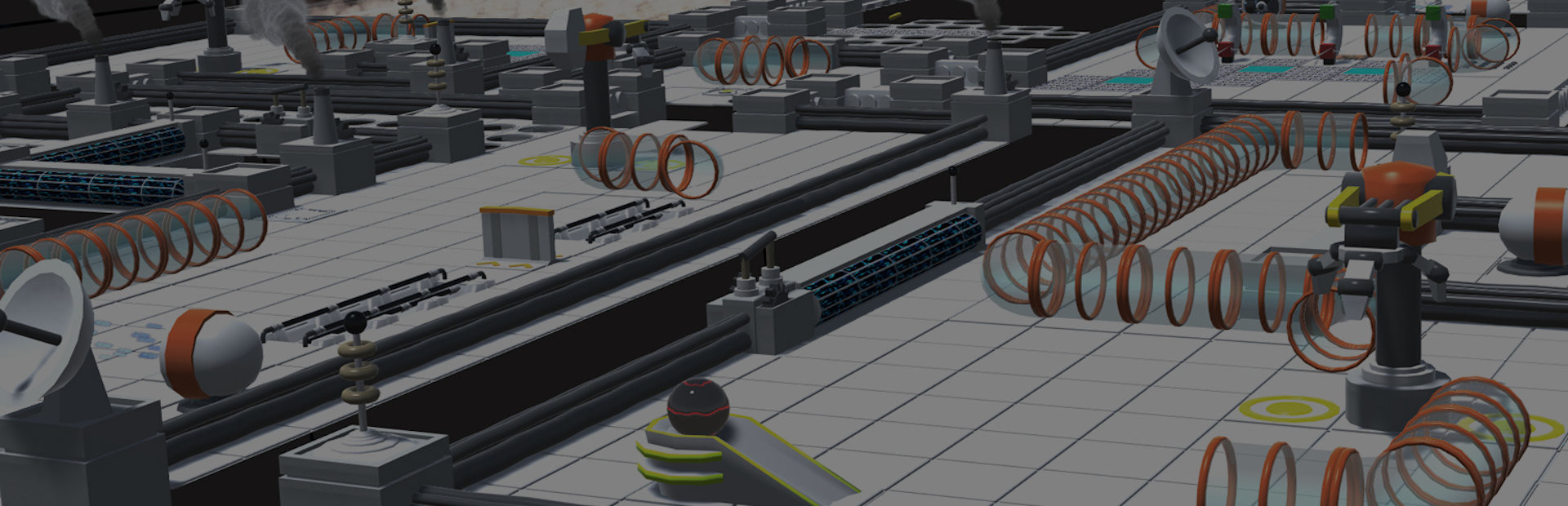
I approach grid-based puzzlers the way I approach grand-strategy games: I want to feel the satisfaction of a plan executing correctly, every tool placed with intention, every variable accounted for. One Hundred Ways sells itself on that premise. You place gadgets on an isometric grid, release a marble down a ramp, and watch the chain reaction unfold. Teleport pads, bounce pads, speed ramps, redirection launchers, rubber fences - over 30 tool types are introduced gradually across 115 levels (the original 100 plus a December 2015 patch that added 15 more). On paper, that toolkit has the bones of something like The Incredible Machine scaled down for a quick session. In practice, the depth never quite materialises the way it promises. The core loop is straightforward: your ball rolls at a fixed, constant speed with no physics simulation worth the name. It will roll forever if nothing redirects it. That design choice strips out the unpredictability of real physics, which could be a strength - a pure logic puzzle instead of a physics experiment - but the game never fully commits to that cleaner identity. Some levels can genuinely be solved multiple ways, which is a real design virtue, and the slowly escalating difficulty does a reasonable job of introducing each gadget type before piling them together. The early levels function as a workable tutorial even if the in-level hint system (delivered by a small robot mascot) is inconsistent at best, occasionally garbled or unhelpfully vague. If you are the kind of player who likes to discover solutions rather than be guided, the looseness of the hints is actually fine. Where the wheels come off is in the rough edges. The physics engine, paradoxically for a game that mostly bypasses physics, occasionally misbehaves in later levels: the ball fails to speed up as expected, skips past bounce pads, or behaves inconsistently across repeated attempts at the same level. That means some failures are not yours to own - they are engine glitches. The audio situation compounds the frustration: a single music track loops for the entire game's runtime with no variation, which becomes genuinely wearing across longer sessions. There are no Steam achievements, no Steam Cloud save (progress is stored in the Windows registry), and the menu system is clunkier than it has any right to be for a game this structurally simple. Steam user reception sits at 44% positive across a thin review sample, which broadly tracks with the mixed-to-negative critical reception the Xbox port received. Who is this actually for? Casual puzzle fans who want short, low-stakes sessions on PC or Mac, preferably measured in 15-minute intervals rather than marathon runs. It is not a game that rewards the kind of deep system analysis I normally look for - there is no build order to optimise, no branching upgrade tree, no late-game complexity payoff. What it offers is a compact set of spatial reasoning problems with a gentle difficulty curve, a modest tool set, and a price point that reflects its mobile origins. If you have already played and loved The Incredible Machine or similar gadget-chain puzzlers and want a lightweight modern equivalent, One Hundred Ways scratches that itch in small doses. Just do not expect it to grow with you the way a well-designed PC puzzle game should.

Strategy & simulation
Tags
System Requirements
Minimum
- OS
- Windows 7, 8 or 10
- Memory
- 1 GB RAM
- Storage
- 190 MB available space
- Graphics
- Graphics card with a minumum of 256 MB
- Processor
- Pentium 4 with 1.5GHz (or better)
Keep exploring
Community Discussion
Be the first to comment on One Hundred Ways.
Reviews & Ratings
No ratings available
Game Info
- Developer
- Sunlight Games
- Publisher
- Sunlight Games
- Release Date
- Oct 23, 2015