One Deck Dungeon
A 15-minute dice-puzzler that punishes impulsive players but rewards anyone willing to study their stat columns before kicking down a door.
GamerScout Verdict
Worth it for puzzle-minded roguelite fans who can live with dice variance; a hard pass if luck-based setbacks drain your sessions.
Compare Prices(0 stores)
Loading prices...
We may earn a commission when you buy games through links on this page — at no extra cost to you. It never affects our rankings or verdicts.
Price History
Screenshots & Media
About One Deck Dungeon
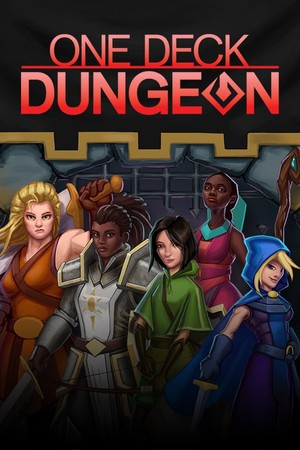
My first instinct with One Deck Dungeon was to treat it like a light filler and breeze through encounters. That lasted about two floors before the Dragon's Cave turned my Warrior into crispy armor scraps. This is a dice allocation game wearing roguelite clothing, and the distinction matters: every time you flip a room card, you roll a pool of Strength, Agility, or Magic dice determined by your chosen hero's stat spread, then manually assign those dice to colored challenge boxes on the card. Miss a box, take a penalty in health or time. Clear them all, and you loot the card itself, converting it into a new skill, a stat boost, or raw XP toward a level-up. That loot-the-card mechanic is the design's best idea: the same Glooping Ooze that nearly killed you becomes the Armor Crush skill tucked under your character sheet. There are six heroes in the base game, each with a distinct dice composition that functions like a build order. The Warrior rolls heavy on Strength dice, the Mage leans on Magic, the Archer and Rogue prioritize Agility, and the Paladin plays a hybrid support role built around shielding a partner. For solo players, the choice of hero against a specific dungeon boss is where the most interesting pre-run decision-making lives. Pair a Magic-light hero into the Lich's Tomb and you will spend three floors slowly drowning in curse penalties. That asymmetry between hero kits and boss dungeons gives the game its strategic texture. The digital version adds a cross-run progression sheet per hero, with up to 15 unlockable talents that gently tilt the odds in your favor over time. There are also multiple difficulty tiers, ranging from a Novice setting that starts you at experience level 2 all the way up to Expert, which is the raw tabletop ruleset with no concessions. New players should start on Standard and ignore the Expert discourse online. The honest friction point is RNG variance, and anyone considering a purchase needs to understand the stakes. High challenge-box requirements on encounter cards mean a genuinely bad dice roll can shave off a quarter of your health with zero counterplay available beyond fleeing, which trades the loot opportunity for survival. The difficulty scaling across the three dungeon floors is elegant in structure, with mandatory locked dice slots on deeper floors eating your best numbers, but the swings from that variance can make late-floor collapses feel arbitrary rather than earned. Community sentiment splits predictably: players who approach it as a puzzle (what can I cover given this roll?) find it deeply engaging, while players expecting consistent agency over outcomes hit a wall. If dice luckiness in games genuinely ruins your session, this one will not convert you. Handelabra's digital execution is clean throughout. The UI handles the fiddliest part of the tabletop version, which is tracking dice pools, locked slots, and timed penalties simultaneously, without ever feeling cluttered. An undo button for dice placement is present and very much appreciated. Sessions clock in around 15 to 30 minutes once you know the rules, which makes it a strong candidate for short-session play or couch co-op, since local two-player co-op is fully supported with both players coordinating dice allocation together across a shared run. A Gauntlet Mode unlocks after clearing all bosses, chasing completion in minimum runs. The Forest of Shadows and Abyssal Depths expansions add new encounter decks, dungeon locations, and the Fiend mechanic (persistent threats that haunt you across the entire run), which meaningfully extend the content pool for players who hit the base game's ceiling.

Strategy & simulation
Tags
System Requirements
Minimum
- OS
- Windows 7 SP1+
- Memory
- 2 GB RAM
- DirectX
- Version 10
- Storage
- 300 MB available space
- Graphics
- DX10, DX11, DX12 Capable
- Processor
- x64 architecture with SSE2 instruction set support
Recommended
Requires a 64-bit processor and operating system
Keep exploring
Community Discussion
Be the first to comment on One Deck Dungeon.
Reviews & Ratings
No ratings available
Game Info
- Developer
- Handelabra Games Inc.
- Publisher
- Handelabra Games Inc.
- Release Date
- May 18, 2018