Aeon's End
If you've ever wanted a deck-builder that punishes sloppy play and actually rewards thinking three turns ahead, Aeon's End is the one to keep installed. Expect to lose repeatedly, and enjoy it.
GamerScout Verdict
Best for solo strategy players who want a deck-builder where the discard pile is a weapon, not an afterthought.
Compare Prices(5 stores)
Every store in this table quotes us in euros, so the EUR figure is the price the seller actually set, not our arithmetic — which is why EUR is also the currency we rank in. We only list an offer here when the store gives us its price in euros, so nothing in this table is a number we invented.
Pick USD, PLN, GBP, CAD or AUD in the header and we convert from EUR at the European Central Bank reference rate — converted amounts are prefixed with ~. Your bank or the store may apply a different rate at checkout. We never hide offers based on where you are: everyone sees this whole table.
We may earn a commission when you buy games through links on this page — at no extra cost to you. It never affects our rankings or verdicts.
Price History
Screenshots & Media
About Aeon's End
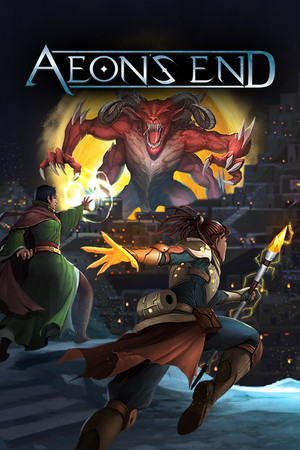
I've played enough cooperative deck-builders to know that most of them let you get away with bloated, unfocused hands and still squeak out a win. Aeon's End does not. The design discipline here is unusual: you never shuffle your discard pile when it runs out, which means the order you discard cards is a genuine decision with consequences several turns down the line. That single rule change turns what looks like a modest digital tabletop port into something closer to a puzzle game - every gem you play, every spell you prep to a breach, every relic you hold back needs to slot into a plan. Blow the sequencing early and the Nameless compounds your mistake until Gravehold's life total crumbles faster than you thought possible. The base game ships with 8 Breach Mages, each with a unique starting card and a chargeable ability. Kadir can heal herself or an ally and let teammates dig for spells; Xaxos peeks at the top of the turn order deck and helps allies charge faster. You assemble a team of up to four mages, then face off against one of four Nemeses - Rageborne charges in hard using his Strike Deck, the Prince of Gluttons devours cards directly from your market, the Carapace Queen floods the board with minion insects, and the Crooked Mask corrupts your deck by shuffling bad cards into it mid-game. Each Nemesis deck is built from a mix of basic and boss-specific cards before the match, so repetition doesn't mean predictability: you will face the same Nemesis multiple times and get different threat sequences every run. The randomized turn order - mages and Nemesis share the same order deck and it reshuffles each round - means the Nameless can occasionally chain turns together while your mages scramble to keep pace, which is the game's sharpest source of tension. The market is the other major differentiator from genre peers. Before each match you hand-pick which gems, relics, and spells fill the nine supply slots - and each slot contains a stack of identical copies of that card. No mid-game card lottery, no random surprises from the shop. That design intentionality is what makes the pre-game setup feel like its own layer of strategy: you are theorycrafting a market to suit your mage composition and the specific Nemesis mechanics you know you will face. This is not a game where you react to what you draw; it is a game where you architect the conditions for winning before the first card hits the table. For newcomers, the tutorial does cover the basics and then steps aside, which is fine if you are the type to learn by doing. A full in-game rulebook is available if you want to read the system properly, and I'd actually recommend doing so. Sessions run around 30 minutes once you know the game, making it more approachable than the complexity level implies. The bigger concern is the absence of online multiplayer - local co-op in pass-and-play mode exists, but remote synchronous play requires workarounds like screen sharing. The artwork is functional rather than striking, which is a consistent note across the community. Steam user sentiment lands around 82% positive across several hundred reviews, with the negative minority almost entirely split between difficulty complaints and the missing online mode. Neither should deter you if you understand what you are buying. Three paid DLC packs - The Nameless, The Depths, and The New Age - expand the mage and Nemesis roster substantially, with The New Age introducing a multi-session Expedition system for players who want persistent progression.

Strategy & simulation
Tags
System Requirements
Minimum
- OS
- Windows 7 SP1+
- Memory
- 2 GB RAM
- DirectX
- Version 10
- Storage
- 400 MB available space
- Graphics
- DX10, DX11, DX12 Capable
- Processor
- x64 architecture with SSE2 instruction set support
Recommended
Requires a 64-bit processor and operating system
Keep exploring
Community Discussion
Be the first to comment on Aeon's End.
Reviews & Ratings
No ratings available
Game Info
- Developer
- Handelabra Games Inc.
- Publisher
- Handelabra Games Inc.
- Release Date
- Sep 17, 2019