NASCAR Arcade Rush
Holds throttle, hits boost, repeats for two hours then runs out of game. Fun in short bursts with a friend on the couch, but the online is a ghost town and the AI rubber-banding is genuinely egregious.
GamerScout Verdict
Best grabbed at a steep discount for couch split-screen sessions - solo play and online both run dry within hours.
Compare Prices(5 stores)
Every store in this table quotes us in euros, so the EUR figure is the price the seller actually set, not our arithmetic — which is why EUR is also the currency we rank in. We only list an offer here when the store gives us its price in euros, so nothing in this table is a number we invented.
Pick USD, PLN, GBP, CAD or AUD in the header and we convert from EUR at the European Central Bank reference rate — converted amounts are prefixed with ~. Your bank or the store may apply a different rate at checkout. We never hide offers based on where you are: everyone sees this whole table.
We may earn a commission when you buy games through links on this page — at no extra cost to you. It never affects our rankings or verdicts.
Price History
Screenshots & Media
About NASCAR Arcade Rush
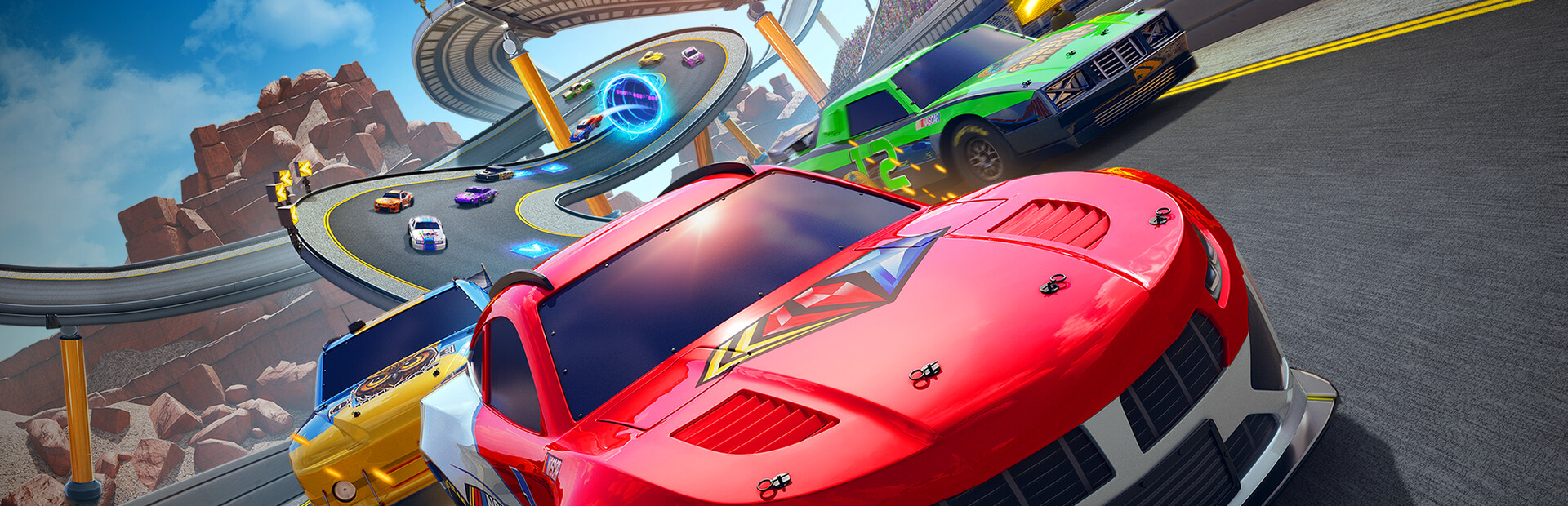
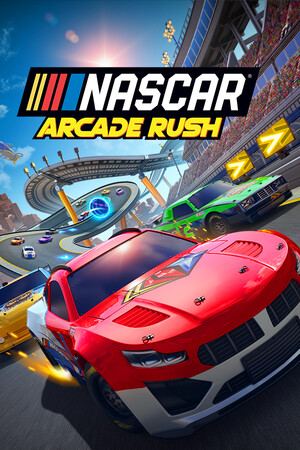
I went into NASCAR Arcade Rush wanting what every shooter-burned competitive player occasionally wants from a racing game: something brainless, fast, and good for thirty minutes of couch chaos. The first lap delivers on that promise. Tracks inspired by real-world venues like Daytona International Speedway, Talladega, and Watkins Glen get ripped apart and rebuilt with jumps, elevation changes, and two flavors of boost pad - blue for raw speed, orange for speed plus a partial nitro refill. Cars span a wide cosmetic range from stock-car-adjacent shapes to floaty futuristic vehicles, and the whole thing runs smooth and moves fast. That opening impression is real. The problem is it's also the peak. Dig one layer deeper and the mechanical poverty becomes hard to ignore. There is no drifting. There is no drafting or slipstreaming, which is wild for a game wearing the NASCAR badge. The single handling tool available is a nitro bar you manage across three laps, and the boost pads scattered around each circuit. That is the complete toolkit. The camera sits low to the ground and makes corner judgment legitimately difficult until you have memorized individual tracks, and the steering is twitchy enough that wall-banging feels less like a skill expression and more like the intended play pattern. On jumps, dumping your nitro mid-air can bounce the car backwards, which is a physics quirk that never stops being annoying. The rubber-band AI is the nastiest part of the solo experience. Play a clean race and the field teleports back onto your bumper in the final lap regardless. It does not feel like deliberate tension design - it feels like the game is afraid you will notice how little racing is actually happening. There are two difficulty tiers, Rookie and Elite, but neither one earns you a sense of genuine competition. The Cup Series strings together four tracks per cup across nine cups, and reviewers consistently reported burning through the whole thing in under five hours. Twelve tracks is the full pool, and they start blending after your second or third run through the rotation. Online multiplayer supports up to twelve players and is theoretically the save point for everything the solo mode lacks. In practice, the lobbies have been dead since launch. Multiple reviewers across PC and Xbox reported failing to find a single match at release, and there is no evidence that population has recovered since. Split-screen local play is present and is genuinely the best use case for this game - short sessions, real human opponents who cannot rubber-band, and the chaos becomes charming rather than frustrating. Progression unlocks cosmetics across a hundred levels, but the bulk of those unlocks are emotes rather than cars or visual upgrades that feel meaningful. Car tuning does not exist; every vehicle is statistically identical regardless of what you bolt onto it. For the audience that will actually get value here: kids, parents looking for an E-rated couch racer, or anyone who just wants something arcade-brained to play for one evening with zero commitment. If you came looking for a game that rewards clean lines, movement tech, or any kind of ranked ladder worth climbing, this is not it. The bones of something fun are in there, but they needed another six months and a design doc that asked harder questions about what happens after lap one.

Shooters
Tags
System Requirements
Minimum
- OS
- Windows 10 (64bit version only)
- Memory
- 16 GB RAM
- DirectX
- Version 12
- Storage
- 15 GB available space
- Graphics
- Nvidia GeForce GTX 1060
- Processor
- Intel i5 7400 @ 3GHz
Recommended
- OS
- Windows 10 (64bit version only)
- Memory
- 16 GB RAM
- DirectX
- Version 12
- Storage
- 15 GB available space
- Graphics
- NVIDIA GeForce RTX 2060
- Processor
- Ryzen 7 2700 X @ 3.7GHz
Keep exploring
Community Discussion
Be the first to comment on NASCAR Arcade Rush.
Reviews & Ratings
No ratings available
Game Info
- Developer
- Team6 Game Studios
- Publisher
- GameMill Entertainment
- Release Date
- Sep 15, 2023