'n Verlore Verstand
A South African fever dream of walking, jumping, and quiet existential confusion across 18 stages - absorbing atmosphere, genuinely punishing platforming in the back half.
GamerScout Verdict
Worth it for atmosphere-chasers and VR owners; a harder sell if first-person platforming frustration breaks your immersion.
Compare Prices(6 stores)
Every store in this table quotes us in euros, so the EUR figure is the price the seller actually set, not our arithmetic — which is why EUR is also the currency we rank in. We only list an offer here when the store gives us its price in euros, so nothing in this table is a number we invented.
Pick USD, PLN, GBP, CAD or AUD in the header and we convert from EUR at the European Central Bank reference rate — converted amounts are prefixed with ~. Your bank or the store may apply a different rate at checkout. We never hide offers based on where you are: everyone sees this whole table.
We may earn a commission when you buy games through links on this page — at no extra cost to you. It never affects our rankings or verdicts.
Price History
Screenshots & Media
About 'n Verlore Verstand
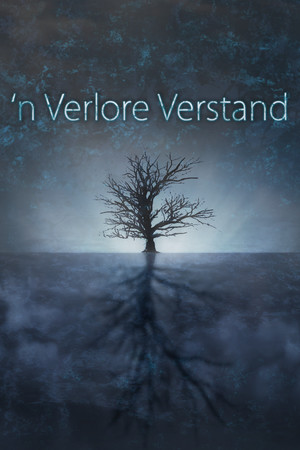
I have a soft spot for games that refuse to explain themselves, so 'n Verlore Verstand - an Afrikaans title that roughly translates to "a lost mind" - had me from the first dreamlike corridor. Skobbejak Games is a tiny two-person studio out of Johannesburg, and this is very much the work of people who had something personal to express and chose the most abstract possible container for it. There is no dialogue, no HUD, no character introduction, no tutorial text. You exist. You move. You find the tree. Structurally, the game is a first-person hybrid: part walking exploration, part light puzzle-solving, part platformer. Those three things sit in uneasy company with each other. The exploration sections - wandering a decaying mansion, drifting through a cold Valhalla-like void, picking through a city that feels intentionally desolate - are where the game earns real praise. The environments cycle across five distinct worlds split across 18 stages, and the best of them land somewhere between haunting and meditative. Reaching each stage's glowing white tree feels genuinely earned when the atmosphere is working. The soundtrack deserves its own mention: reviewers consistently praised it, describing the blend of tender piano and hypnotic, trance-inflected beats as one of the few things that holds the whole experience together. For players who care primarily about mood and soundscape, those stretches of pure exploration will be enough. Where the game loses people - and it loses a fair number, sitting at a 47% positive rating on Steam - is the platforming. First-person jumping is an notoriously difficult thing to pull off, and 'n Verlore Verstand does not fully solve the problem. Without seeing your feet, landing on moving blocks or calculating edge jumps becomes a trial-and-error grind. Checkpoints exist but give no indication of where they are, so a failed jump late in a long section can roll you back further than feels fair. The difficulty ramps sharply in the second half, demanding precision timing and pattern memorisation that sits at odds with the dreamy, unhurried tone the earlier stages establish. Players who stick with it report completion times ranging from three hours on the low end to eight or more depending on patience with the platforming friction. There is a Time Trial mode unlocked after finishing the main campaign, and each of the 18 stages has its own achievement tied to beating a target time - a neat bonus for completionists who somehow made peace with the jumping. VR support via SteamVR and Oculus is baked in, and by multiple accounts the already-atmospheric environments become something genuinely stranger in headset. For a game built around spatial unease and a refusal to anchor you, VR is probably the intended delivery mechanism even if most people will play it flat. I want to defend this one more than the community consensus would suggest I should. The intention is clear, the soundscape is carefully constructed, and the early stages show a developer with a real sense of mood-building. But sincerity of intent does not fix ambiguous spatial geometry or checkpoints that feel adversarial. This is a game for people who prioritise atmosphere and can tolerate the friction as part of the dreamlike disorientation - not for anyone who needs tight mechanical feedback to stay engaged.

Indie & narrative
Tags
System Requirements
Minimum
- OS
- Windows 7 32-bit
- Memory
- 2 GB RAM
- DirectX
- Version 9.0c
- Storage
- 2 GB available space
- Graphics
- Nvidia Geforce 8800 OR ATI Radeon HD 3870 OR equivalent/higher
- Processor
- Dual Core
- Sound Card
- Direct X compatible
- VR Support
- SteamVR or Oculus PC. Keyboard or gamepad required
Recommended
- OS
- Windows 10 64-bit
- Memory
- 4 GB RAM
- DirectX
- Version 11
- Storage
- 5 GB available space
- Graphics
- Nvidia GTX 460 OR AMD Radeon HD 5770 OR equivalent/higher
- Processor
- Quad Core
- Sound Card
- Direct X compatible
Keep exploring
Community Discussion
Be the first to comment on 'n Verlore Verstand.
Reviews & Ratings
No ratings available
Game Info
- Developer
- Skobbejak Games
- Publisher
- Conglomerate 5
- Release Date
- Apr 5, 2016