Myst IV: Revelation
The prettiest game in the Myst series is also its most technically troubled port - gorgeous Ages and a satisfying narrative payoff for series veterans, buried under laggy mouse controls and a 4:3 aspect ratio that refuses to play nice with modern monitors.
GamerScout Verdict
Worth it for Myst series completionists willing to apply community fixes, but a tough sell for newcomers or casual puzzle fans.
Compare Prices(5 stores)
Every store in this table quotes us in euros, so the EUR figure is the price the seller actually set, not our arithmetic — which is why EUR is also the currency we rank in. We only list an offer here when the store gives us its price in euros, so nothing in this table is a number we invented.
Pick USD, PLN, GBP, CAD or AUD in the header and we convert from EUR at the European Central Bank reference rate — converted amounts are prefixed with ~. Your bank or the store may apply a different rate at checkout. We never hide offers based on where you are: everyone sees this whole table.
We may earn a commission when you buy games through links on this page — at no extra cost to you. It never affects our rankings or verdicts.
Price History
Screenshots & Media
About Myst IV: Revelation
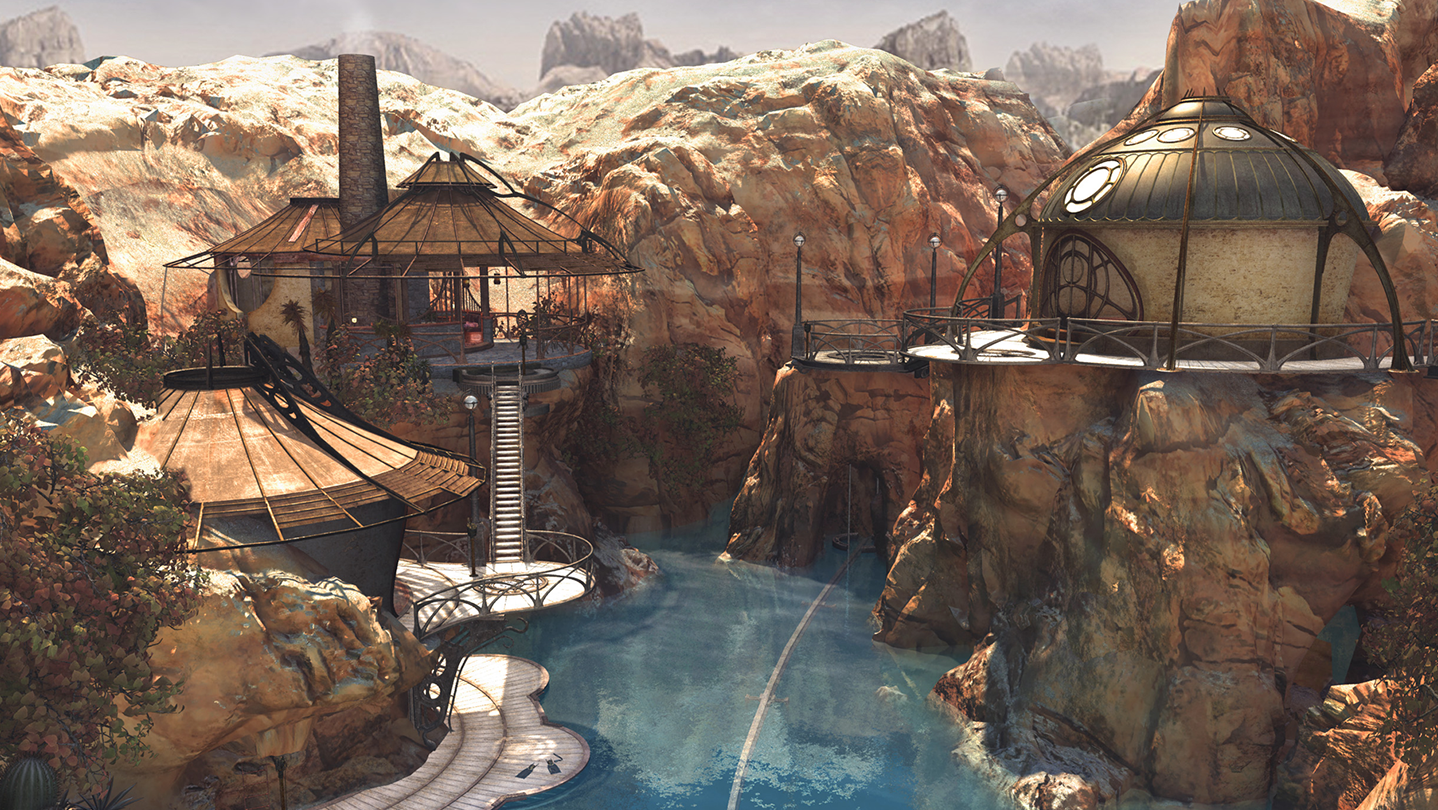
My first impression loading Myst IV: Revelation on a modern PC was that it looked jaw-dropping for a 2004 title - and then five seconds passed waiting for the scene to change after a single mouse click. That tension between the game's genuine artistry and its creaky Steam port defines the whole experience here. This is a first-person node-based adventure where you hop between pre-rendered environments, rotate your view at each stopping point, and work out increasingly intricate puzzles across four Ages: Tomahna, Haven, Spire, and Serenia. You move by clicking waypoints rather than free-walking, which is classic Myst, but the zip mode shortcut lets you skip back to previously visited nodes without trudging through every transition - a small mercy given how slow those transitions run. On the puzzle side, Revelation is ambitious to a fault. The best moments involve untangling interconnected natural and mechanical systems spread across an entire Age - the kind of logic that clicks all at once and feels genuinely satisfying. The worst moments tip into what patient players will call "obtuse" and everyone else will call "arbitrary." Pixel hunting in Spire and Haven is a real problem, and the mouse controls, which suffer from a jitter issue that some players partially fix through polling rate tweaks, can actually cause you to fail precision-based puzzles through no real fault of your own. An in-game journal and camera tool let you log clues without reaching for a notepad, which is a thoughtful quality-of-life addition from the era. Storytelling is handled largely through a memory amulet that triggers psychometric flashbacks as you interact with objects - it is a clever device that gives story beats a sense of discovery rather than just dumping exposition via cutscenes. The resolution of the Sirrus and Achenar storyline (the two brothers who set everything in motion in the original Myst) is the main draw for series fans, and it mostly delivers, though community sentiment is split on some of the narrative retcons that quietly rewrite details from the first game. Musician Peter Gabriel contributed to the audio, and composer Jack Wall's score gives every Age its own atmosphere. Visually, the pre-rendered backgrounds are packed with subtle animations that make the worlds feel inhabited rather than painted. The Steam port is the elephant in the room. Scene transitions are sluggish by default, the game locks to a 4:3 aspect ratio (cropping or distorting on widescreen setups), and launch reliability on Windows 10 and 11 is inconsistent. A community-made tool called M4Revolution can re-encode the image files to fix the loading pauses, and PCGamingWiki has a config workaround for windowed mode, but none of this should be necessary out of the box. If you are fine doing a fifteen-minute setup before you ever boot the game, the experience on the other side is a genuinely rich puzzle adventure with one of the best ambient soundscapes in the series. If you want a clean plug-and-play experience, Revelation will frustrate you before you even reach the first puzzle. Series veterans who have cleared Myst, Riven, and Exile are the right audience here. Going in cold means missing the emotional weight of finally confronting Atrus's sons directly. For that specific group, the payoff is worth the technical friction - just go in with the PCGamingWiki fixes already applied.

Catch-all
Tags
System Requirements
Minimum
- OS
- 7 / 8 / 10
- Processor
- 1.8 GHz Processor
- Memory
- 512 MB RAM
- Graphics
- 32 MB 3D graphics card compatible with DirectX 9
- DirectX
- Version 9.0
- Storage
- 7172 MB available space
- Sound Card
- DirectX 9 compliant audio devic…
Keep exploring
Community Discussion
Be the first to comment on Myst IV: Revelation.
Reviews & Ratings
Game Info
- Developer
- Ubisoft Montreal
- Publisher
- Cyan Worlds
- Release Date
- Sep 24, 2018