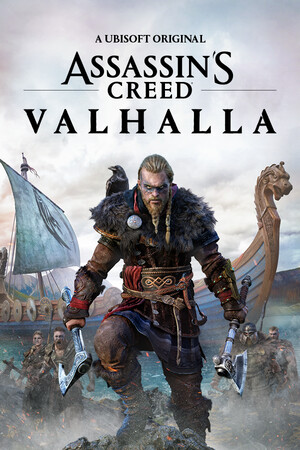
Assassin's Creed Valhalla - Dawn of Ragnarok
Eivor goes full Norse god in Svartalfheim, wielding mythical powers to stop Ragnarok - ambitious scope, uneven execution, 50% approval tells its own story.
GamerScout Verdict
A striking biome and clever power-theft mechanics can't offset the same repetitive quest loops that made base Valhalla overstay its welcome.
Compare Prices(2 stores)
Every store in this table quotes us in euros, so the EUR figure is the price the seller actually set, not our arithmetic — which is why EUR is also the currency we rank in. We only list an offer here when the store gives us its price in euros, so nothing in this table is a number we invented.
Pick USD, PLN, GBP, CAD or AUD in the header and we convert from EUR at the European Central Bank reference rate — converted amounts are prefixed with ~. Your bank or the store may apply a different rate at checkout. We never hide offers based on where you are: everyone sees this whole table.
We may earn a commission when you buy games through links on this page — at no extra cost to you. It never affects our rankings or verdicts.
Price History
Screenshots & Media
About Assassin's Creed Valhalla - Dawn of Ragnarok
Dawn of Ragnarok bills itself as the biggest DLC expansion in Assassin's Creed history, and on raw square footage alone, Ubisoft Montreal probably isn't lying. Svartalfheim is a visually striking dwarven realm crammed with volcanic ridges, frost-sieged fortresses, and warring mythological factions. Eivor steps into the role of Odin searching for his son Baldr, which sounds like a premise with genuine narrative weight. And for the first hour or two, the mythological framing genuinely works - the scale feels operatic, the enemies are imposing, and the new Hugr-Rip power mechanic, which lets you absorb enemy abilities like flame-walking or shapeshifting into a raven, is the freshest idea the series has introduced in years. The Hugr-Rip powers are worth spending a paragraph on because they actually change how combat and traversal play out. Stealing the ability to walk through fire from a Muspel soldier, then using it to access a shortcut through a burning corridor moments later, is the kind of environmental puzzle-solving that the base Valhalla game rarely bothered with. The raven form adds a verticality to exploration that suits Svartalfheim's layered terrain. If the expansion had committed harder to building encounters around these mechanics, Dawn of Ragnarok could have been a genuine high point for the series. But then Ubisoft remembered it was still an Assassin's Creed game. The quest structure collapses into the same loop that made the base game feel exhausting by hour sixty: clear the camp, collect the thing, return to the NPC, repeat. The story premise - Odin's paternal grief, the mythological stakes of Ragnarok itself - deserved writing that could hold up under scrutiny. Instead the dialogue frequently settles for workmanlike exposition, and the side quests that pad out the runtime are the exact kind of filler content I have zero patience for. Baldr as a narrative goal feels distant rather than urgent, and the emotional throughline that should be driving the whole expansion keeps getting buried under objective markers. The 50 percent approval rating on Steam is not a fluke. Players who bounced off the base Valhalla's open-world sprawl will find Dawn of Ragnarok amplifies the problems rather than fixing them. The mythical powers are a genuine mechanical innovation, but they're wrapped in a content delivery system that assumes players want more of exactly what they already have. For RPG-focused players hoping that Odin's perspective would bring sharper writing or meaningful divergence in how the story unfolds, the branching here is thin. Choices exist but the consequences rarely ripple outward in ways that feel earned. If you loved Valhalla and simply want more of it with a striking new biome and a genuinely cool power-theft mechanic, Dawn of Ragnarok delivers on that narrow promise. If you were hoping the mythological setting would push the writing or the systems into more ambitious territory, the expansion will frustrate you. The bones of something more interesting are visible throughout, which almost makes the execution harder to forgive.

RPGs
Tags
System Requirements
Minimum
- OS
- Windows 10 (versions 64 bits uniquement)
- Processor
- AMD Ryzen 3 1200 3.1 GHz / Intel Core i5-4460 3.2 GHz
- Memory
- 8 GB RAM
- Graphics
- AMD R9 380 /NVIDIA G…
Recommended
- OS
- Windows 10 (versions 64 bits uniquement)
- Processor
- AMD Ryzen 5 1600 3.2 GHz / Intel Core i7-4790 3.6 GHz
- Memory
- 8 GB RAM
- Graphics
- AMD R9 380 /NVID…
Keep exploring
Community Discussion
Be the first to comment on Assassin's Creed Valhalla - Dawn of Ragnarok.
Reviews & Ratings
Game Info
- Developer
- Ubisoft Montreal
- Publisher
- Ubisoft
- Release Date
- Dec 6, 2022