Mothmen 1966
Two hours of cryptid-haunted West Virginia atmosphere so carefully crafted it makes most five-hour indie games look careless. If the Mothman legend means anything to you, this one is already waiting.
GamerScout Verdict
Worth it for mood-first players who appreciate handcrafted atmosphere over deep interactivity, especially at a low asking price.
Compare Prices(7 stores)
Every store in this table quotes us in euros, so the EUR figure is the price the seller actually set, not our arithmetic — which is why EUR is also the currency we rank in. We only list an offer here when the store gives us its price in euros, so nothing in this table is a number we invented.
Pick USD, PLN, GBP, CAD or AUD in the header and we convert from EUR at the European Central Bank reference rate — converted amounts are prefixed with ~. Your bank or the store may apply a different rate at checkout. We never hide offers based on where you are: everyone sees this whole table.
We may earn a commission when you buy games through links on this page — at no extra cost to you. It never affects our rankings or verdicts.
Price History
Screenshots & Media
About Mothmen 1966
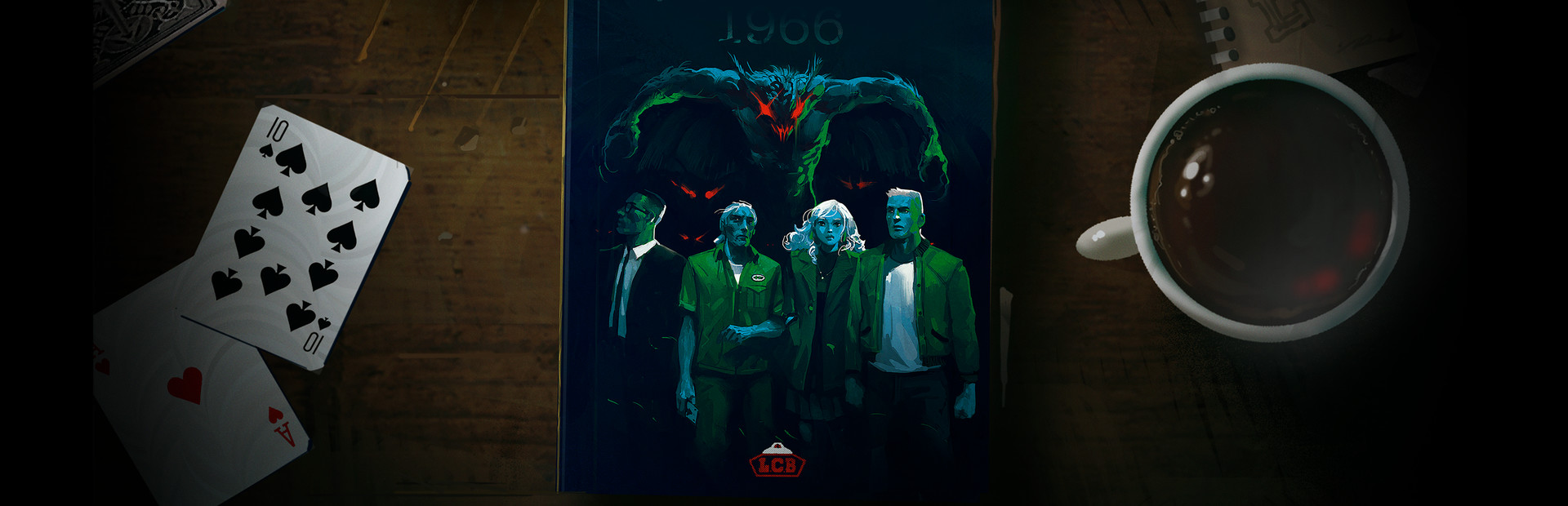
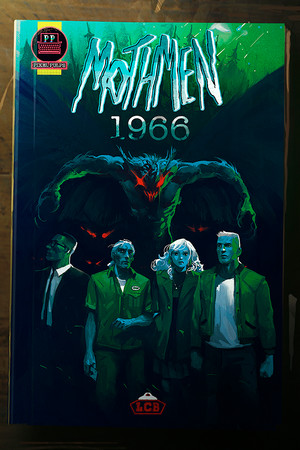
I want to talk about what LCB Game Studio did with darkness. Not the thematic kind, though that's here too, but the literal pixel-art black that Fernando Martinez Ruppel smears across every scene in Mothmen 1966. The studio is a two-person operation out of Argentina, and they've built something that understands one of horror's oldest tricks: the thing you can't quite see is always more frightening than the thing you can. The limited color palette, heavy on jagged greens and cold blues with bursts of white and red, does the job a full HD render couldn't. Faces loom out of that darkness half-formed. Figures stand at distances the engine deliberately refuses to resolve. The whole visual language is borrowed from early-80s home computer graphics, the kind of lo-fi aesthetic that evokes ZX Spectrum shareware nights, and it is completely, intentionally right for a story about things that should not exist. The narrative runs across ten chapters, rotating between three characters over a single strange November night. Holt is a gas station owner with a paralyzed grandmother and an increasingly unmanageable day. Lee is a young man who has planned a romantic evening under the Leonid meteor shower for his girlfriend Victoria, who is privately wrestling with bigger decisions than the night was supposed to require. Then the Men in Black show up. Then something worse does. Writer Nico Saraintaris keeps the prose tight and pulpy in the best sense, short sharp paragraphs that move, characters whose inner lives feel sketched in a few precise lines rather than overexplained. The story rotates through perspectives chapter by chapter, and the structure works: each POV shift reframes the horror slightly, which is genuinely unsettling rather than just mechanical. The interactive layer is lighter than the word "game" implies, and you should know that going in. Dialogue choices appear regularly but most don't redirect the story in dramatic ways. The real weight comes from the puzzle sequences scattered through the chapters: sorting inventory on a gas station shelf, fending off coyotes by choosing the right sequence of actions, navigating what the game cheerfully calls Impossible Solitaire, a card minigame that is exactly as described and surprisingly compelling in isolation. There are also combat-adjacent sequences that play like stripped-down, text-menu strategy, where wrong answers mean death and you restart from the top of the sequence. Some reviewers found those restarts irritating, and honestly they are not wrong. The puzzle menus are clunky, the penalty for failure is occasionally fussier than the puzzle deserves, and the controls in the interactive stretches never feel as considered as everything else. The writing and the art carry the experience; the minigames support it rather than define it. The soundtrack sits underneath all of this like something filtered through failing tape. Sound effects, barks, squealing tires, slamming doors, come through warped and slightly wrong, as if the game engine itself is uncertain what sounds real. It is a specific, deliberate choice and it works persistently on the nerves. The whole soundscape reinforces what the visuals are doing: this is a world where the familiar has gone slightly out of calibration. For people who care about audio craft in small games, this deserves attention. The experience runs around two hours on a first playthrough, with multiple endings reachable through choice combinations and achievements tied to specific dialogue paths, which gives completionists a reason to return even if the puzzle sequences repeat unchanged. Mothmen 1966 sits at a Metacritic 68, which captures the critical split accurately: critics who valued atmosphere and prose over interactivity responded warmly, those who wanted more robust gameplay found the minigames lacking. Steam players landed at 91% positive across nearly 300 reviews, which says something about the audience it actually reached. This is not a game for someone expecting branching systems or meaningful agency. It is a game for someone willing to sit inside a very well-made mood for two hours and let a two-person team show them what pulp horror feels like when it is handled with care and real craft. The ending will leave you wanting one more chapter. That feeling is part of the design.

Indie & narrative
Tags
System Requirements
Minimum
- OS
- 7
- Memory
- 2 GB RAM
- Storage
- 250 MB available space
- Graphics
- Nvidia 450 GTS / Radeon HD 5750 or better
- Processor
- Intel i3+
Recommended
- OS
- 10
- Memory
- 4 GB RAM
- Storage
- 250 MB available space
- Graphics
- Nvidia GTX 460 / Radeon HD 7800 or better
- Processor
- Intel i5+
Keep exploring
Community Discussion
Be the first to comment on Mothmen 1966.
Reviews & Ratings
Game Info
- Developer
- LCB Game Studio
- Publisher
- Chorus Worldwide Games
- Release Date
- Jul 14, 2022