Morphblade
A micro-sized hex puzzler that hides genuine tactical depth behind a two-minute run time - Tom Francis built something quietly brilliant here.
GamerScout Verdict
Built for score-chasers who want genuine tactical depth packed into a two-minute session - thin on content, rich on craft.
Compare Prices(5 stores)
Every store in this table quotes us in euros, so the EUR figure is the price the seller actually set, not our arithmetic — which is why EUR is also the currency we rank in. We only list an offer here when the store gives us its price in euros, so nothing in this table is a number we invented.
Pick USD, PLN, GBP, CAD or AUD in the header and we convert from EUR at the European Central Bank reference rate — converted amounts are prefixed with ~. Your bank or the store may apply a different rate at checkout. We never hide offers based on where you are: everyone sees this whole table.
We may earn a commission when you buy games through links on this page — at no extra cost to you. It never affects our rankings or verdicts.
Price History
Screenshots & Media
About Morphblade
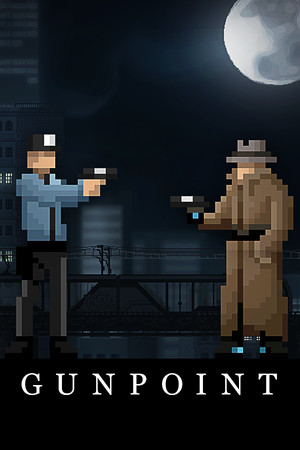
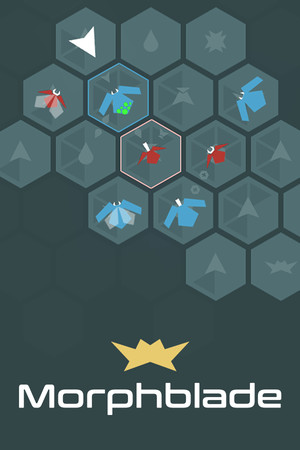
I keep coming back to Morphblade the way you return to a single crossword clue that you're sure you almost cracked. Each session is short - a normal run lasts somewhere between two and five minutes - but the thinking it demands is anything but casual. You play as a small white robot on a hexagonal grid, and the twist that makes everything click is this: you have no fixed abilities of your own. Every hex you step onto reshapes you into a different weapon. Step onto a Blade tile and you slash enemies flanking you on both sides as you move. Step onto an Arrow and you fire yourself through two enemies in a line. The Hammer lets you stay put and smash a single target in front of you. There is also an Acid tile that strips armoured enemies of their protection, a Repair tile that heals you, and a Teleport tile for emergency repositioning. Six tile types total, and the whole game is really a question of how to choreograph your movement across them under pressure. Between waves of bugs you get to expand your grid and upgrade the tiles you've been using. This is where Morphblade earns the word 'deep' with a straight face. Upgrades work by cross-breeding adjacent tile types with each other - so an Arrow next to an Acid tile can absorb the Acid property, letting it punch through armour on top of everything else it already does. A Teleport tile upgraded with Repair heals you every time you blink across the board. Stacking is allowed, which means a sufficiently nurtured Arrow can eventually offer infinite range, armour penetration, knockback, and self-healing all at once. The road from 'I just click the hex I'm on' to 'I am choreographing a five-tile combo to clear the board' is shorter than it looks, and that compression is the real craft at work here. Tom Francis - the solo developer, also responsible for Gunpoint - has spoken openly about building Morphblade as a deliberate response to Michael Brough's iOS game Imbroglio, adapting the core idea of location-determining-weapon with Brough's blessing and then redesigning almost everything else around it. The honest limitations are real and worth naming. There is no story, no progression that carries across sessions, no unlockable characters or modes. Each run is procedurally arranged and ends when you die, which will happen frequently in the early going and eventually stops feeling like failure and starts feeling like the rhythm of the game. If you need a clear endpoint or a sense of forward momentum across multiple sittings, this will frustrate you. Players who don't enjoy score-chasing or who bounce off games without narrative scaffolding will find the loop thin. Steam players have noted that the 'beat your own score' hook can either grip you completely or leave you cold, and that split is a real one. For the right player - someone who appreciates tight, handcrafted systems where every rule interacts with every other rule, and who finds satisfaction in shaving one move off an inefficient run - Morphblade is the kind of small game that quietly occupies a corner of your brain for weeks. It is modest in scope and absolutely intentional in everything it does. The runs are short enough to fit into a commute and complex enough to replay on arrival. Suspicious Developments made something that knows precisely what it is and commits fully. That kind of clarity is rarer than it should be.

Indie & narrative
Tags
System Requirements
Minimum
- OS
- Windows XP or later
- Memory
- 4 GB RAM
- Graphics
- 64MB DirectX 9 compatible card
- Processor
- 2GHz to be safe
Keep exploring
Community Discussion
Be the first to comment on Morphblade.
Reviews & Ratings
No ratings available
Game Info
- Developer
- Suspicious Developments
- Publisher
- Suspicious Developments
- Release Date
- Mar 3, 2017