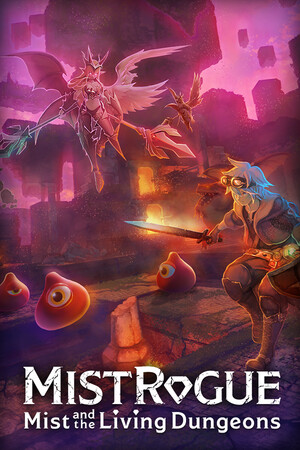
MISTROGUE: Mist and the Living Dungeons
Build-crafting meets collapsing floors: MISTROGUE rewards players who treat the dungeon itself as a weapon, not just a backdrop. Casuals will bounce hard; min-maxers will find a gem worth digging into.
GamerScout Verdict
Best for Mystery Dungeon veterans who want a build-focused twist on the formula and can accept a short story with a thin post-game.
Compare Prices(3 stores)
Every store in this table quotes us in euros, so the EUR figure is the price the seller actually set, not our arithmetic — which is why EUR is also the currency we rank in. We only list an offer here when the store gives us its price in euros, so nothing in this table is a number we invented.
Pick USD, PLN, GBP, CAD or AUD in the header and we convert from EUR at the European Central Bank reference rate — converted amounts are prefixed with ~. Your bank or the store may apply a different rate at checkout. We never hide offers based on where you are: everyone sees this whole table.
We may earn a commission when you buy games through links on this page — at no extra cost to you. It never affects our rankings or verdicts.
Price History
Screenshots & Media
About MISTROGUE: Mist and the Living Dungeons
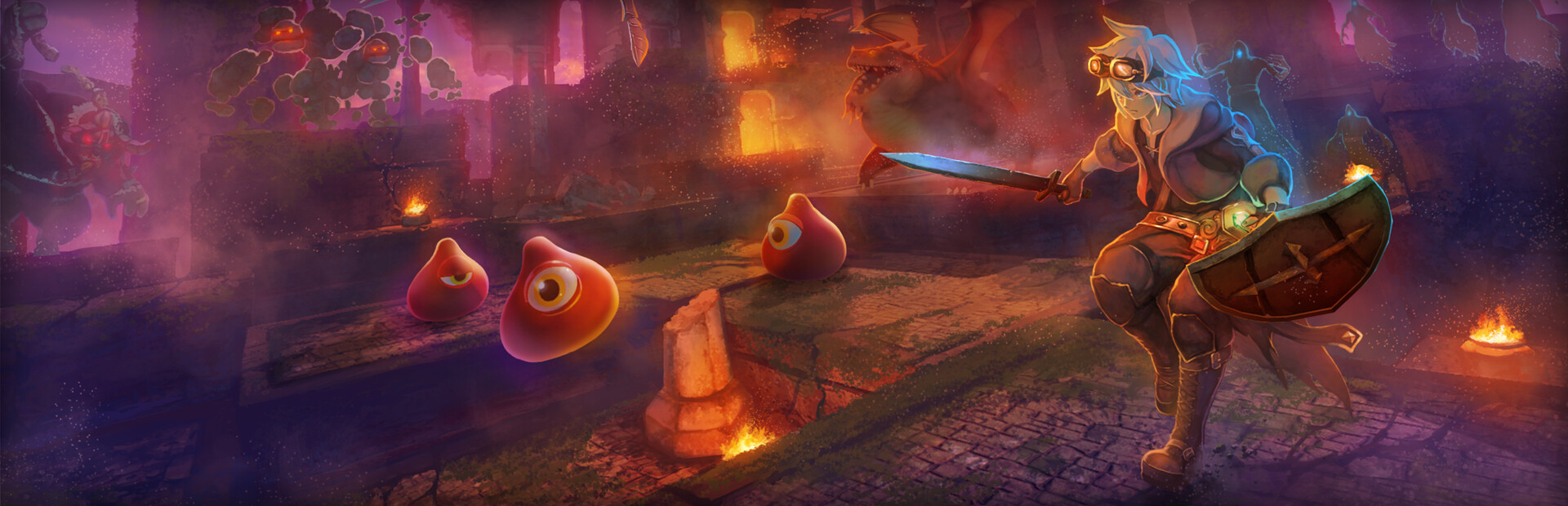
My first question whenever a roguelike lands on my radar is always the same: does the loop have enough decision surface to survive repeated runs, or does it turn into muscle memory after hour three? MISTROGUE sits in uncomfortable middle ground on that question, and being honest about where it lands is the only useful thing I can do for you here. The headline mechanic is genuinely clever. The dungeons are not just procedurally generated at the start of a run -- they actively reshape while you are standing in them. Floor tiles rise and fall, bridges collapse after a single crossing, and monster houses can materialize the moment you step through a door. That dynamism forces a kind of spatial read that most dungeon crawlers never demand. The Maze Stone system layers on top of it nicely: you can spend those items to create or erase footholds on the fly, which means you can drop a platform out from under a mob cluster, seal off a retreat corridor, or bridge a gap to a treasure chest that would otherwise be unreachable. Using Maze Stones offensively while juggling your weapon skills mid-combat is the closest this game gets to a high-skill ceiling, and when it clicks, it feels like a distinctly different game from anything else in the Mystery Dungeon family tree. The build system is where my strategy brain wakes up properly. Mist slots skills into weapons, shields, and bracelets, and each combination carries different recast times and MP costs. The game slows time while you are in the inventory, which softens the real-time pressure enough to let you actually think about swapping gear mid-fight -- a smart concession to the build-tinkering crowd. Rings add random stat bumps with no attached skills, so they function as the RNG wildcard that either supercharges your planned build or sends you scrambling to adapt. The Skill Book, which semi-automatically surfaces viable combinations as you clear support missions, is a genuine tutorial-friendly feature I did not expect from a small indie release. A newcomer can lean on it to understand synergies before committing to their own theorycrafting. Here is where I have to be straight with you about the downsides. Community reception landed at roughly 66 percent positive across roughly 184 Steam reviews -- "Mixed" territory -- and the criticism clusters around two things: content volume and story payoff. The Story mode spans three dungeon areas, and once that is done, the narrative closes with a whimper rather than a climax. Post-story longevity depends entirely on whether Endless Hyperspace (strip-entry, no carry-in equipment) and The Battle Road (five timed boss stages with scoreboard rankings) hold your attention. For players who need narrative momentum to stay engaged, those modes will feel thin. For players who genuinely want a tighter, harder challenge layer to test an optimised build, The Battle Road specifically is a worthwhile target. The item drop pool with its claimed thousands of combinations does keep loot hunting from feeling pointless, and legendary drops from common enemies are a real -- if infrequent -- thrill. If you are coming from Shiren the Wanderer, Touhou: Scarlet Curiosity, or any of the Chocobo Dungeon titles, you will adapt to MISTROGUE's rhythm quickly and probably find enough to appreciate. If your roguelike touchstones are deeper western entries with huge content slates, manage expectations downward. The bones are solid, the Maze Stone idea earns its place as a genuinely original mechanic, but the overall package feels like it needed one more content layer to cross from "interesting experiment" to confident recommendation.

Strategy & simulation
Tags
System Requirements
Minimum
- OS
- Windows 10(64bit)
- Memory
- 4 GB RAM
- DirectX
- Version 11
- Storage
- 4 GB available space
- Graphics
- GeForce GTX 960 or AMD Radeon RX 560
- Processor
- Core i5-6600K
Recommended
- OS
- Windows 10(64bit)
- Memory
- 8 GB RAM
- DirectX
- Version 11
- Storage
- 4 GB available space
- Graphics
- GeForce GTX 1060 or AMD Radeon RX 580
- Processor
- Core i5-6600K
Keep exploring
Community Discussion
Be the first to comment on MISTROGUE: Mist and the Living Dungeons.
Reviews & Ratings
No ratings available
Game Info
- Developer
- Polyscape Inc.
- Publisher
- Polyscape Inc.
- Release Date
- Oct 26, 2023