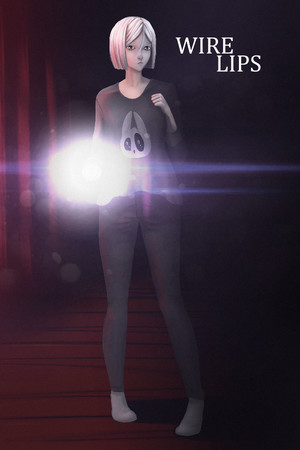

MiSide
The dating-sim wrapper is bait, and MiSide knows it. What starts as idle chores with an anime girl becomes a genre-hopping psychological horror that two developers built better than most studios manage with a full team.
GamerScout Verdict
Built by two people and better paced than most studio horror releases, MiSide is worth it if four hours of precise, unsettling craft is enough for you.
Compare Prices(7 stores)
Every store in this table quotes us in euros, so the EUR figure is the price the seller actually set, not our arithmetic — which is why EUR is also the currency we rank in. We only list an offer here when the store gives us its price in euros, so nothing in this table is a number we invented.
Pick USD, PLN, GBP, CAD or AUD in the header and we convert from EUR at the European Central Bank reference rate — converted amounts are prefixed with ~. Your bank or the store may apply a different rate at checkout. We never hide offers based on where you are: everyone sees this whole table.
We may earn a commission when you buy games through links on this page — at no extra cost to you. It never affects our rankings or verdicts.
Price History
Screenshots & Media
About MiSide
I spend most of my time in games that reward systems thinking and long-term planning, so MiSide is not my usual corner of the library. I picked it up because the community reception data was too loud to ignore: 97% positive across tens of thousands of Steam reviews, sitting at the top of unofficial all-time indie ratings for 2024. Numbers like that demand an explanation, so I went in. Four hours later, I fully understand the noise. The setup reads like a genre checklist: you play a reclusive programmer who downloads a mobile game featuring a virtual girlfriend named Mita. For about thirty minutes, the loop is gentle and domestic. You do chores, play small minigames, buy gifts. Then Mita pulls you literally inside the game, and MiSide stops pretending it is the thing it looks like. The horror pivot is not a cheap jumpscare flip. The dread is architectural. Lighting shifts, sound design warps, and the apartment you thought you understood starts behaving according to different rules. The whole opening half-hour of domesticity functions as data collection on you, the player, because Crazy Mita, the version of the character who has trapped you, has been watching the whole time. On the mechanical side, MiSide is a first-person adventure game that cycles through several distinct gameplay styles without ever settling into one lane long enough to grow stale. There is environmental puzzle solving, a stealth fragment, a DOOM-style action segment, a spatial loop sequence reminiscent of Japanese indie horror, and multiple optional minigames with the other Mita variants you encounter as you travel backward through the game's update layers. Cappie, Kind Mita, and the other versions you meet along the way each have distinct personalities and reveal different corners of the lore. The structure is closer to The Stanley Parable than to a conventional horror game: the variety is the point, and the pacing between each shift is tightly controlled. Dialogue choices affect how certain scenes play out, and the game contains multiple endings, though community consensus is that the "true" ending is the one most players will reach on a first playthrough. The criticisms that surface consistently are fair: the runtime is short, landing between four and six hours depending on exploration depth, and the ending section piles on twists in a way that slightly dilutes the impact of each one. There is no official mod support currently, which limits replayability for anyone who wants to extend the experience beyond a second playthrough hunting hidden lore fragments. A Peaceful Mode with expanded Mita interactions has been on the developer roadmap but was not available at time of writing. For a game built by exactly two people, MakenCat and Umeerai, these feel less like failures of ambition and more like the honest constraints of a micro-team that still shipped one of the most polished indie releases of the year. Technical performance is solid, the voice acting in Russian and Japanese is well regarded by players of both, and post-launch patches have addressed stability issues on lower-VRAM setups. Who is this for? Horror fans who enjoy atmospheric dread over combat, players who appreciated Doki Doki Literature Club's metafictional angle and want something that takes that formula further, and anyone who can stomach a premise that opens cute and turns genuinely unsettling. It is not for players who need more than five hours of content to feel a purchase is justified, or those who bounce hard off anime aesthetics regardless of what is underneath them. For everyone else, the ratio of craft to runtime here is unusually high.

Strategy & simulation
Tags
System Requirements
Minimum
- OS
- Windows 7/8/10
- Memory
- 4 GB RAM
- DirectX
- Version 10
- Storage
- 2 GB available space
- Graphics
- NVIDIA GT 630 / 650m, AMD Radeon HD6570 or equivalent
- Processor
- Intel Core i5-2300 @ 2,80 GHz, AMD FX 8120 @ 3.1 GHz
- Sound Card
- 100% DirectX 9.0c compatible sound card
Recommended
- OS
- Windows 7/8/10
- Memory
- 8 GB RAM
- DirectX
- Version 11
- Storage
- 2 GB available space
- Graphics
- NVIDIA GTX 1050
- Processor
- Intel i7 920 @ 2.7 GHz, AMD Phenom II 945 @ 3.0 GHz
- Sound Card
- 100% DirectX 9.0c compatible sound card
Keep exploring
Community Discussion
Be the first to comment on MiSide.
Reviews & Ratings
No ratings available
Game Info
- Developer
- AIHASTO
- Publisher
- IndieArk
- Release Date
- Dec 10, 2024