MINOS
Tower defense meets roguelite in ancient Crete, and for once you are the threat every hero should have turned back from. If pressure-plate kill corridors make you feel like a genius, this is built for you.
GamerScout Verdict
Best for strategy and tower-defense fans who want a puzzle-forward roguelite with a genuinely deep trap-chaining sandbox.
Compare Prices(4 stores)
Every store in this table quotes us in euros, so the EUR figure is the price the seller actually set, not our arithmetic — which is why EUR is also the currency we rank in. We only list an offer here when the store gives us its price in euros, so nothing in this table is a number we invented.
Pick USD, PLN, GBP, CAD or AUD in the header and we convert from EUR at the European Central Bank reference rate — converted amounts are prefixed with ~. Your bank or the store may apply a different rate at checkout. We never hide offers based on where you are: everyone sees this whole table.
We may earn a commission when you buy games through links on this page — at no extra cost to you. It never affects our rankings or verdicts.
Price History
Screenshots & Media
About MINOS
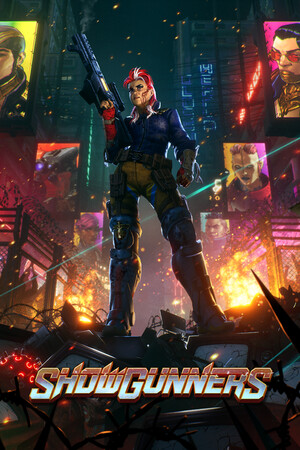
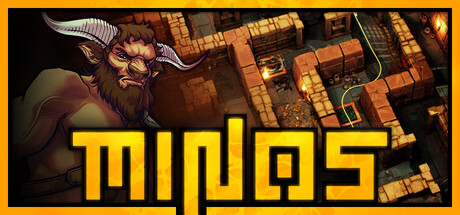
I've spent enough hours with Dungeon Keeper and Orcs Must Die to recognize the exact moment a trap-builder stops being a novelty and starts being a proper strategy game. MINOS hits that moment somewhere around the third run, when you realize the maze you built last time was embarrassingly naive, and you start routing corridors not by instinct but by geometry. That shift is what separates a genuinely good system from a gimmick, and Artificer, the Warsaw studio behind Showgunners and Sumerian Six, has built a genuinely good system here. The structure is a roguelite split across two distinct roles. Before each wave, you play as Daedalus, dragging walls, gates, and corridors into new configurations while setting trap sequences across designated slots. Then the doors open and you switch to Asterion, moving through the labyrinth while adventurers march in, stepping in personally with an axe when the traps fail to close the deal. The trap toolkit is where the depth lives: spikes, rolling boulders, swinging blades, and fire hazards can all be linked through pressure plates into chain reactions. One plate triggers a shifting gate that locks a knight in a rotating passage, which drops a boulder into a spike wall. When that sequence fires perfectly, the satisfaction is exactly the kind of thing I reload saves to see in less elegant games. MINOS just lets you watch it live. The roguelite loop is more forgiving than it initially presents itself. Deaths strip your run-specific arsenal, but Asterion carries permanent upgrades between attempts, covering health, movement speed, the ability to rearm traps mid-wave, and shortcuts to deeper floors. That persistent skill tree means even a catastrophic run where a Dismantler enemy tears through your carefully tuned kill corridor still pushes the needle forward. The one credible criticism I have for the late game is exactly that: Dismantler-type enemies that can deactivate traps create hard RNG dependency if the run's trap pool hasn't handed you the right counters, like a Ballista. That is a real friction point, not a dealbreaker, but worth knowing before you commit to deeper floors. Individual levels also run on the long side; cautious players will feel it. The tutorial takes a light-touch approach that some reviewers flagged as under-explanatory. I'd argue the opposite instinct is right here. The mechanics for trap chaining and maze reshaping are visualized clearly enough that the only real way to understand synergies is to break a run on them first. An Imaginarium system between missions lets you unlock new devices permanently, which expands your strategic toolkit run over run and encourages you to try configurations you'd never risk on a first instinct. Enemy variety escalates deliberately: early waves are soft warm-ups, but later units tank damage, attack at range, or deactivate traps outright, which forces genuine strategic diversification rather than letting one kill-corridor configuration carry the whole game. The stylized isometric art keeps the playfield readable at the cost of visual spectacle, though the audio work is sharper than expected, with each trap type carrying a distinct sound cue so you can track chain activations without watching every pixel. Steam players are landing at 90 percent positive across over 400 reviews, and a 1.1 patch beta is already in public testing, which signals an active development posture post-launch. For strategy players who want a puzzle-forward roguelite with genuine spatial problem-solving at its core, MINOS is a well-constructed package from a developer that clearly understands systems design. The occasional run-length drag and RNG friction in late waves keep it short of being a genre standout, but the trap-chaining sandbox is deep enough to reward return visits for a long time after the credits roll.

Strategy & simulation
Tags
System Requirements
Minimum
- OS
- Windows 10 x64 Bit
- Memory
- 8 GB RAM
- DirectX
- Version 11
- Storage
- 5 GB available space
- Graphics
- GeForce GTX 960 / Radeon RX 570 / Arc A380
- Processor
- Intel Core i5-6600K / AMD Ryzen 5 2500U
Recommended
- OS
- Windows 11 x64 Bit
- Memory
- 16 GB RAM
- DirectX
- Version 12
- Storage
- 5 GB available space
- Graphics
- GeForce RTX 2070 / Radeon RX 5700 XT / Arc A580
- Processor
- Intel Core i7-6700K / AMD AMD Ryzen 5 1500X
Keep exploring
Community Discussion
Be the first to comment on MINOS.
Reviews & Ratings
Game Info
- Developer
- Artificer
- Publisher
- Devolver Digital
- Release Date
- Apr 9, 2026