Mini Settlers
Logistics puzzles dressed as a city builder, Mini Settlers earns its 85% positive rating by stripping out everything that normally bloats the genre and leaving only the supply-chain tension you actually care about.
GamerScout Verdict
Best for logistics-minded players who want Anno-style supply chains without the scale, combat, or economics getting in the way.
Compare Prices(8 stores)
Every store in this table quotes us in euros, so the EUR figure is the price the seller actually set, not our arithmetic — which is why EUR is also the currency we rank in. We only list an offer here when the store gives us its price in euros, so nothing in this table is a number we invented.
Pick USD, PLN, GBP, CAD or AUD in the header and we convert from EUR at the European Central Bank reference rate — converted amounts are prefixed with ~. Your bank or the store may apply a different rate at checkout. We never hide offers based on where you are: everyone sees this whole table.
We may earn a commission when you buy games through links on this page — at no extra cost to you. It never affects our rankings or verdicts.
Price History
Screenshots & Media
About Mini Settlers
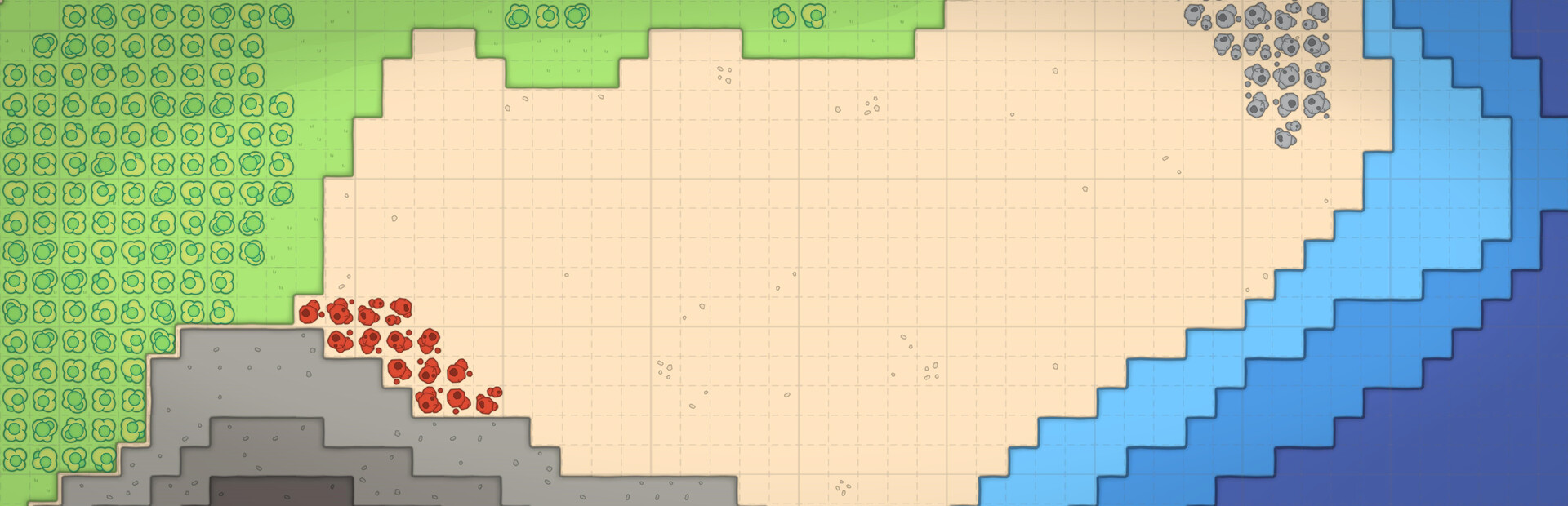
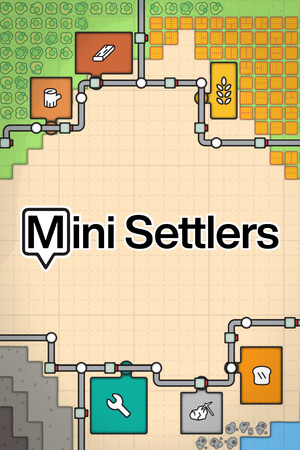
I've spent enough hours colour-coding production chains in Anno and Factorio to immediately recognise what Mini Settlers is actually selling: it's not a city builder in the sprawling, district-zoning sense, it's a logistics puzzle with a population ticker attached, and that framing changes everything about how you should approach it. The whole economy runs without money or pollution metrics. Every decision boils down to whether your roads, trains, and port warehouses are physically capable of moving goods fast enough to keep houses satisfied and the Town Center ticking up through its upgrade tiers. The seven-tile road segment rule is the core mechanic that makes or breaks runs. Each road spawns exactly one worker who shuttles goods back and forth along that stretch, which means road length directly determines throughput. Cram too many connections into a single warehouse and you flood it with workers, creating traffic jams that back up the whole chain. Veteran logistics game players will spot this as the Anno island import/export problem shrunk to a human scale, and it's genuinely clever. The biome variety adds a second layer: Plains maps give you easy water and apple access for early growth, Desert maps lock your most valuable goods behind charcoal and cactus-juice chains, and Snowland maps demand you ship inputs from warmer islands via port connections before local industry can even start. Linking biomes through multi-island trade routes is where the mid-to-late game lives, and it's the most satisfying part of the experience. For newcomers to logistics builders, the learning curve is far gentler than the genre average. The tutorial covers the basics without condescension, tooltips explain what each building needs and produces, and the Sandbox mode lets you prototype road layouts before committing them to a campaign map. I'd argue this is actually a solid entry point for players who bounced off Anno 1800 or Factorio because the scale stays small enough that you can hold the whole system in your head. The absence of combat, deadlines, and city debt means mistakes are recoverable rather than run-ending. That said, players looking for the complexity ceiling of a Paradox title should temper expectations: the production tree is relatively shallow, and once you internalize the warehouse-connection limits and biome resource lists, late-game challenge comes from spatial efficiency rather than strategic depth. Where Mini Settlers earns genuine criticism is in logistics simulation fidelity. Some community players have flagged that the truck routing logic occasionally makes counterproductive pickup decisions, pulling goods from a building that actually needs them. Road segments colliding at junctions can also produce looping behaviour that requires teardown to fix. These are bugs rather than design failures, but they sting precisely because the game asks you to trust the automation. Post-launch patch activity has addressed several of these issues, and the developer shipped a meaningful 1.0 content update with new biome maps and 15-plus additional buildings, which signals ongoing commitment. The 67 Steam achievements provide a clean completionist checklist if you want structured goals beyond organic optimisation. Bottom line from a build-order perspective: approach each map as a logistics routing problem first, a city builder second. Keep warehouses to four connections maximum, prioritise radial road layouts around Town Centers to minimise trip lengths, and use ports early rather than waiting until you feel you need them. This is a game that rewards systems thinkers who like finding the bottleneck, not players who want to watch a pretty city grow.

Strategy & simulation
Tags
System Requirements
Minimum
- OS
- Windows 10
- Memory
- 4 GB RAM
- Graphics
- Intel HD Graphics 4000 or equivalent, Integrated cards also work
- Processor
- Core i3
Keep exploring
Community Discussion
Be the first to comment on Mini Settlers.
Reviews & Ratings
No ratings available
Game Info
- Developer
- Knight Owl Games
- Publisher
- Goblinz Publishing
- Release Date
- May 6, 2025