Megapolis
If your idea of city building is a 5x5 grid, timed level goals, and redeveloping rundown apartment blocks into profit machines, Megapolis scratches that itch without demanding much from you in return.
GamerScout Verdict
Best for casual players who want a low-stakes city puzzler in short sessions, not a deep builder.
Compare Prices(6 stores)
Every store in this table quotes us in euros, so the EUR figure is the price the seller actually set, not our arithmetic — which is why EUR is also the currency we rank in. We only list an offer here when the store gives us its price in euros, so nothing in this table is a number we invented.
Pick USD, PLN, GBP, CAD or AUD in the header and we convert from EUR at the European Central Bank reference rate — converted amounts are prefixed with ~. Your bank or the store may apply a different rate at checkout. We never hide offers based on where you are: everyone sees this whole table.
We may earn a commission when you buy games through links on this page — at no extra cost to you. It never affects our rankings or verdicts.
Price History
Screenshots & Media
About Megapolis
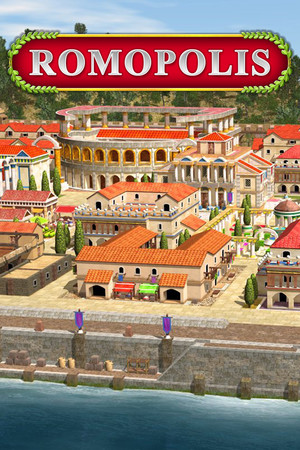
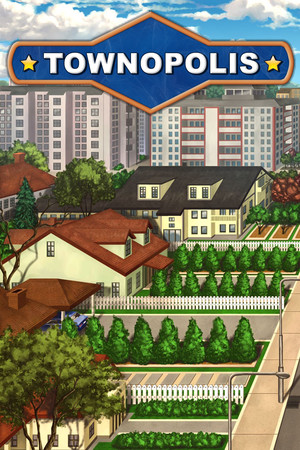
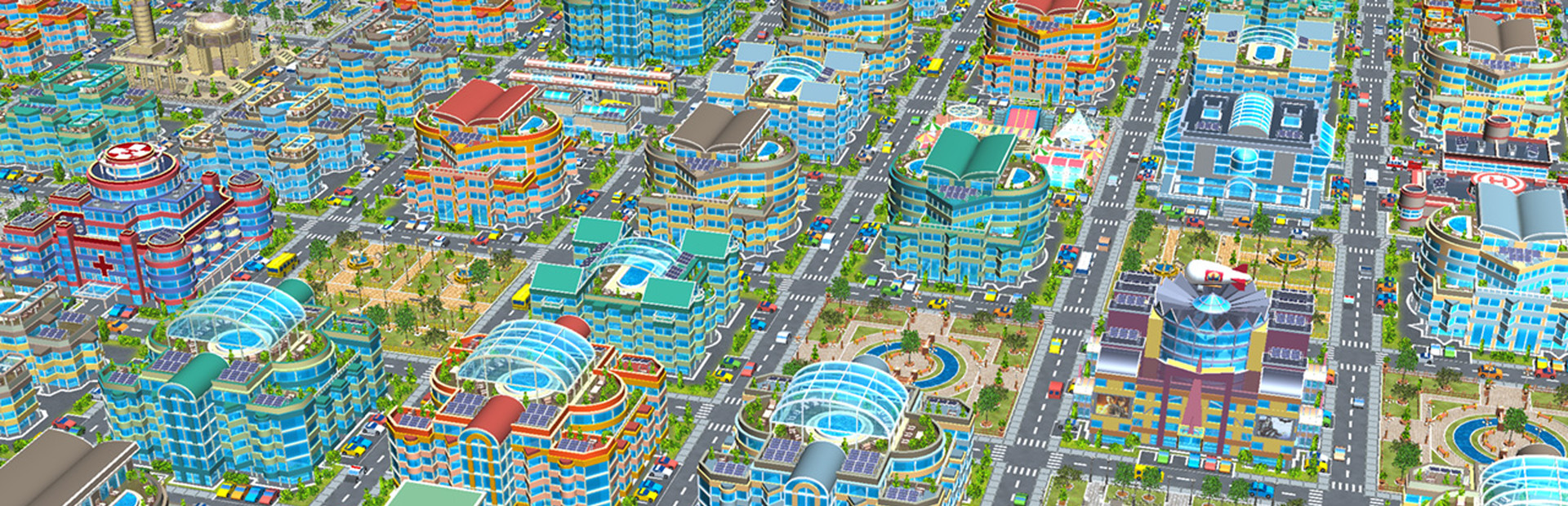
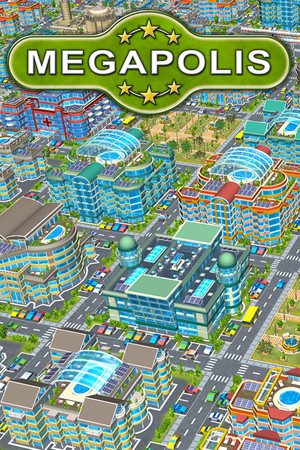
I put my spreadsheet brain away for this one. Megapolis is not a grand-strategy city sim. It's the third entry in Lonely Troops' Townopolis-Romopolis-Megapolis lineage, and it plays closer to a Build-A-Lot-style time management puzzler than anything resembling Cities: Skylines. Stages drop you onto a compact isometric grid, pre-populated with ageing apartment blocks that generate a trickle of starting income. Your job is to tear things down, build up, balance resident happiness, and hit a set of primary and secondary objectives before the clock runs out. A pause button and an optional no-timer mode exist for players who want to approach it more casually, which is a sensible concession. The core redevelopment hook is where Megapolis earns its modest reputation over its predecessors. Rather than planting towns from bare dirt, you're working with an existing economy from turn one, which keeps the early minutes from feeling empty. Electricity shows up as a secondary resource: power your blocks and they stay maintained; let supply slip and upkeep costs climb. The problem is that the balance is shaky. The power plant unlocks too late to matter much, and once apartment income reaches mid-game levels, electricity management mostly becomes irrelevant noise. Building size creates a similar imbalance: small structures earn almost nothing while larger ones generate more than you can realistically spend, so the optimal play pattern becomes obvious fairly quickly and rarely changes across the game's 24 campaign scenarios. The custom scenario editor gives the game a second wind, but the grid never expands beyond the same compact footprint used in the campaign, which puts a hard ceiling on creative ambition. Players hoping to sculpt a sprawling skyline will hit that wall fast and feel the sting of repetition. The isometric visuals are clean and readable, with moving cars and construction animations that give the city a believable pulse, but they're not doing extra work to disguise how formulaic the scenario structure gets by the midpoint. There is no mod ecosystem to speak of, no AI opponent to challenge, and no late-game complexity curve to reward mastery. For the audience this targets, that isn't necessarily a dealbreaker. If you want a low-friction 90-minute session game, something to wind down with between heavier titles, Megapolis delivers exactly that. The mechanics are stable, the UI is clean, and 22 Steam achievements give completionists a light checklist to chase. Just calibrate your expectations: this is a palate cleanser, not a main course. Anyone coming in expecting the depth of a proper city builder will bounce off the limited grid and shallow resource loop before the second hour.

Strategy & simulation
Tags
System Requirements
Minimum
- OS
- Windows 10
- Memory
- 1 GB RAM
- DirectX
- Version 11
- Storage
- 200 MB available space
- Graphics
- DirectX 10.0 compatible
- Processor
- x86-64 compatible
Recommended
- OS
- Windows 11
- Graphics
- DirectX 11.0 compatible
Keep exploring
Community Discussion
Be the first to comment on Megapolis.
Reviews & Ratings
Game Info
- Developer
- Lonely Troops
- Publisher
- Lonely Troops
- Release Date
- Jun 15, 2016