Max: The Curse of Brotherhood
Deceptively charming and occasionally maddening, this puzzle-platformer from Press Play does one thing really well: a magic marker that rewires how you think about every obstacle on screen.
GamerScout Verdict
Best for patient puzzle fans who can tolerate imprecise action sequences in exchange for clever environmental problem-solving.
Compare Prices(5 stores)
No offers for PC right now.
Every store in this table quotes us in euros, so the EUR figure is the price the seller actually set, not our arithmetic — which is why EUR is also the currency we rank in. We only list an offer here when the store gives us its price in euros, so nothing in this table is a number we invented.
Pick USD, PLN, GBP, CAD or AUD in the header and we convert from EUR at the European Central Bank reference rate — converted amounts are prefixed with ~. Your bank or the store may apply a different rate at checkout. We never hide offers based on where you are: everyone sees this whole table.
We may earn a commission when you buy games through links on this page — at no extra cost to you. It never affects our rankings or verdicts.
Price History
Screenshots & Media
About Max: The Curse of Brotherhood
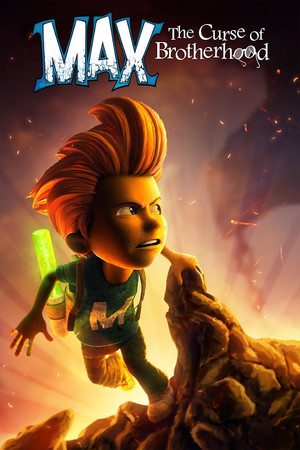
My first impression was that this looked like a Saturday morning cartoon somebody accidentally turned into a game, and honestly that first impression holds up. Press Play built a 2.5D physics-based puzzle-platformer across 7 chapters and 20 connected levels that flow together like one continuous run through a hostile fantasy world, and the whole thing wears a Pixar-grade visual coat that genuinely earns the comparison. Environments shift from lush forests to lava caves to eerie lantern-lit bogs, and a cinematic camera that zooms out to dwarf Max against massive backdrops gives the game a sense of scale that punches well above its budget. The central hook is the magic marker, and whether this game clicks for you will depend almost entirely on how you feel about it. You hold a trigger to summon it, then use an analog stick to target glowing interaction points on the environment, drawing earth columns to lift yourself, branches and vines to swing from, water geysers to ride, and eventually fireballs to dispatch enemies. The marker gains new powers progressively, and the late-game puzzles chain all of them together in ways that feel genuinely satisfying when they snap into place. Figuring out that vines can attach to rocks and move them, not just serve as ladders, is the kind of quiet eureka moment the game lives for. The puzzle design is the strongest thing here, full stop. The friction is real, though. Controlling the marker via analog stick is an inherently imprecise business, and that imprecision bites hardest during the action sequences where a monster is bearing down on you and you need to draw something fast. The platforming itself has a slightly floaty feel that divides people sharply, some find it imprecise, others adjust within an hour. The story is thin enough that you could summarize it in two sentences and lose nothing, and the game is short, roughly six to eight hours depending on how hard the puzzles humble you. Collectibles and achievements add mild replay incentive, but there is no second playthrough hook beyond completion. Who is this for? Players who enjoy quiet, methodical puzzle-platformers with a light difficulty curve and a visually rich world will get the most out of it. Parents looking for something approachable for older kids should know the monster-chase sequences have genuine tension and the puzzles do not hold your hand, so younger players may need a co-pilot. Anyone who bounced off the marker controls early should stick with it into the second chapter, because the early game undersells how inventive things get. If analog-stick precision puzzles under pressure sound like your specific nightmare, that frustration is real and documented, so go in knowing.

Catch-all
Tags
System Requirements
Minimum
- OS
- Windows XP SP3 or newer
- Memory
- 2 GB RAM
- DirectX
- Version 9.0c
- Storage
- 2 GB available space
- Graphics
- Intel HD 4000 or better
- Processor
- Dual-Core 1.6 ghz / AMD Dual-Core Athlon 2.0ghz
- Sound Card
- DirectX(r) compatible
Recommended
- OS
- Windows 7 or newer
- Memory
- 4 GB RAM
- DirectX
- Version 9.0c
- Storage
- 2 GB available space
- Graphics
- GeForce GT 640 / Radeon HD 6750
- Processor
- Intel Core i3, 1.7ghz or faster
- Sound Card
- DirectX(r) compatible
Keep exploring
Community Discussion
Be the first to comment on Max: The Curse of Brotherhood.
Reviews & Ratings
Game Info
- Developer
- Press Play
- Publisher
- Xbox Game Studios
- Release Date
- May 21, 2014