Kalimba
Controlling two totem pieces with one analog stick sounds cute until the game starts hurling color-coded barriers, gravity flips, and spirit cannons at you simultaneously. Tighter than it looks, meaner than it admits.
GamerScout Verdict
Best for solo players who want a precision platformer with teeth, and couch co-op pairs who trust each other under pressure.
Compare Prices(3 stores)
Every store in this table quotes us in euros, so the EUR figure is the price the seller actually set, not our arithmetic — which is why EUR is also the currency we rank in. We only list an offer here when the store gives us its price in euros, so nothing in this table is a number we invented.
Pick USD, PLN, GBP, CAD or AUD in the header and we convert from EUR at the European Central Bank reference rate — converted amounts are prefixed with ~. Your bank or the store may apply a different rate at checkout. We never hide offers based on where you are: everyone sees this whole table.
We may earn a commission when you buy games through links on this page — at no extra cost to you. It never affects our rankings or verdicts.
Price History
Screenshots & Media
About Kalimba
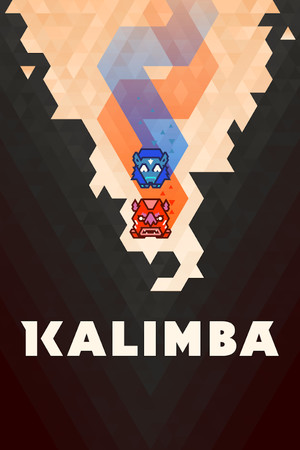
I went in expecting a breezy Xbox indie filler and got a puzzle-platformer that had me audibly swearing at my own thumbs. The core hook is deceptively simple: you pilot two totem characters at once using a single analog stick, and both move in tandem with every input. What sounds manageable for about thirty seconds becomes genuinely taxing the moment the game starts splitting your screen space, introducing color-coded barriers that only the matching totem can pass through, and then throwing gravity inversion on top of that. Press Play layers these mechanics fast, rarely letting a single idea sit for longer than a stage before the next wrinkle arrives. The moment-to-moment feel is tight. Controls are responsive and the 60fps target holds, which matters here because a lot of the challenge is pure twitch timing rather than puzzle logic. Stacking your two totems to chain double and quadruple jumps, swapping their vertical positions mid-air to squeeze through narrow color gates, or using "spirit cannons" to blast one totem across a gap while keeping the other alive on a shrinking platform - these mechanics interact cleanly and the game communicates them without drowning you in tutorials. Hoebear, your sardonic bear guide, gives you the barest minimum of explanation and then leaves you to it, which is the right call. The eureka moments when a section finally clicks land harder because of it. Checkpointing is mostly fair, though a few placements will make you grind your teeth. Replay structure is worth knowing before you buy. Each of the main levels hides up to 70 collectibles, and your death count directly degrades the quality of the totem piece you restore at the end - gold totem for a clean run, a sad block of wood if you died forty times. That scoring loop gives completionists a real reason to replay. Bonus challenge rooms scattered through the levels function like hidden expert stages, closer in spirit to Super Meat Boy's dark worlds than anything casual. A free post-launch update added Llama Mode, a local speed-run mode for up to six players taking turns, and Puma Mode, which lets you race asynchronously against ghost data from other players across 30 additional levels. That's a solid content stack for the base price. The co-op campaign is a separate set of levels, not a reskin of singleplayer, which is the right design decision. Each player manages a pair of stacked totems in their own color, and some of the later stages demand four totem pieces coordinated across the same screen simultaneously. This will either be the funniest evening you've had on a couch this year or a genuine test of whoever you brought with you. A Steam reviewer puts it plainly: the con column contains only "you will scream at your friends." The co-op content is relatively short - the base campaign plus the Co-Optimistic DLC can be cleared in a few hours - so if couch co-op is your only reason to buy, temper expectations on runtime. Solo, the game is longer and the satisfaction curve is more consistent. Where Kalimba shows its age is difficulty pacing. The early sections are almost too gentle, and some mid-game spikes feel arbitrary rather than designed. The art direction is vibrant in motion - the trixel particle style (everything built from triangles) pops when hazards are flying - but in static screenshots it reads as generic. The soundtrack is competent, not memorable. These are minor gripes against a game that earns its 81 on Metacritic and its 90% positive Steam rating. For anyone who wants a precision platformer that respects your time while still punishing your errors, this is a sharper package than most of what fills that genre shelf.

Shooters
Tags
System Requirements
Minimum
- OS
- Windows 7 or newer
- Memory
- 4 GB RAM
- DirectX
- Version 11
- Storage
- 2 GB available space
- Graphics
- Intel HD5100 (Iris) / GeForce GT630 or better
- Processor
- 2 GHZ, dual core
Recommended
- OS
- Windows 7 or newer
- Memory
- 4 GB RAM
- DirectX
- Version 11
- Storage
- 2 GB available space
- Graphics
- GeForce GT 640 / Radeon HD7750 or better
- Processor
- 2 GHZ, dual core
Keep exploring
Community Discussion
Be the first to comment on Kalimba.
Reviews & Ratings
Game Info
- Developer
- Press Play
- Publisher
- Xbox Game Studios
- Release Date
- Apr 22, 2015