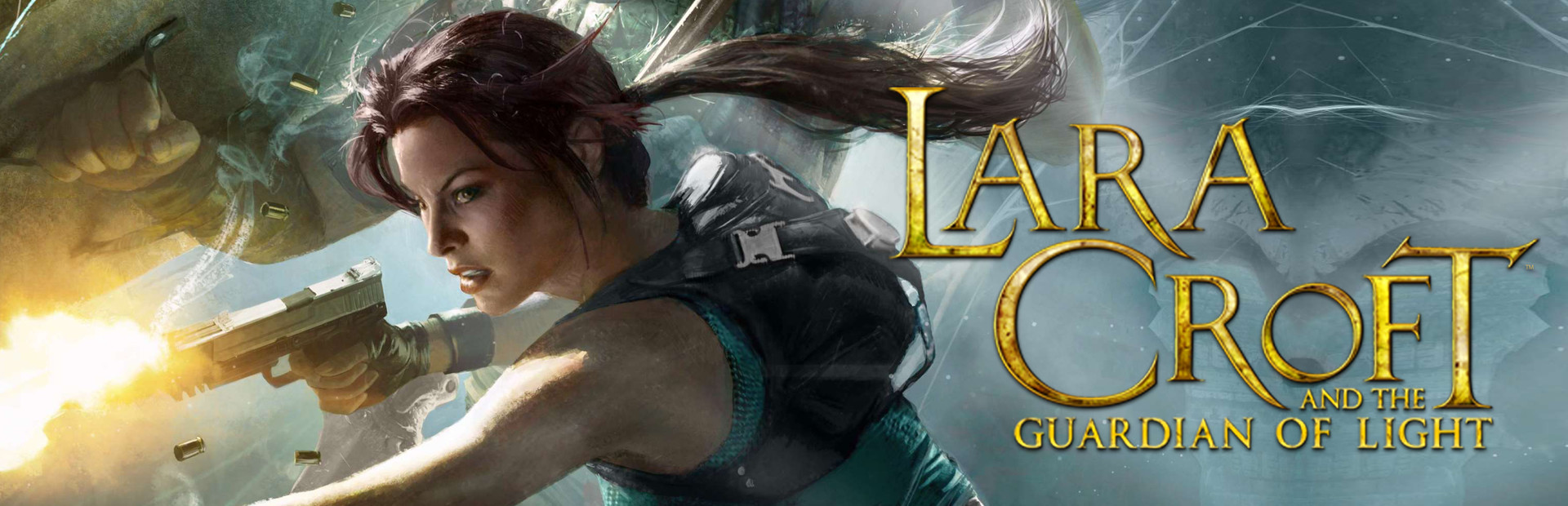
Lara Croft and the Guardian of Light
Crystal Dynamics stripped out the third-person camera and the cinematic baggage, handed Lara twin pistols and a grappling hook, and built one of the sharpest isometric co-op shooters of its era.
GamerScout Verdict
Best for co-op duos who want a lean, puzzle-laced shooter with genuine mechanical asymmetry between its two characters.
Compare Prices(5 stores)
Every store in this table quotes us in euros, so the EUR figure is the price the seller actually set, not our arithmetic — which is why EUR is also the currency we rank in. We only list an offer here when the store gives us its price in euros, so nothing in this table is a number we invented.
Pick USD, PLN, GBP, CAD or AUD in the header and we convert from EUR at the European Central Bank reference rate — converted amounts are prefixed with ~. Your bank or the store may apply a different rate at checkout. We never hide offers based on where you are: everyone sees this whole table.
We may earn a commission when you buy games through links on this page — at no extra cost to you. It never affects our rankings or verdicts.
Price History
Screenshots & Media
About Lara Croft and the Guardian of Light
I came into this expecting a budget spin-off used to fill a release gap. What I got was a tight, isometric twin-stick shooter that quietly outclasses several of the mainline Tomb Raider entries it ran alongside. Crystal Dynamics pulled the camera overhead, locked it in place, and forced the design to live or die on its mechanics rather than spectacle. Mostly, it lives. The core loop is Lara moving through Mayan ruins and jungle levels, carrying up to four weapons with the twin-stick layout you already know. Her default dual pistols have infinite ammo, secondary weapons burn from a pickup-fed meter, and the grappling hook doubles as both a traversal tool and a literal tightrope for your co-op partner Totec to cross. Totec himself throws spears that can be embedded in walls to create climbing ledges. Each level layers score challenges, speed challenges, hidden symbols, and optional challenge tombs on top of the critical path, so the first clear is rarely the last visit. The boss fights use environmental problem-solving rather than raw damage output, which is a welcome change of pace. Solo works fine. The AI does not follow you around babysitting you, it just absent. Lara takes on Totec's utility functions herself, meaning she borrows the spears and loses her pistols in those sections, which is a mild annoyance. The game's real identity kicks in with a second player, either local co-op on the same machine or via online private and public lobbies. When you have a partner, puzzle layouts actually change to use both characters' abilities in tandem. That asymmetry is genuinely clever design, not a checkbox feature. The online implementation is workable, though Steam community reports flag the public lobby system as unreliable for finding strangers at this point in the game's life, so bring a friend rather than relying on matchmaking. The combat sits somewhere between casual and satisfying. Weapon balance is functional: you will default to one fast weapon for trash enemies and one harder-hitting option for tougher targets. Enemy variety is limited, and the twin-stick shooting lacks the mechanical depth of something built specifically around gunplay. If you came here for a shooter to practice micro-adjustments on, wrong address. The fixed isometric camera can occasionally obscure Lara in tight indoor sections, a minor but recurring frustration. Visually the game shows its 2010 production date clearly, though the Mayan environment art holds up better than the character models. The full campaign runs six to eight hours depending on co-op coordination, longer if you chase all the challenges and relic rewards. At its age and typical sale price this is compact but not padded. The sequel, Lara Croft and the Temple of Osiris, expanded the formula to four players if you want more after this.

Shooters
Tags
System Requirements
Minimum
- Processor
- 3+ GHz Intel or 2.5+ GHZ AMD
- Memory
- 1 GB RAM (XP) / 2 GB RAM (Vista)
- Graphics
- NVIDIA GeForce 6 Series (6800GT or better) / ATI 1300XT or better Hard Drive: 7GB Sound: DirectX 9.0c com…
Keep exploring
Community Discussion
Be the first to comment on Lara Croft and the Guardian of Light.
Reviews & Ratings
Game Info
- Developer
- Crystal Dynamics
- Publisher
- Crystal Dynamics
- Release Date
- Sep 28, 2010