
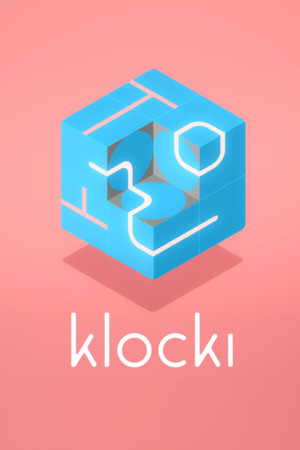
klocki
Maciej Targoni built a puzzle game so stripped back it skips the title screen entirely and just begins. If that sounds like your kind of confidence, klocki will earn an hour or two of your full attention.
GamerScout Verdict
Worth it for puzzle fans who want a calm, handcrafted hour or two with no friction and no filler.
Compare Prices(4 stores)
Every store in this table quotes us in euros, so the EUR figure is the price the seller actually set, not our arithmetic — which is why EUR is also the currency we rank in. We only list an offer here when the store gives us its price in euros, so nothing in this table is a number we invented.
Pick USD, PLN, GBP, CAD or AUD in the header and we convert from EUR at the European Central Bank reference rate — converted amounts are prefixed with ~. Your bank or the store may apply a different rate at checkout. We never hide offers based on where you are: everyone sees this whole table.
We may earn a commission when you buy games through links on this page — at no extra cost to you. It never affects our rankings or verdicts.
Price History
Screenshots & Media
About klocki
I have a soft spot for one-person projects that say everything through design and nothing through words, and klocki is about as pure an example of that philosophy as I have encountered on PC. There is no title screen, no tutorial text, no menu to speak of. You are dropped straight into the first puzzle, a pair of tiles with broken lines on them, and the game trusts you to figure out that clicking one and then another swaps their positions. When the lines connect, a small gong sounds and you move on. That is the whole contract, stated without a single word of English. The roughly 80 levels across the game are a slow, deliberate unfolding. The early stages introduce swapping tiles to complete line circuits, which is gentle to the point of feeling almost decorative. Then Targoni quietly adds rotating discs, sliding blocks, domino-style dot tiles that must not touch each other orthogonally, 3D perspective puzzles where the grid itself gains depth, and eventually multi-mechanic combinations that ask you to hold several rule sets in your head at once. The escalation is patient and well-judged. Each new mechanic gets its own introductory run of puzzles before it is folded into something harder, so you are never blindsided, only gradually challenged. The difficulty only meaningfully sharpens in the final third, which is worth knowing if you are hoping for a sustained brain workout throughout. The audio is the other half of the experience, and it carries real weight. The soundtrack by Wojciech Wasiak sits somewhere between ambient and meditative, never calling attention to itself but absolutely present. It is the kind of music that makes a Tuesday afternoon feel slower in the best way. Paired with the clean pastel palette and distraction-free backgrounds, klocki creates a very specific mood: focused calm, the feeling of having briefly opted out of noise. There are no points, no timers, no leaderboards, no ratings. Nothing interrupts the loop of look, solve, gong, continue. The honest caveats are small but real. The total runtime sits under two hours for most players, and replay value is essentially zero once the puzzles are solved. The interface is barebones to a fault: no level numbering, no resolution options surfaced at launch (hold Shift on startup to access a settings dialog), and completing the final puzzle loops you silently back to level one, which briefly makes you wonder if something broke. A proper end screen or even a subtle visual cue would cost nothing and mean a lot. Players who came from Targoni's earlier game Hook hoping for a harder experience will find klocki more mechanically varied but not dramatically more demanding overall. For what it is, though, klocki knows exactly when to end and exactly how much to say. In a landscape crowded with puzzle games that pad runtime with repetition, a game that delivers 80 well-crafted stages and then quietly steps aside feels like good manners. This is the kind of small, handcrafted thing I want to exist on Steam.

Indie & narrative
Tags
System Requirements
Minimum
- OS
- Windows XP/Vista/7/8
- Memory
- 2 GB RAM
- Storage
- 100 MB available space
- Graphics
- Graphics card supporting DirectX 9.0c
- Processor
- 2 Ghz Dual Core
- Sound Card
- Any
Keep exploring
Community Discussion
Be the first to comment on klocki.
Reviews & Ratings
No ratings available
Game Info
- Developer
- Maciej Targoni
- Publisher
- Maciej Targoni
- Release Date
- Jul 13, 2016