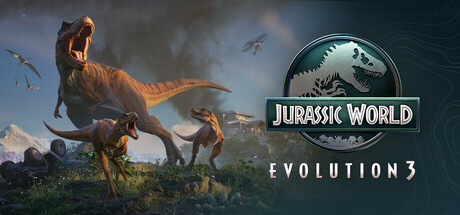
Jurassic World Evolution 3
Frontier finally hands you the full toolset: breeding programs, gender dimorphism, juvenile enclosure management, and terraforming that actually bites back. The best park-builder in the series, with the UI debt to prove it.
GamerScout Verdict
Best for management sim fans ready to track fertility ratings and faction politics across a globe-spanning dinosaur conservation network.
Compare Prices(10 stores)
Every store in this table quotes us in euros, so the EUR figure is the price the seller actually set, not our arithmetic — which is why EUR is also the currency we rank in. We only list an offer here when the store gives us its price in euros, so nothing in this table is a number we invented.
Pick USD, PLN, GBP, CAD or AUD in the header and we convert from EUR at the European Central Bank reference rate — converted amounts are prefixed with ~. Your bank or the store may apply a different rate at checkout. We never hide offers based on where you are: everyone sees this whole table.
We may earn a commission when you buy games through links on this page — at no extra cost to you. It never affects our rankings or verdicts.
Price History
Screenshots & Media
About Jurassic World Evolution 3
I have a colour-coded spreadsheet tracking every management sim Frontier has shipped, and I will tell you plainly that JWE3 lands closer to the top than any previous entry in this series. The headline feature is natural breeding: pair a male and female of the same species, place a compatible nest inside their territory, satisfy comfort ratings across environmental and social need categories, and eventually an egg appears. Juveniles that hatch inherit behavioural and cosmetic traits from both parents, and those traits can recede for a generation before resurfacing later, which means your paddock's lineage actually compounds in interesting ways over time. That is a system with genuine depth, not a cosmetic checkbox. The three-mode structure of Campaign, Challenge, and Sandbox covers the full skill spectrum sensibly. The Campaign runs across 10 distinct global locations, including Indonesia, Japan, and Hawaii, and tasks you with managing the Dinosaur Integration Network while balancing three competing factions: conservation, entertainment, and security. Each faction pulls your park in a different direction, and choosing whose demands to meet has real downstream consequences for your budget and dinosaur roster. Critically, the campaign tutorial is paced well enough that the mechanics layer in before the game starts testing you hard. The Sandbox mode, meanwhile, unlocks every species without grinding, includes a procedural island generator, and lets you toggle juvenile maturity off entirely if you want permanent babies. That is the kind of newcomer-friendly configuration that stops complexity from becoming a wall. For players who want structured pressure, Challenge mode sets fixed scenarios with cosmetic rewards, which is a decent middle ground. The creative toolset has had a proper overhaul. Modular building borrows from Planet Zoo's piece-by-piece construction philosophy, giving you thousands of individual components to assemble custom structures and edit pre-existing buildings. Terraforming is now meaningfully three-dimensional: raise embankments that function as organic fences, carve trenches that fill with water, sculpt waterfalls using elevation changes. Frontier Workshop integration means the community can share blueprints across platforms, and the user-created content already available at launch is substantial. The visual upgrade to the dinosaurs themselves is real: sexual dimorphism produces distinct male and female variants, species behaviours feel more considered, and the rendering quality on the roughly 85-plus base species is the best the series has produced. The weaknesses are familiar to anyone who tracks Frontier's output. The UI is cluttered and multi-layered; finding a specific building type requires either memorising icon locations or scrolling through the full site map, which is not a great answer. Some campaign missions are slow to escalate, and veterans of JWE2 will spend early hours clicking through mechanics they already know. The AI managing your park staff is functional but not impressive, and occasional frame rate dips appear as park complexity grows, particularly near water features. There is also a legitimate critique from long-term community members about post-launch communication, which is worth tracking if you care about the DLC roadmap. For strategy-and-sim players considering the entry cost: this is not a game that demands you min-max breeding programmes from hour one. The depth is there if you want it, the sandbox respects your time if you do not, and a campaign that introduces mechanics gradually makes it approachable regardless of prior series experience. The management loop of funding fossil expeditions, expanding research at the Science Centre, balancing faction demands, and watching a paddock of Triceratops raise a calf is genuinely satisfying across many hours. The UI friction is real but learnable. The series still has room to reinvent rather than refine, but as a current-generation park builder, this is the benchmark.

Strategy & simulation
Tags
System Requirements
Minimum
- OS
- Windows 10 64bit (min version 22H2)
- Memory
- 16 GB RAM
- DirectX
- Version 12
- Storage
- 25 GB available space
- Graphics
- NVIDIA GeForce GTX 1060 (6GB VRAM) / AMD Radeon RX 5600XT (6GB VRAM) / Intel Arc A750 (8GB VRAM)
- Processor
- Intel i5-6600K / AMD Ryzen 5 2600
Recommended
- OS
- Windows 10, 11
- Memory
- 16 GB RAM
- DirectX
- Version 12
- Storage
- 25 GB available space
- Graphics
- NVIDIA GeForce RTX 2070 Super (8GB VRAM) / AMD Radeon RX 6700 XT (12GB VRAM) / Intel Arc B580 (12GB VRAM)
- Processor
- Intel i7-10700K / AMD Ryzen 7 5800
DLC & Add-ons for Jurassic World Evolution 31
Expansions, DLC packs and add-on content for this game. Click any item to see store offers.
Keep exploring
Community Discussion
Be the first to comment on Jurassic World Evolution 3.
Reviews & Ratings
Game Info
- Developer
- Frontier Developments
- Publisher
- Frontier Developments
- Release Date
- Oct 21, 2025