Jackal
Hotline Miami's spiritual heir swapped the neon 80s for a sweatier, grungier 70s Vegas, and somehow the mob never stood a chance. If physics-fueled improvised carnage with an Egyptian death god riding shotgun sounds like your Thursday night, this one's for you.
GamerScout Verdict
Built for Hotline Miami veterans who want shorter, meaner runs and a Vegas-sized sense of absurdist style.
Compare Prices(3 stores)
Every store in this table quotes us in euros, so the EUR figure is the price the seller actually set, not our arithmetic — which is why EUR is also the currency we rank in. We only list an offer here when the store gives us its price in euros, so nothing in this table is a number we invented.
Pick USD, PLN, GBP, CAD or AUD in the header and we convert from EUR at the European Central Bank reference rate — converted amounts are prefixed with ~. Your bank or the store may apply a different rate at checkout. We never hide offers based on where you are: everyone sees this whole table.
We may earn a commission when you buy games through links on this page — at no extra cost to you. It never affects our rankings or verdicts.
Price History
Screenshots & Media
About Jackal
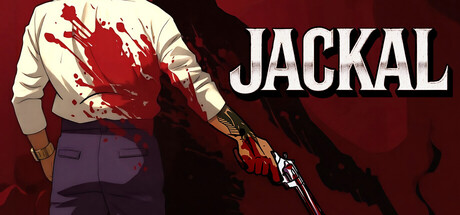
I put a few hours into Jackal expecting another competent Hotline Miami tribute act and came out the other side genuinely unsettled by how good it feels. Michał Marcinkowski, the Soldat and Maniac creator, has spent decades refining this exact design instinct: fast, lethal, physics-first combat where the room itself is the weapon. In Jackal, that instinct reaches something close to its purest form. The setting is 1970s Las Vegas, all nicotine yellows and casino neons, and you are a drug-enhanced hitman being whispered at by Anubis, the Egyptian god of death, in a purple suit. The story is deliberately unhinged, swinging between noir voiceover and psychedelic hallucination, and it works precisely because Marcinkowski never asks you to take it seriously. The combat is where this game lives or dies, and it largely lives. One bullet kills you; most enemies go down in one hit too, except for the heavier types who soak more punishment in later levels. Reloading your firearm slows you to a crawl, which is the game's elegant way of saying: put the gun down and get creative. Ashtrays, pool cues, knives, chairs, telephones, and shotguns grabbed mid-air from stunned goons all become instruments of very loud problem-solving. Knocking someone down, snatching their weapon from the air, shooting a second enemy, then bouncing the gun off the first guy's face to finish him with an execution move, all inside five seconds, is exactly the kind of unscripted cinema this game generates constantly. Anubis also supplies supernatural abilities that slot into this loop beautifully: a time-stop power that only moves when you move, teleportation to a visible point on the map, and enemy-blinding spells, each limited to one use per mission, so deploying them becomes its own small puzzle. The procedurally generated rooms and stackable mutators are the answer to the inevitable runtime question. The main campaign runs somewhere between two and four hours depending on how many times the game sends you back to the beginning of a room. That is a short trip, and some players will feel the sting of it. But the architecture is built for repetition: random enemy placements mean memorized routes are useless, unlockable dual pistols and modified execution rules shift the feel between runs, and a speedrun mode exists for the crowd who wants to be judged by a god on their efficiency. The community complaint worth flagging is a specific one: some levels clear static enemies only to flood the room with aware gunmen who know exactly where you are, which can tip from tense into tedious. It is the one moment where the design's confidence wobbles. Audiovisually, Jackal earns its place. Chunky, expressive character caricatures move across environments stuffed with period detail: shag carpets, rotary phones, gaudy slot machines. The soundtrack, composed separately and already generating its own fervent following, layers sleazy funk against paranoid synths in a way that makes every raid feel like a deleted Tarantino scene. The noir voiceover from Matthew Curtis is dry and committed. It is a small, handcrafted game that knows exactly what it wants to be, and has the restraint to stop before it overstays its welcome. For a game this violent, that restraint is the most surprising thing about it.

Indie & narrative
Tags
System Requirements
Minimum
- OS
- Windows 7 (SP1+)
- Memory
- 1 GB RAM
- DirectX
- Version 10
- Storage
- 200 MB available space
- Graphics
- DX10, DX11, and DX12-capable GPUs
- Processor
- X64 architecture with SSE2 instruction set support
Recommended
Requires a 64-bit processor and operating system
Keep exploring
Community Discussion
Be the first to comment on Jackal.
Reviews & Ratings
No ratings available
Game Info
- Developer
- Transhuman Design
- Publisher
- Transhuman Design
- Release Date
- Feb 5, 2026