
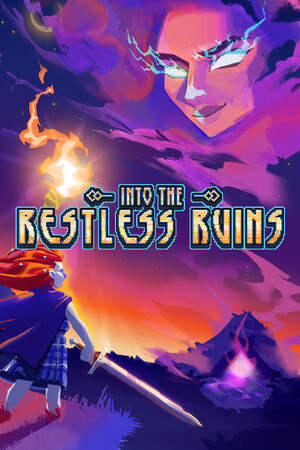
Into the Restless Ruins
If your card-game instincts run toward spatial planning rather than combat math, this Scottish folklore roguelite may be the most original thing in the genre right now - and it earns that claim.
GamerScout Verdict
Ideal for strategy players who want to think like an architect first and a fighter second, thin combat aside.
Compare Prices(4 stores)
Every store in this table quotes us in euros, so the EUR figure is the price the seller actually set, not our arithmetic — which is why EUR is also the currency we rank in. We only list an offer here when the store gives us its price in euros, so nothing in this table is a number we invented.
Pick USD, PLN, GBP, CAD or AUD in the header and we convert from EUR at the European Central Bank reference rate — converted amounts are prefixed with ~. Your bank or the store may apply a different rate at checkout. We never hide offers based on where you are: everyone sees this whole table.
We may earn a commission when you buy games through links on this page — at no extra cost to you. It never affects our rankings or verdicts.
Price History
Screenshots & Media
About Into the Restless Ruins
My spreadsheet brain lit up the moment I understood what Into the Restless Ruins is actually asking of you. The cards in your deck are not spells or abilities - they are literal rooms and corridors, physical tiles you slot together on a grid before you ever set foot inside the dungeon. That two-phase structure, architect first then survivor second, is the idea that makes almost every other deckbuilder feel ordinary by comparison. You spend your limited Build Points placing rooms that can contain training grounds, armouries, campfires, and libraries, each with spatial entry points that must actually connect to adjacent tiles. Then the camera zooms in and you are inside the maze you just designed, torch burning down, 62 varieties of creature closing in, your character auto-attacking in a style closer to Vampire Survivors than Slay the Spire. The strategic layer is where the depth sits, and it is real. Every placement decision carries downstream consequences: a short direct path to the Warden conserves torchlight but starves you of stat bonuses and seal locations locked behind fog-shrouded side rooms. A sprawling labyrinth nets more Glimour for levelling up and lets you pick bow plus sword loadouts from weapon-swap rooms, but you will run out of torch before you find every seal. Room shapes are not all rectangles - curved corridors, multi-exit junctions, and oddly angled tiles create a genuine spatial puzzle each turn, and learning which combinations chain into useful synergies is the game's core skill loop across its six ruins. The content numbers are not trivial either: 116 cards, 40 Charms, 38 Cantrips as difficulty and modifier toggles, 12 weapons, and six boss encounters rooted in Scottish folklore, from Am Fear Liath Mor, the Grey Man of the Cairngorms, upward. Cantrips deserve specific mention - they function as opt-in difficulty modifiers that scale score multipliers, so replaying an earlier ruin at harder settings is a legitimate progression path rather than a chore. The honest criticisms are consistent across press coverage and player feedback. Combat is the weaker pillar. Auto-attacking works fine, and positioning to strafe between enemy clusters carries some Vampire Survivors DNA, but boss encounters are essentially scaled-up versions of regular enemies rather than mechanical departures. The weapon pool of 12 options and a stat system built around attack speed and crit damage is functional but thin - there is no character build variety to theorise over between runs the way a deeper action-RPG would offer. Visibility when torchlight drops is a genuine pressure mechanic that some players find atmospheric and others find punishing to the point of friction; there is no minimap, which is either a feature or a flaw depending on your tolerance for spatial memory challenges. Run length, with each of the six stages taking roughly an hour, means a full clear is achievable in a single long session, and the shorter overall scope has been flagged as a longevity concern by multiple reviewers. For newcomers to the genre, the structure is actually friendlier than it first appears. There is no hard permadeath: dying to enemies or darkness adds to a curse meter rather than resetting everything, which lets players learn the dungeon-building fundamentals without the full roguelike tax of losing an hour of progress. The six ruins unlock sequentially, so the difficulty ramp is controlled and tutorial-adjacent early on. Cantrips can be configured to make runs easier, not just harder, which means the difficulty dial genuinely has a low end. A free demo on Steam lets you test the first ruin risk-free before committing. The Steam user base currently sits at around 83 percent positive across early reviews, and critical reception has been uniformly warm, with most outlets landing in the eight-to-nine-out-of-ten range for the dungeon-crafting concept specifically. If you can accept that the combat half is a means to an end rather than a draw in itself, the architectural puzzle half is original enough to carry the whole package.

Strategy & simulation
Tags
System Requirements
Minimum
- OS
- Windows 10
- Memory
- 400 MB RAM
- Storage
- 400 MB available space
- Graphics
- NVIDIA GeForce 940MX
- Processor
- Intel(R) Core(TM) i7-8569U CPU @ 2.80GHz
Recommended
- OS
- Windows 10
- Memory
- 400 MB RAM
- Storage
- 400 MB available space
- Graphics
- NVIDIA GeForce 2070
- Processor
- Intel(R) Core(TM) i9-9900 @ 3.60GHz
Keep exploring
Community Discussion
Be the first to comment on Into the Restless Ruins.
Reviews & Ratings
No ratings available
Game Info
- Developer
- Ant Workshop Ltd
- Publisher
- Wales Interactive
- Release Date
- May 15, 2025