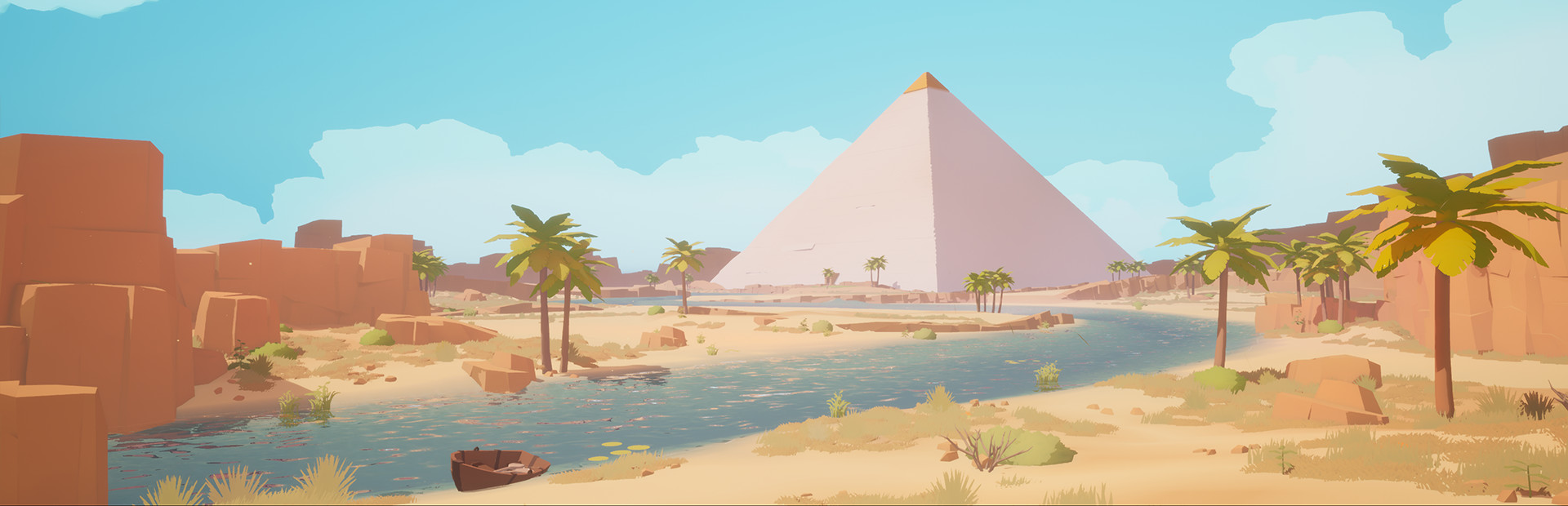

Hourglass
A compact first-person puzzle that tasks you with co-operating with a ghost of your own past actions - quiet, clever, and over before it overstays its welcome.
GamerScout Verdict
Best for puzzle fans who want one elegant mechanic explored fully in a focused, atmosphere-rich three-to-four hour session.
Compare Prices(9 stores)
Every store in this table quotes us in euros, so the EUR figure is the price the seller actually set, not our arithmetic — which is why EUR is also the currency we rank in. We only list an offer here when the store gives us its price in euros, so nothing in this table is a number we invented.
Pick USD, PLN, GBP, CAD or AUD in the header and we convert from EUR at the European Central Bank reference rate — converted amounts are prefixed with ~. Your bank or the store may apply a different rate at checkout. We never hide offers based on where you are: everyone sees this whole table.
We may earn a commission when you buy games through links on this page — at no extra cost to you. It never affects our rankings or verdicts.
Price History
Screenshots & Media
About Hourglass
I keep a soft spot for games that build their entire identity around one mechanical idea and refuse to flinch from it. Hourglass is exactly that kind of game. Cyberwave gave themselves a single question - what if you could record a loop of your own movement, rewind to the start, and then work alongside the spectral replay of yourself to solve environmental puzzles - and then built a first-person adventure around answering it as completely as a small team could. The time-clone mechanic is the game. You activate a recording, perform a sequence of actions (pressing a switch, pushing a block, holding a lever), and when your recording window closes, time snaps back and a translucent blue figure runs through your exact movements on a loop while you, the real Aywa, do something else entirely. The satisfaction of syncing your live actions with your ghostly past self, watching a door open precisely because two versions of you are standing on two pressure plates at once, is genuinely gratifying. Puzzles escalate in creative ways, asking you to think about timing and spatial positioning simultaneously. Critics have noted it sits somewhere between Portal and Superliminal in spirit - less language-driven than either, more purely geometric in how it uses space. The Egyptian setting gives the game a particular atmosphere: warm sandy stonework, portals opening into geometry that ancient architecture has no business containing, an ambient soundtrack that earns its keep. The music is one of the quieter surprises - it settles into the environment rather than performing over it. The cell-shaded visuals have a stylised cleanliness that makes the puzzle geometry readable, which matters enormously in a game where visual clarity is half the design. The time-clone itself appears as a crisp spectral figure; minor animation quirks in how it handles objects exist but never break the logic of any given puzzle. Honesty about scope: this runs three to four hours depending on how long you sit with harder rooms. The story - archaeologist father, missing, Egypt, mystery - is a frame rather than a focus, and reviewers have been consistent that narrative is not where Hourglass earns its reputation. If you arrive expecting a story-driven adventure, you may feel the premise is underwritten. If you arrive expecting a focused puzzle box with a distinctive mechanic and a sense of place, the runtime feels exactly right. Steam players have been warm on it, with the community response sitting solidly in positive territory. Some technical hiccups have been flagged by a small number of players, particularly around the demo build, though these do not appear to affect the core game experience for most. Hourglass is the kind of small, intentional release that asks one good question and answers it well. Puzzle fans who value mechanical elegance over production scale will find it worth the afternoon.

Indie & narrative
Tags
System Requirements
Minimum
- OS
- Windows 7, Windows 8 or Windows 10
- Memory
- 8 GB RAM
- Storage
- 3 GB available space
- Graphics
- DirectX 10 Feature Level AMD or NVIDIA Card with 1 GB VRAM
- Processor
- Intel or AMD Dual Core CPU
- Sound Card
- TBD
Keep exploring
Community Discussion
Be the first to comment on Hourglass.
Reviews & Ratings
No ratings available
Game Info
- Developer
- Cyberwave
- Publisher
- Cyberwave
- Release Date
- Oct 22, 2021