Hotel Architect
Closer to a logistics puzzle than a decoration toy, Hotel Architect will quietly destroy you the moment you place your casino next to your guest rooms without a noise buffer.
GamerScout Verdict
Solid management sim for players who enjoy optimizing interconnected systems; too opaque in places for casual tycoon fans.
Compare Prices(8 stores)
Every store in this table quotes us in euros, so the EUR figure is the price the seller actually set, not our arithmetic — which is why EUR is also the currency we rank in. We only list an offer here when the store gives us its price in euros, so nothing in this table is a number we invented.
Pick USD, PLN, GBP, CAD or AUD in the header and we convert from EUR at the European Central Bank reference rate — converted amounts are prefixed with ~. Your bank or the store may apply a different rate at checkout. We never hide offers based on where you are: everyone sees this whole table.
We may earn a commission when you buy games through links on this page — at no extra cost to you. It never affects our rankings or verdicts.
Price History
Screenshots & Media
About Hotel Architect
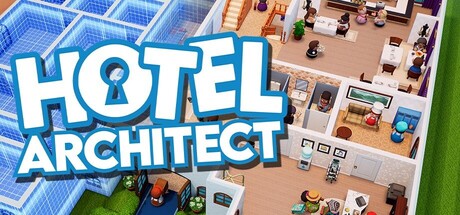
I went in expecting a light tycoon where you drag furniture around and watch money tick up. What I got instead was a supply-chain simulation wearing a hotel uniform. The core loop in Hotel Architect is deceptively tight: design your layout, hire staff with fixed personalities and trainable skills, and then watch every misplaced corridor or understaffed break room cascade into a ratings disaster. The game tracks individual towels, plates, and trash bags moving through your building in real time, which means a bottleneck in your linen supply chain hits your guest satisfaction scores before you even notice the problem. For strategy players who enjoy optimizing systems under pressure, that granularity is the whole appeal. The career campaign spans eight real-world-inspired locations, from Gothenburg and Santorini through Paris and St. Anton up to New York and Las Vegas, each with its own scenario objectives and a sandbox mode that unlocks once you clear the goals. The difficulty escalates in ways that feel earned rather than arbitrary. Early Gothenburg runs are almost forgiving, small footprint, short staff paths, manageable guest counts. By the time New York arrives, elevator placement and dedicated service corridors become survival requirements rather than nice-to-haves, because every extra floor adds inefficiency to your entire workforce. Las Vegas then opens casino mechanics, complete with blackjack and roulette zones and a Croupier staff role, which introduces a serious secondary income stream but also a new noise problem if you build carelessly. The six guest tiers, Backpackers, Sporty, Sunbathers, Business travelers, Brats, and Upper Crusts, each unlock upgrade tree points when they check out, which creates a genuine incentive to diversify your clientele rather than min-max a single type. The staff system deserves a dedicated paragraph because it is doing real work here. Each employee carries fixed personality traits, some beneficial (leadership buffs nearby workers), some neutral-odd (energetic but needs extra breaks), some actively punishing (one trait means the employee skips showering and tanks nearby guest satisfaction). The training system added before the 1.0 launch lets you develop up to five skills per staff member at a training desk in the break room, but core personalities stay locked, so hiring is a meaningful decision rather than a numbers check. That said, the upgrade tree across locations has been criticized for feeling misaligned. Progress from one scenario does not always carry cleanly into the next, and some campaign objectives, notably a phone booth challenge in London, lack enough in-game explanation to be fair. On the rougher edges: the UI has not fully kept pace with the depth of the systems. Locating specific furniture items is more friction than it should be, and wall deletion, especially removing multiple walls at once, remains fiddly. Larger sandbox maps on mid-range hardware can strain performance noticeably. The critic evaluation system, which visits every two days and can only shift your star rating by one point per visit, sometimes makes scenario mode feel like watching paint dry rather than problem-solving. The 94 percent positive Steam rating across over 1,400 reviews suggests most players are willing to look past these issues, and the developers have demonstrated consistent responsiveness throughout the Early Access period, shipping four major content updates before the 1.0 release. For management sim regulars, this is a well-constructed entry with genuine late-game depth and a community-shaped feature set that shows in the quality-of-life tooling: blueprint mode for copying room layouts, granular difficulty settings, and a door restriction system for separating guest and staff traffic. Newcomers to the genre will find the tutorial covers the basics adequately, and the early scenarios are gentle enough to learn without punishment. This is not a game that reinvents tycoon design, but it executes the interconnected-systems fantasy more convincingly than most titles in the niche.

Strategy & simulation
Tags
System Requirements
Minimum
- OS
- Windows 10
- Memory
- 8 GB RAM
- DirectX
- Version 12
- Storage
- 5 GB available space
- Graphics
- Intel Iris Xe Graphics, NVIDIA GeForce GTX 1050, AMD Radeon R9 280
- Processor
- Intel Core i5-7500, AMD Ryzen 5 1600
Recommended
- OS
- Windows 11
- Memory
- 16 GB RAM
- DirectX
- Version 12
- Storage
- 5 GB available space
- Graphics
- Intel ARC A750, NVIDIA GeForce RTX 2070, AMD Radeon RX 6600-XT
- Processor
- Intel Core i7-7700, AMD Ryzen 5 7500F
Keep exploring
Community Discussion
Be the first to comment on Hotel Architect.
Reviews & Ratings
No ratings available
Game Info
- Developer
- Pathos Interactive
- Publisher
- Wired Productions
- Release Date
- May 14, 2026