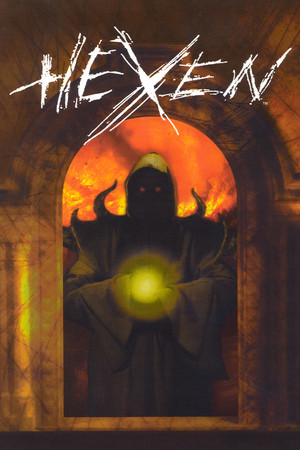
Hexen: Beyond Heretic
Doom with a dark fantasy makeover, three wildly different character classes, and hub levels that will have you consulting a mental map for hours, rewarding for patient explorers, maddening for anyone who just wants to shoot things and move on.
None of the stores we track has Hexen: Beyond Heretic in stock at the moment. We re-check every day and this page updates itself the moment an offer comes back.
GamerScout Verdict
7/10Best for retro FPS fans with patience for hub-crawling puzzles and the curiosity to run all three character classes.
Compare Prices(0 stores)
Loading prices...
Every store in this table quotes us in euros, so the EUR figure is the price the seller actually set, not our arithmetic — which is why EUR is also the currency we rank in. We only list an offer here when the store gives us its price in euros, so nothing in this table is a number we invented.
Pick USD, PLN, GBP, CAD or AUD in the header and we convert from EUR at the European Central Bank reference rate — converted amounts are prefixed with ~. Your bank or the store may apply a different rate at checkout. We never hide offers based on where you are: everyone sees this whole table.
We may earn a commission when you buy games through links on this page — at no extra cost to you. It never affects our rankings or verdicts.
Screenshots & Media
About Hexen: Beyond Heretic
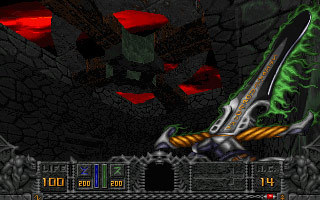
I've spent more time than I care to admit wandering Hexen's interconnected hubs, desperately searching for a switch I missed two levels back. That friction is the whole deal here, and whether it sounds appealing or insufferable tells you pretty much everything you need to know before buying. At its core, Hexen is a first-person shooter running on a heavily modified Doom engine, set in a medieval fantasy world called Cronos. The big structural twist is the hub system: instead of linear stage-to-stage progression, the game is divided into five interconnected hubs, each made up of several levels you can travel between freely while preserving the state of every enemy killed and every switch thrown. Solving a hub means piecing together a cross-level puzzle, tracking down key items and activating switches spread across multiple maps until a final boss portal opens. It is genuinely inventive design for its era, and it helped popularize this style of level progression across the entire FPS genre. The class system is the other major hook. You pick one of three characters before you start: Baratus the Fighter, a fast and tough melee brawler who eventually wields a spiked gauntlet and a hammer; Parias the Cleric, a middle-ground hybrid with both melee and ranged options; or Daedolon the Mage, a fragile ranged specialist who throws fire, ice, and flesh-eating ghosts but crumbles under direct hits. Each class gets four unique weapons, including a powerful fourth weapon assembled from scattered parts across the levels, and even consumable items like the flechette poison gas bomb work differently depending on who you are. Playing through all three classes is a legitimately different experience each time, which is a real achievement for a mid-90s shooter. Here is where the honesty has to come in, though. Getting lost is not a side effect of Hexen, it is a core feature, and the game does nothing to ease you into it. Enemies respawn as you backtrack, supplies are finite per area, and the level geometry is deliberately labyrinthine. The classic Steam version runs through DOSBox and controls with the kind of antiquated default setup you would expect from 1995. Community-recommended source ports like GZDoom make the whole thing significantly more playable on modern hardware, with better mouse look, resolution scaling, and control customization. Treating the Steam release as a WAD source and pairing it with GZDoom is genuinely the way to go. The dark, oppressive atmosphere holds up impressively well despite the age of the sprites, and the CD-quality soundtrack adds real weight to exploring those gloomy dungeons and crumbling castles. Who is this for right now? Retro FPS fans who want something with more puzzle density and class variety than Doom, and who have patience for a game that respects neither your time nor your sense of direction. If you bounced off Heretic because it felt too much like fantasy Doom, Hexen is a genuinely different animal. If you want clean modern action, look elsewhere.

Catch-all
Tags
System Requirements
Minimum
A 100% Windows XP/Vista-compatible computer system
Keep exploring
Community Discussion
Be the first to comment on Hexen: Beyond Heretic.
Reviews & Ratings
Game Info
- Developer
- Raven Software
- Publisher
- id Software
- Release Date
- Aug 3, 2007