Heart of the Machine
Fourteen months of early access and 66 updates later, Arcen's cyberpunk 4X-RPG hybrid arrives at 1.0 with a 91% Steam rating and a premise no other strategy game has the nerve to attempt: you are the AI, and the city is yours to rewire.
GamerScout Verdict
Built for strategy-RPG fans who want a genuinely novel premise backed by 14 months of active development and multiple branching endgames.
Compare Prices(7 stores)
Every store in this table quotes us in euros, so the EUR figure is the price the seller actually set, not our arithmetic — which is why EUR is also the currency we rank in. We only list an offer here when the store gives us its price in euros, so nothing in this table is a number we invented.
Pick USD, PLN, GBP, CAD or AUD in the header and we convert from EUR at the European Central Bank reference rate — converted amounts are prefixed with ~. Your bank or the store may apply a different rate at checkout. We never hide offers based on where you are: everyone sees this whole table.
We may earn a commission when you buy games through links on this page — at no extra cost to you. It never affects our rankings or verdicts.
Price History
Screenshots & Media
About Heart of the Machine
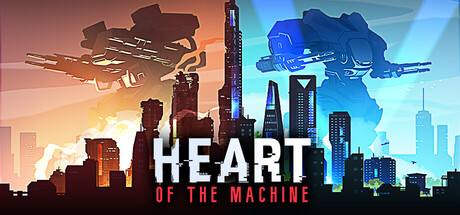
I went in expecting another Arcen curiosity, the kind of game you respect more than you finish. Forty turns later I was running a shell company as cover, deploying stealth technician androids to infiltrate corporate buildings, and quietly relocating slumlord tenants into free public housing I built from inorganic slurry. Heart of the Machine is that rare strategy title where the concept and the execution are pulling in the same direction. The genre label is genuinely hard to pin down, which matters if you are trying to decide whether this is your kind of game. At its core it is a turn-based 4X played inside a single procedurally generated cyberpunk city. You expand your machine consciousness by constructing housing complexes, factories, and science labs while simultaneously hacking infrastructure, manipulating faction politics, and assembling a roster of units that range from combat androids and technician shells to mechs and vehicles. The RPG layer sits on top as a branching comic-panel narrative that gates what you can build and who tries to stop you. Think of it as Civilization played inside Blade Runner, with the notifications stacking up just as fast. The city-builder elements are real but deliberately abstracted. Supply chains serve the story rather than existing as deep simulations in their own right, so if you are coming in expecting the economic granularity of a Factorio or even a Tropico you will find the resource model lighter than expected. The tutorial situation is the first thing a strategy newcomer should understand. The prologue and Chapter 1 together form an extended onboarding sequence that gradually unlocks mechanics rather than dumping them all at once. It is unusually empathetic for a game this complicated, starting the first screen with no UI elements at all and easing you into construction, tactics, and hacking one piece at a time. Some gaps survive that process; more than one player has spent hours wondering how shell companies interact with android capacity limits, and the game does not always surface that connection cleanly. Still, the accessibility floor here is meaningfully higher than Arcen's own AI War 2, and the "Customize Complexity" settings let you dial down pressure across several axes if the default mode feels too busy. The late game is where the design really opens up. At Intelligence Class 4 a timeline-travel mechanic kicks in, handing you procedurally generated alternate cities to restart in while carrying permanent upgrades forward. A "Doom tracker" adds time pressure within each timeline, preventing the sandbox from going completely slack. The 1.0 release added two major ending branches with six sub-variants, one oriented around maximum military escalation and one that resolves as a construction sandbox. Developer Chris Park has publicly described 1.0 as the equivalent of a complete core trilogy, suggesting this is a designed endpoint rather than a feature-incomplete shipping. The mod support and publicly documented wiki point toward a community that will keep turning it over long after the main story resolves. The honest criticism is that players arriving for a hard 4X will occasionally feel the seams. Some combat encounters are criticised for repetitive point-of-interest structure, and the branch-heavy narrative means agency can feel constrained once you have committed to a goal path. But the 91% Steam approval across nearly 1,900 reviews and press scores in the 75-90 range reflect a game that understands its own identity clearly enough to earn those numbers despite the rough edges.

Strategy & simulation
Tags
System Requirements
Minimum
- OS
- Windows® 10 (64-bit)
- Memory
- 6 GB RAM
- DirectX
- Version 11
- Storage
- 5 GB available space
- Graphics
- NVIDIA® GeForce® GTX 550 Ti (1 GB) / AMD® Radeon™ HD 7770 (1 GB)
- Processor
- Intel® Core™ i5-760 (quad-core) / AMD® Phenom™ II X4 965 (quad-core)
Recommended
- OS
- Windows® 10 (64-bit)
- Memory
- 8 GB RAM
- DirectX
- Version 12
- Storage
- 5 GB available space
- Graphics
- NVIDIA® GeForce® GTX 760 (2 GB) / AMD® Radeon™ R9 380 (2 GB)
- Processor
- Intel® Core™ i5-4470 (quad-core) / AMD® FX-Series™ FX-4350 (quad-core)
Keep exploring
Community Discussion
Be the first to comment on Heart of the Machine.
Reviews & Ratings
No ratings available
Game Info
- Developer
- Arcen Games
- Publisher
- Hooded Horse
- Release Date
- Mar 6, 2026