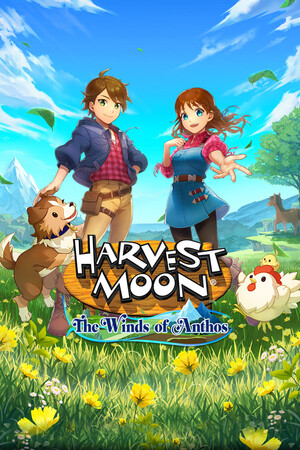
Harvest Moon: The Winds of Anthos
Natsume's most ambitious farming sim yet earns a cautious recommendation, if you can muscle through a rough prologue, a genuinely large open world and 80 animal variants are waiting on the other side.
GamerScout Verdict
Worth it for exploration-focused farming sim fans once you grind past the stamina-starved prologue, weakest on NPC depth, strongest on map scale.
Compare Prices(6 stores)
Every store in this table quotes us in euros, so the EUR figure is the price the seller actually set, not our arithmetic — which is why EUR is also the currency we rank in. We only list an offer here when the store gives us its price in euros, so nothing in this table is a number we invented.
Pick USD, PLN, GBP, CAD or AUD in the header and we convert from EUR at the European Central Bank reference rate — converted amounts are prefixed with ~. Your bank or the store may apply a different rate at checkout. We never hide offers based on where you are: everyone sees this whole table.
We may earn a commission when you buy games through links on this page — at no extra cost to you. It never affects our rankings or verdicts.
Price History
Screenshots & Media
About Harvest Moon: The Winds of Anthos
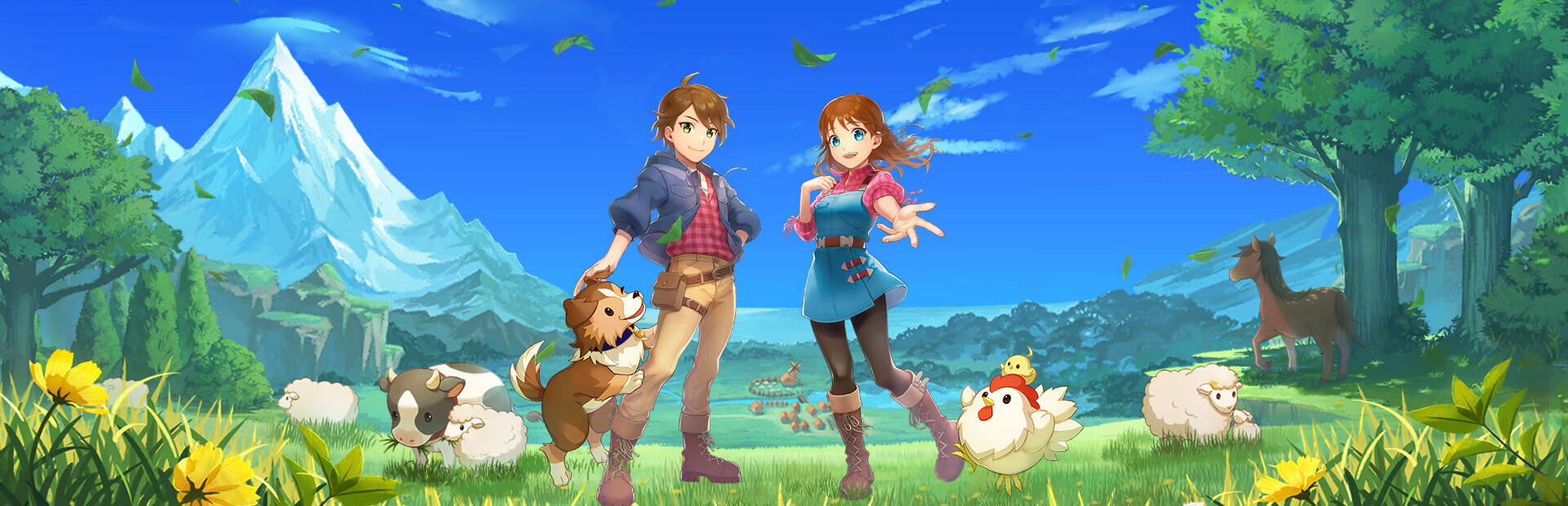
I'll be straight with you: I came into Winds of Anthos with the kind of spreadsheet skepticism you'd normally reserve for a Paradox expansion with a 40-euro price tag. Natsume's track record since the series split has not been inspiring, and the farming sim market is brutally crowded right now. What I did not expect was to still be playing three in-game seasons later, cataloguing ore tiers and hunting down Harvest Wisps in a snowy mountain biome I unlocked by fixing a bridge. The game's central hook is the Expando-Farm, a portable farm system that Doc Jr. engineers for you partway through the story. Once you have it, you can relocate your entire farming operation to different regions, each with its own terrain, seasonal quirks, and regional seed pool. Seeds themselves are not bought from shops, you collect them from colored Harvest Wisps scattered across the world, with rarer purple wisps yielding harder-to-find varieties. That design decision alone turns crop planning into a legitimate exploration incentive rather than a menu chore. Throw in the fact that some seeds mutate when grown out of their native season and you get a modest but real layer of agricultural optimization that rewards patience. Tool upgrades, axe, pickaxe, watering can, gate progression naturally, and the deeper mine floors require Damascus Steel and Titanium ores that are genuinely difficult to reach, so resource management has teeth. The open world is the biggest structural shift from past entries. Roughly 50 regions, fast travel via Warp Statues you unlock by physically reaching them first, and environmental hazards like cold snaps that require specific buffs or bonded animals to safely cross. The 80 animal variants, including tameable wolves, Bengal tigers, and foxes, can grant passive skills when befriended, which turns the creature-collecting side of things into something closer to a light progression system. The mining loop uses a dowsing mechanic: hold the button to highlight radius zones, smaller circles mean rarer ore, and random falling rocks drain your stamina if you are not paying attention. It is surface-level by dungeon-crawler standards but fits the pace of the game without feeling like busywork. Here is where I have to be honest about the friction. The prologue is genuinely bad. You start with minimal stamina, expensive food costs, and a barn-building quest that requires Silver ore at a point when finding Silver feels almost arbitrary. Multiple reviewers needed third-party guides to get past that specific moment, which is a genuine design failure for a tutorial. Once you clear that wall and unlock the Expando-Farm, the pacing dramatically improves, but some players will bounce off before they get there. The NPC cast is also a persistent weakness, eight marriage candidates spread across the map, including same-sex options which is a first for Natsume, but most non-romance villagers feel like set dressing rather than characters. Towns feel sparse until you invest time raising their Cultural Rank through fetch quests, which means the early game world looks emptier than it actually is in the mid and late stages. For the PC and Xbox audience specifically, performance is substantially cleaner than the widely-criticized Switch version. If you have seen reviews complaining about frame skips and texture popping, those are largely hardware-specific complaints, the PC build runs with noticeably more stability. The visual style is functional rather than impressive, and the game engine (Unity) shows its constraints in open-area draw distances, but nothing that breaks immersion once you are settled into a farming rhythm. Who should buy this? Farming sim regulars who want more map to explore than Stardew Valley offers and are comfortable with a guided quest structure rather than a sandbox. Players expecting the social depth of Story of Seasons or the combat loop of Rune Factory should look elsewhere, this is strictly a farming-and-exploration game with no combat whatsoever. If you have written off the Natsume branch of the franchise entirely, Winds of Anthos is a reasonable argument to reconsider, though it is not yet operating at the level of the genre's best.

Strategy & simulation
Tags
System Requirements
Minimum
- OS
- Windows® 10, Windows® 11 64bit
- Memory
- 8 GB RAM
- DirectX
- Version 11
- Storage
- 5 GB available space
- Graphics
- NVIDIA GeForce GTX 750 or over
- Processor
- Intel(R) Core(TM) i5-7200U or over
Recommended
Requires a 64-bit processor and operating system
Keep exploring
Community Discussion
Be the first to comment on Harvest Moon: The Winds of Anthos.
Reviews & Ratings
No ratings available
Game Info
- Developer
- Appci Inc.
- Publisher
- Natsume Inc.
- Release Date
- Sep 27, 2023