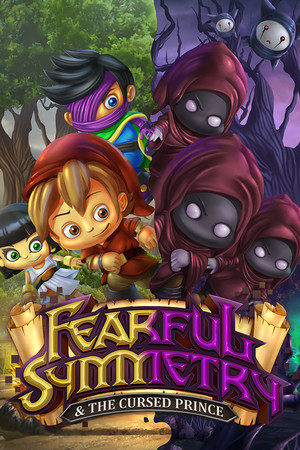
Fearful Symmetry & The Cursed Prince
A split-screen puzzler that rewires your brain one mirrored step at a time. Patience-testers only.
GamerScout Verdict
Best for patient puzzle fans who enjoy a single clever mechanic pushed to its logical limits across a compact 5-8 hour run.
Compare Prices(4 stores)
Every store in this table quotes us in euros, so the EUR figure is the price the seller actually set, not our arithmetic — which is why EUR is also the currency we rank in. We only list an offer here when the store gives us its price in euros, so nothing in this table is a number we invented.
Pick USD, PLN, GBP, CAD or AUD in the header and we convert from EUR at the European Central Bank reference rate — converted amounts are prefixed with ~. Your bank or the store may apply a different rate at checkout. We never hide offers based on where you are: everyone sees this whole table.
We may earn a commission when you buy games through links on this page — at no extra cost to you. It never affects our rankings or verdicts.
Price History
Screenshots & Media
About Fearful Symmetry & The Cursed Prince
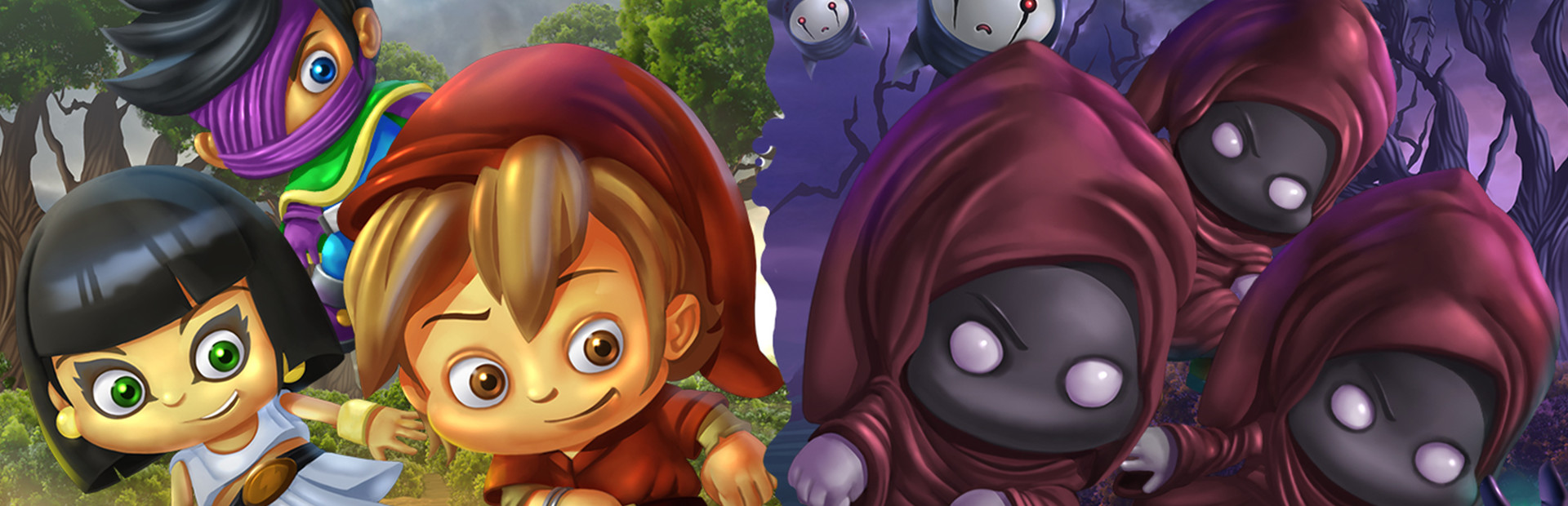
I want to be honest with you: the first time I understood what Fearful Symmetry was actually asking of me, I put the controller down and stared at the ceiling for a moment. The screen splits cleanly in two, and every input you make moves both characters at once but in opposite directions. Push left on the stick and your hero glides left while a shadow version of them slides right on the other panel. Push up and the other goes down. The maps themselves, however, are not symmetrical at all. Each side has its own arrangement of pit traps, undead hands rising from the ground, projectile-firing guardians, and flickering ghosts. That mismatch between your unified input and two wildly different spatial problems is the entire game, and it is genuinely clever. Three characters sit at the heart of the experience: Hero, the unlocked-from-the-start adventurer with no special abilities; Haim, a cursed prince who can teleport one tile in the direction he faces; and Nulan, a sorceress with the power to ignite obstacles in her path. Each of the three carries their own short narrative thread about the Symmetry Scrolls that cursed them, though nobody is here for the writing. The real reason to replay levels is mechanical: Haim's teleport slip opens shortcuts Hero cannot use, and Nulan's fire ability dissolves certain obstacles entirely, meaning the same room plays out as a completely different puzzle depending on who you bring in. That layering is the game's quietest strength, and it mostly works. Where things get thorny is the timing-heavy sections. Slower rooms, the kind where you can stop and calculate every step, are where the core idea shines cleanest. The trouble arrives when moving enemies force you to act quickly, because quick movement and opposite-direction logic are genuinely at odds with each other. Some players will call this exhilarating. Others will find it the point at which the game stops feeling fair. Keyboard controls also drew some criticism for feeling unresponsive under pressure, so a gamepad is strongly recommended. One or two bugs, including occasional character-lock moments that force a full menu restart, still surface in an otherwise stable build. The audio sits firmly in forgettable territory, a small sting for a game whose visual atmosphere, SNES-era top-down pixel work with a slightly gothic edge, does a respectable job of selling two different dimensional moods side by side. Runtime lands somewhere between five and eight hours depending on how long the mid-game walls hold you. There is no new-game-plus pull, no procedural layer, nothing that generates fresh content once the credits roll. For a focused puzzler asking a modest price, that feels like an honest scope rather than a shortcoming. Gamera Interactive built a whole game around one tightly held idea, and that kind of restraint deserves acknowledgment, even if the presentation never fully elevates the concept the way a more polished production might have. If you are the sort of person who finds a stubborn level more magnetic than annoying, this one will quietly eat an afternoon.

Indie & narrative
Tags
System Requirements
Minimum
- OS
- Windows 7 or higher
- Memory
- 2 GB RAM
- DirectX
- Version 9.0c
- Storage
- 150 MB available space
- Graphics
- Direct X 9.0c compliant video card
- Processor
- CPU 1Ghz or higher
Keep exploring
Community Discussion
Be the first to comment on Fearful Symmetry & The Cursed Prince.
Reviews & Ratings
No ratings available
Game Info
- Developer
- Gamera Interactive
- Publisher
- Gamera Interactive
- Release Date
- Dec 12, 2017