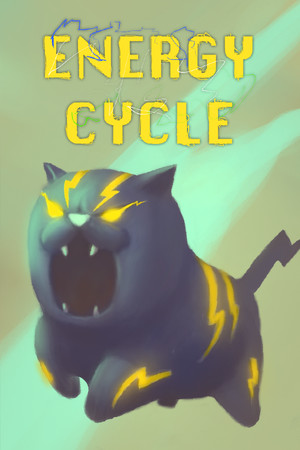
Energy Cycle
Satisfying for exactly one sitting: a compact color-matching puzzler that clicks like a Lights Out clone, then quietly runs out of ideas before you finish your coffee.
GamerScout Verdict
Worth a single focused session for fans of logic puzzles, but too thin on variety to justify returning after that first clear.
Compare Prices(6 stores)
Every store in this table quotes us in euros, so the EUR figure is the price the seller actually set, not our arithmetic — which is why EUR is also the currency we rank in. We only list an offer here when the store gives us its price in euros, so nothing in this table is a number we invented.
Pick USD, PLN, GBP, CAD or AUD in the header and we convert from EUR at the European Central Bank reference rate — converted amounts are prefixed with ~. Your bank or the store may apply a different rate at checkout. We never hide offers based on where you are: everyone sees this whole table.
We may earn a commission when you buy games through links on this page — at no extra cost to you. It never affects our rankings or verdicts.
Price History
Screenshots & Media
About Energy Cycle
I kept my expectations modest going into Energy Cycle, and it still found a way to feel both smaller and larger than advertised. The premise is the kind of thing that fits on a single index card: a grid of colored orbs, three possible colors cycling through on click, and the cascade rule that any orb you touch also flips every neighbor along its horizontal and vertical axis. It is the Lights Out formula dressed in neon, and for the first handful of puzzles that framing genuinely works. There is something satisfying about tracing a chain reaction backward in your head and clicking with purpose. The Puzzle mode contains 28 pre-designed levels, and the difficulty arc is real enough that mid-game grids do require you to think a move or two ahead rather than clicking at random. That is worth saying plainly, because a handful of reviewers have written the whole thing off as trivially easy. Some levels are too thin, but others will stop you cold and force you to actually learn the underlying logic rather than muscle through by trial and error. The three-color system means you are cycling through states, not toggling binary switches, which adds a layer of planning that the game is not always credited for. The community-built Steam guides for puzzle solutions are popular for a reason, and the existence of a level editor that generates shareable codes is a quietly generous touch for such a small release. Where the experience loses its footing is in variety, or the lack of it. The single mechanic never evolves past its introductory statement. Puzzle mode ends in roughly an hour to two hours depending on your pace. Time Attack and Infinite Play pad the runtime with randomized grids, but randomization tends to produce boards that are either solved in five seconds or feel arbitrary rather than crafted. The soundtrack, an upbeat electronic mix with clubby percussion, earned divided opinions across critics, with some finding it distracting during concentrated play. The color palette has also drawn criticism: the default three colors sit close together on the spectrum, and distinguishing them under certain lighting conditions is harder than it should be. A palette toggle exists in the options menu, but the randomized results are not always an improvement. For the audience this actually fits, which is someone wanting 60 to 90 minutes of low-pressure puzzle logic with leaderboard hooks and a clean achievement list, Energy Cycle does what it says on the tin without pretending to be anything larger. There is a warmth to its simplicity that I can respect even when I wish Someone at Sometimes You had stayed with the concept one iteration longer before shipping. The pixel of personality in the presentation, those spiraling backgrounds and neon orbs, suggests a studio with genuine aesthetic instincts working under tight constraints. The sequel, Energy Cycle Edge, went further by adding three-dimensional grid geometry if this core idea leaves you wanting more depth.

Indie & narrative
Tags
System Requirements
Minimum
- OS
- XP
- Memory
- 1024 MB RAM
- DirectX
- Version 9.0
- Storage
- 300 MB available space
- Graphics
- 512MB Dedicated Memory
- Processor
- 2.4 Ghz Dual Core CPU
- Sound Card
- DirectX® Compatible
Recommended
- OS
- 10
- Memory
- 1024 MB RAM
- DirectX
- Version 9.0
- Storage
- 300 MB available space
- Graphics
- 512MB Dedicated Memory
- Processor
- 3.0 Ghz Quad Core CPU or faster
- Sound Card
- DirectX® Compatible
DLC & Add-ons for Energy Cycle2
Expansions, DLC packs and add-on content for this game. Click any item to see store offers.
Keep exploring
Community Discussion
Be the first to comment on Energy Cycle.
Reviews & Ratings
No ratings available
Game Info
- Developer
- Sometimes You
- Publisher
- Sometimes You
- Release Date
- Jan 13, 2016