Compare East India Company prices across 50+ stores and find the best deal. Developed by Nitro Games. Published by Nitro Games. Released on 7/31/2009. Available on PC. Genres: Strategy. Metacritic score: 67/100.

Solid trade-route fundamentals buried under thin AI, clunky cargo loading, and naval battles that can't keep pace with the ambition of the setting. Worth a look at a deep discount if Age of Sail economics pull you in.

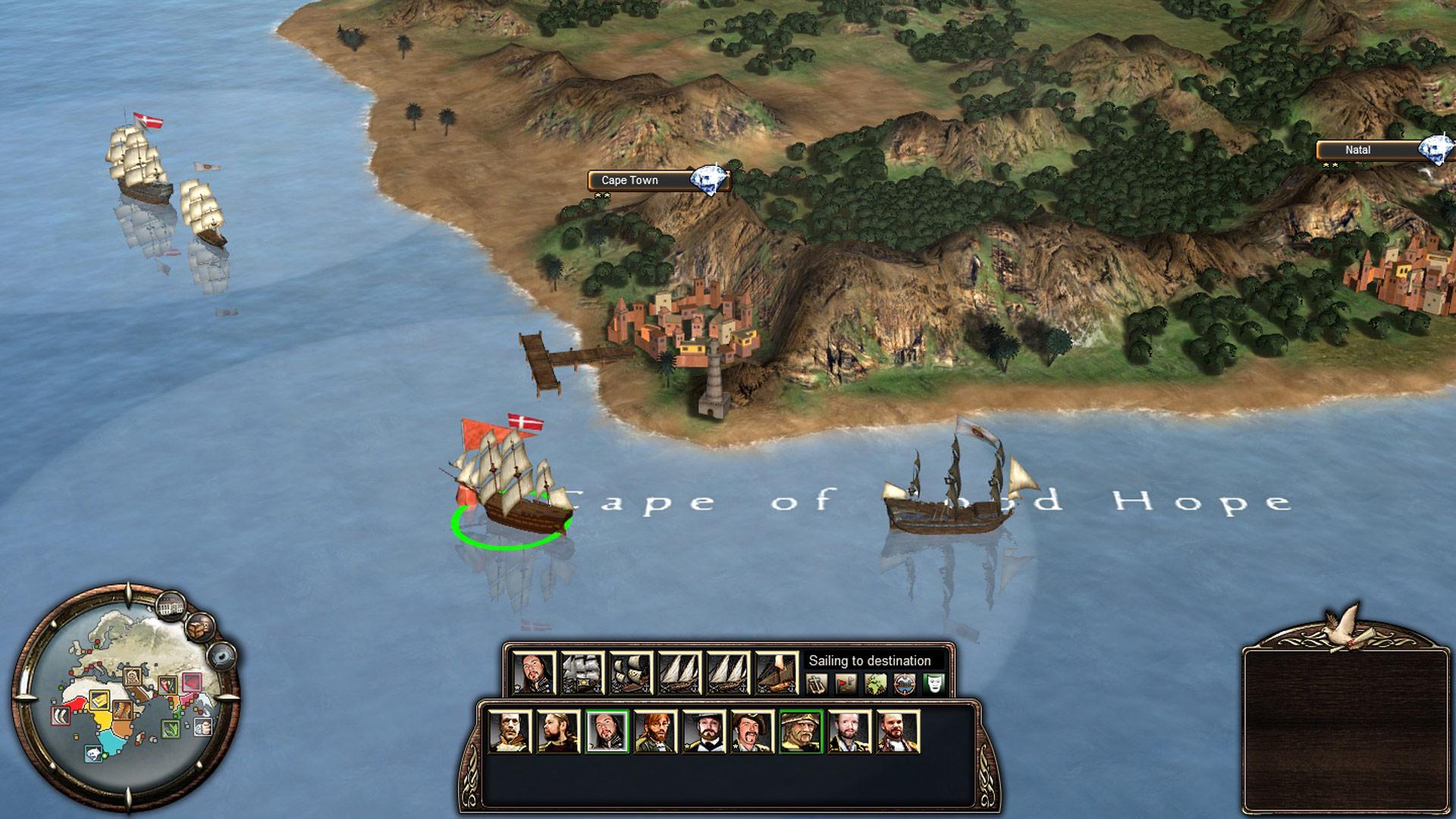
My spreadsheet instincts fired up the moment I saw eight playable nations, a global strategic map spanning Europe to the Indian subcontinent, and Main Trade Items priced dynamically across ports in Africa, the Middle East, and Asia. On paper, East India Company has the skeleton of something genuinely interesting: you pick a nation, build mixed fleets out of 11 ship classes ranging from nimble schooners and sloops up through brigs, East Indiamen, frigates, and ships of the line, assign each fleet a trade route, and watch profit roll in or watch pirates strip your cargo holds bare. The overhead strategic map will feel instantly readable to anyone who has touched Civilization or a Total War campaign layer. Four single-player campaign modes cover the period from roughly 1600 to 1750, and the open-ended Free Mode, where you get 150 years and no hard timer, is the clearest argument for the game's better moments. The trading layer works well enough to generate real decisions early on. Prices at your home port drop when you flood a commodity, so rotating what you ship through which routes matters. Allies can be nudged into attacking a rival in exchange for goods they need most, which adds a thin diplomacy layer on top of the buy-low-sell-high core. The problem is that the economic model never deepens past that. Scarcity barely functions: Indian ports tend to hold large stocks of every Main Trade Item at all times, which deflates the tension a good trading simulation needs. The cargo loading interface compounds this by forcing you to drag small portions of goods repeatedly, turning routine port stops into a chore rather than a decision point. These are not catastrophic failures individually, but they stack up. Naval combat is where expectations hurt East India Company most. You can take direct control of any ship in a real-time engagement, adjust sail configurations, choose between broadside cannon types, and arrange formations. Battle realism can be set to Arcade, Normal, or Simulation. The bones of something tactically interesting are there. In practice, however, skirmishes routinely stretch past twenty minutes, the camera controls are awkward under pressure, and when you have multiple fleets threading pirate-infested water simultaneously, the constant interruptions stall the strategic layer entirely. The AI compounds this: both in trade competition and in combat, it draws consistent criticism for passivity and poor decision-making, which drains the late-game of meaningful pressure. Fleets cap at five ships, which is a design ceiling that felt small even in 2009. Multiplayer is restricted to naval battles only and does not include the strategic trading map, a missed opportunity that limits its replay value considerably. For newcomers worried about entry difficulty: the tutorials are genuinely flawed, with dialogue boxes that obscure the menus they are teaching you to use. The better approach is to skip them, start a Free Mode campaign with in-game tips enabled, and treat the first 30 to 60 minutes as your real tutorial. The interface is more intuitive than the tutorial gives it credit for, and the historical context woven into port menus is a genuine plus. A Designer's Cut update released a few months post-launch reorganised several interface elements and made port access less painful; if you are buying now, confirm which version you are getting. The Gold Edition bundles all DLC and is the version worth owning if you are committed to the setting. East India Company sits at 67 on Metacritic and the consensus from 2009 has aged honestly: competent structure, interesting setting, not enough mechanical depth to sustain a long campaign. Strategy veterans chasing the complexity of a Paradox grand-strategy or the naval breadth of Empire: Total War will feel the ceiling quickly. But if Age of Sail trading economics and historical flavour are what you are after and you can stomach a 15-year-old interface, there are a few genuine evenings of value here at the right price. Diego, Scout Team

East India Company
Strategy

East India Company

Jul 31, 2009Nitro Games
GamerScout Says

Solid trade-route fundamentals buried under thin AI, clunky cargo loading, and naval battles that can't keep pace with the ambition of the setting. Worth a look at a deep discount if Age of Sail economics pull you in.

PC
Best Price Available
0.00
at N/A
Historical low: $0.57

Compare Prices(0 stores)

Loading prices...

We may earn a commission when you buy games through links on this page — at no extra cost to you. It never affects our rankings or verdicts.

Screenshots & Media

Screenshot

About East India Company

My spreadsheet instincts fired up the moment I saw eight playable nations, a global strategic map spanning Europe to the Indian subcontinent, and Main Trade Items priced dynamically across ports in Africa, the Middle East, and Asia. On paper, East India Company has the skeleton of something genuinely interesting: you pick a nation, build mixed fleets out of 11 ship classes ranging from nimble schooners and sloops up through brigs, East Indiamen, frigates, and ships of the line, assign each fleet a trade route, and watch profit roll in or watch pirates strip your cargo holds bare. The overhead strategic map will feel instantly readable to anyone who has touched Civilization or a Total War campaign layer. Four single-player campaign modes cover the period from roughly 1600 to 1750, and the open-ended Free Mode, where you get 150 years and no hard timer, is the clearest argument for the game's better moments. The trading layer works well enough to generate real decisions early on. Prices at your home port drop when you flood a commodity, so rotating what you ship through which routes matters. Allies can be nudged into attacking a rival in exchange for goods they need most, which adds a thin diplomacy layer on top of the buy-low-sell-high core. The problem is that the economic model never deepens past that. Scarcity barely functions: Indian ports tend to hold large stocks of every Main Trade Item at all times, which deflates the tension a good trading simulation needs. The cargo loading interface compounds this by forcing you to drag small portions of goods repeatedly, turning routine port stops into a chore rather than a decision point. These are not catastrophic failures individually, but they stack up. Naval combat is where expectations hurt East India Company most. You can take direct control of any ship in a real-time engagement, adjust sail configurations, choose between broadside cannon types, and arrange formations. Battle realism can be set to Arcade, Normal, or Simulation. The bones of something tactically interesting are there. In practice, however, skirmishes routinely stretch past twenty minutes, the camera controls are awkward under pressure, and when you have multiple fleets threading pirate-infested water simultaneously, the constant interruptions stall the strategic layer entirely. The AI compounds this: both in trade competition and in combat, it draws consistent criticism for passivity and poor decision-making, which drains the late-game of meaningful pressure. Fleets cap at five ships, which is a design ceiling that felt small even in 2009. Multiplayer is restricted to naval battles only and does not include the strategic trading map, a missed opportunity that limits its replay value considerably. For newcomers worried about entry difficulty: the tutorials are genuinely flawed, with dialogue boxes that obscure the menus they are teaching you to use. The better approach is to skip them, start a Free Mode campaign with in-game tips enabled, and treat the first 30 to 60 minutes as your real tutorial. The interface is more intuitive than the tutorial gives it credit for, and the historical context woven into port menus is a genuine plus. A Designer's Cut update released a few months post-launch reorganised several interface elements and made port access less painful; if you are buying now, confirm which version you are getting. The Gold Edition bundles all DLC and is the version worth owning if you are committed to the setting. East India Company sits at 67 on Metacritic and the consensus from 2009 has aged honestly: competent structure, interesting setting, not enough mechanical depth to sustain a long campaign. Strategy veterans chasing the complexity of a Paradox grand-strategy or the naval breadth of Empire: Total War will feel the ceiling quickly. But if Age of Sail trading economics and historical flavour are what you are after and you can stomach a 15-year-old interface, there are a few genuine evenings of value here at the right price. Diego, Scout Team

Tags

singleplayermultiplayertier:sub-5Age of SailNaval CombatTrade RoutesHistorical StrategyReal-Time BattlesFleet ManagementColonial EraMixed Reception

Steam Deck & Linux

ProtonDB Silver

Playable on Linux with some workarounds. Based on 8 ProtonDB community reports.

System Requirements

Minimum

OS
Windows® XP
Sound
DirectX 9.0c compatible sound card
Memory
1GB
Graphics
128 MB DirectX 9.0c compatible or better video card with pixelshader 2.0
DirectX®
9.0c
Processor
1.6 GHz Intel Pentium processor or equivalent AMD Athlon processor
Hard Drive
approx. 6 GB

Recommended

OS
Windows® XP/Vista
Sound
DirectX 9.0c compatible sound card
Memory
2GB
Graphics
512 MB DirectX 9.0c compatible or better video card with pixelshader 3.0
DirectX®
9.0c
Processor
2.0 GHz dual core processor
Hard Drive
approx. 6 GB

Community Discussion

Be the first to comment on East India Company.

Reviews & Ratings

Metacritic
67

Game Info

Developer
Nitro Games
Publisher
Nitro Games
Release Date
Jul 31, 2009

Price Alert

Get notified when the price drops below your target!

Create Alert

Price History

2026-06-100.57(lowest)

More from Nitro Games

Buy smarter: helpful guides

Looking for more? See games like East India Company

Frequently asked questions about East India Company

How much does East India Company cost?

East India Company pricing changes often and varies by store, edition and region. The live price table on this page compares the cheapest in-stock key and store offers across 50+ verified shops, so you always see the current lowest price before you buy.

Where can I buy East India Company cheapest?

Compare East India Company prices across every verified store in the price table on this page. We list the cheapest in-stock key and store offers, updated regularly, so you always see the best current deal before you buy.

What platforms is East India Company available on?

East India Company is available on PC.

When was East India Company released?

East India Company was released on 31 July 2009.

Who developed East India Company?

East India Company was developed by Nitro Games.

Is East India Company worth buying?

East India Company holds a Metacritic score of 67/100, making it one of the standout Strategy titles. See the full reviews, ratings and how-long-to-beat times on this page to decide.