Dungeon Defenders: Going Rogue
Forty minutes per run sounds ideal until the upgrade loop starts feeling hollow and a 40% positive rating on Steam tells you the community noticed too. Strictly for DD loyalists or co-op squads who can forgive a rough finish line.
GamerScout Verdict
Best for Dungeon Defenders fans playing with a full co-op squad who can look past a thin upgrade loop and quiet post-launch support.
Compare Prices(3 stores)
Every store in this table quotes us in euros, so the EUR figure is the price the seller actually set, not our arithmetic — which is why EUR is also the currency we rank in. We only list an offer here when the store gives us its price in euros, so nothing in this table is a number we invented.
Pick USD, PLN, GBP, CAD or AUD in the header and we convert from EUR at the European Central Bank reference rate — converted amounts are prefixed with ~. Your bank or the store may apply a different rate at checkout. We never hide offers based on where you are: everyone sees this whole table.
We may earn a commission when you buy games through links on this page — at no extra cost to you. It never affects our rankings or verdicts.
Price History
Screenshots & Media
About Dungeon Defenders: Going Rogue
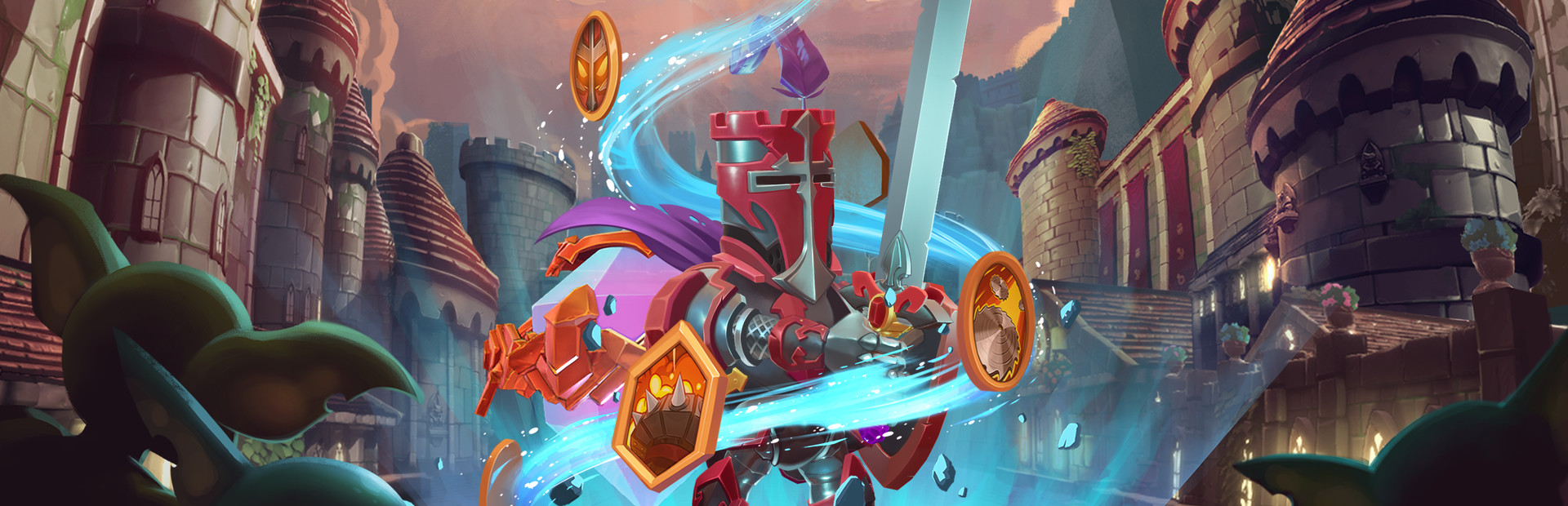
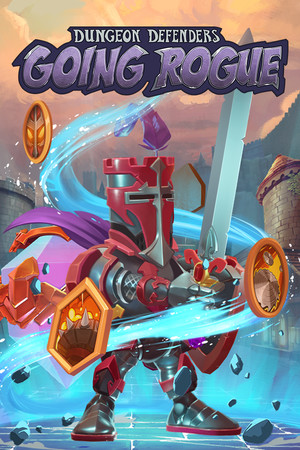
I wanted to root for this one. The pitch is genuinely appealing: take the Dungeon Defenders universe, strip out the hundred-hour grind of Awakened, compress it into a tight roguelite loop of 30-to-40-minute sessions, and let four friends defend Eternia Crystals through procedurally ordered maps with boss fights at fixed intervals. The Squire, Apprentice, Huntress, and Monk are all here, each carrying a familiar feel and a two-slot defense system where towers now expire on a timer rather than holding the line permanently. That single design change actually works in the game's favor, forcing you to think in pulses rather than perfect setups. The Monk's electric aura and healing aura combo, the Huntress's stacked poison and proximity traps, the Squire's shield throw bouncing between clustered enemies - on paper, the class toolkit is fun to rotate through. The problems creep in at the seams. Community reception landed at roughly 40% positive on Steam, and the complaints are consistent: rune upgrades that feel like they barely register, a difficulty curve that turns punishing rather than challenging around the Glitterhelm maps, and a per-run loot system where you keep nothing except account-level experience points and hero mastery ticks. That persistent-progress spine is thin. For a roguelite to sustain repeat runs it needs either a wide build-variety ceiling or strong moment-to-moment combat feel, and Going Rogue lands somewhere short of both. Combat reads as serviceable rather than satisfying - the action is readable, but weight and feedback are muted enough that clearing a wave rarely produces the little dopamine click that the genre depends on. The talent tree, reportedly inspired by the structure found in Hades and Gunfire Reborn, has good bones but narrow expression in practice. There are real concerns around the game's post-launch trajectory too. Community threads note that the title spent a long stretch of its Early Access life without meaningful updates before reaching its 1.0 release, and players are openly asking whether post-launch content support will follow. A game that exits Early Access into mixed reviews and a quiet developer feed is a specific kind of risk. The co-op experience with three friends is genuinely the strongest argument in its favor - the crystal-defense loop clicks better when four different class kits overlap and the Tavern shopping stops between maps gives the group a breath to coordinate. Solo play is punishing to the point of feeling unintended. If you grew up with the original Dungeon Defenders and have a regular co-op group who can stomach an unpolished loop, there is a particular kind of cozy chaos in here that survives the flaws. The cartoony Etheria aesthetic holds up, the map randomization keeps spatial layouts fresh run to run, and the boss encounters with their phase-dependent attack patterns are the mechanical highlight of the whole package. But approaching this as a genre-complete roguelite sitting alongside Hades or Gunfire Reborn will disappoint. It is a spin-off made quickly, with recycled assets and a compressed scope, and that origin is visible at almost every step.

Indie & narrative
Tags
System Requirements
Minimum
- OS
- Windows 10 (64-bit Only)
- Memory
- 4 GB RAM
- DirectX
- Version 11
- Network
- Broadband Internet connection
- Storage
- 12 GB available space
- Graphics
- Nvidia GeForce GTX 750 or AMD Radeon HD 8760
- Processor
- Intel Core i3-3210 or AMD FX-4350
Recommended
- OS
- Windows 10 (64-bit Only)
- Memory
- 8 GB RAM
- DirectX
- Version 11
- Network
- Broadband Internet connection
- Storage
- 12 MB available space
- Graphics
- Nvidia GeForce GTX 1050 or AMD RX 470
- Processor
- Intel Core i7-4770K or AMD Ryzen 5 1500X
Keep exploring
Community Discussion
Be the first to comment on Dungeon Defenders: Going Rogue.
Reviews & Ratings
No ratings available
Game Info
- Developer
- Chromatic Games
- Publisher
- Chromatic Games
- Release Date
- Jan 10, 2025