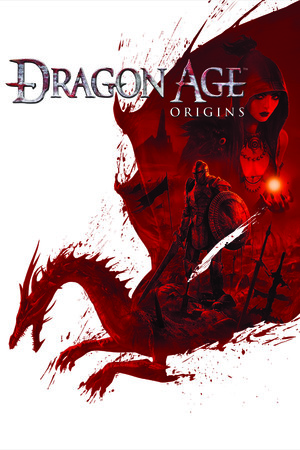
Dragon Age: Origins
Sixteen years on, BioWare's darkest RPG still sets the bar for origin stories that actually mean something, companion approval systems with real teeth, and tactical combat that punishes button-mashers.
GamerScout Verdict
9.1/10Essential for tactical RPG fans willing to patch it to run and invest the hours to master its systems.
Compare Prices(4 stores)
Every store in this table quotes us in euros, so the EUR figure is the price the seller actually set, not our arithmetic — which is why EUR is also the currency we rank in. We only list an offer here when the store gives us its price in euros, so nothing in this table is a number we invented.
Pick USD, PLN, GBP, CAD or AUD in the header and we convert from EUR at the European Central Bank reference rate — converted amounts are prefixed with ~. Your bank or the store may apply a different rate at checkout. We never hide offers based on where you are: everyone sees this whole table.
We may earn a commission when you buy games through links on this page — at no extra cost to you. It never affects our rankings or verdicts.
Price History
Screenshots & Media
About Dragon Age: Origins
I have put more hours into Dragon Age: Origins than I care to admit to my therapist, and the thing that keeps pulling me back is not the archdemon or the darkspawn horde, it is the moment Morrigan judges a decision you made three hours ago and you feel it. This is the game that understood, before almost anyone else, that companion relationships should carry weight, not just approval meters ticking up when you hand someone a flower. The character approval system here means companions will actually leave, turn on you, or sacrifice themselves differently depending on choices you barely noticed you were making. It is a game that takes seriously the idea that a Denerim city elf and a Dwarven Noble have genuinely different stakes in saving Ferelden. You pick one of three classes, Warrior, Rogue, or Mage, then combine that with your race to unlock one of six distinct origin stories, each with its own prologue, unique dialogue callbacks throughout the full game, and a different emotional entry point into the Grey Wardens. The Mage origin, set inside the Circle Tower under the watchful eyes of the Templars, is probably the best tutorial BioWare ever wrote. From there the structure is classically BioWare: recruit four major factions, each requiring a self-contained questline, before converging on Denerim for the finale. The Arl of Redcliffe quest alone contains more genuine moral horror than most modern RPGs manage across their entire runtimes. Combat is the part that divides people most sharply, and it is worth being honest about. This is a real-time-with-pause tactical system. You are constantly pausing, setting up spell combos, repositioning your rogue for backstabs, making sure your Warrior is positioned to tank while your Mage lands Cone of Cold into a crowd before a Warrior follows up with Shatter. The Tactics system lets you script AI behavior for party members using conditional logic, which is either deeply satisfying or a spreadsheet nightmare depending on your disposition. On higher difficulty settings, friendly fire from area-effect spells is live, and a badly positioned Fireball will kill your own tank. It demands patience. Players who bounced off it in 2009 for feeling clunky were not entirely wrong, but those who leaned in found one of the most rewarding tactical sandboxes in the genre. The skill trees across Warrior, Rogue, and Mage specialisations, including Berserker, Arcane Warrior, Assassin, and Spirit Healer, hold up past hour forty, which is not something every RPG from this era can claim. The honest criticisms: the graphics were already showing their age at launch and look genuinely dated now without community texture mods. Inventory management is clunky in ways that feel less charmingly retro and more genuinely annoying. Some mid-game questlines, particularly in the Brecilian Forest, drag in ways that feel like XP padding rather than storytelling. And the PC version on modern hardware requires some community patches to run stably, which is a real friction point for new players in 2025. None of this is fatal, but it is the friction tax you pay to access what is still one of the most carefully written dark-fantasy worlds in the medium. The lore of Thedas, from the Chantry's theology to the Dalish elven exile mythology, is dense enough to reward re-reads of every codex entry without ever feeling like homework. If you have played every BioWare game since and wondered why the community keeps measuring each new release against this one, Origins is the answer. It is not a comfortable or easy game, and it is not trying to be. It earns its darkness.

RPGs
Tags
System Requirements
Minimum
- Processor
- Intel Core 2 Single 1.6 Ghz Processor (or equivalent) or AMD 64 2.0 GHz Processor (or equivalent)
- Memory
- 1GB (1.5 GB Vista and Windows 7)
- Graphics
- ATI Ra…
Recommended
- Processor
- Intel Core 2 Duo 2.4 Ghz or AMD Phenom II X2 Dual-Core 2.7 Ghz Processor or equivalent
- Memory
- 2 GB (3GB Vista and Windows 7)…
DLC & Add-ons for Dragon Age: Origins3
Expansions, DLC packs and add-on content for this game. Click any item to see store offers.
Keep exploring
Community Discussion
Be the first to comment on Dragon Age: Origins.
Reviews & Ratings
Game Info
- Developer
- BioWare
- Publisher
- Electronic Arts
- Release Date
- Nov 6, 2009