Dragon Age II: Ultimate Edition
Forget the discourse wars - Hawke's 50-hour story of mage-templar politics and found family in Kirkwall is the most character-dense BioWare has ever written, rough edges and recycled dungeons included.
GamerScout Verdict
Best for BioWare fans who can tolerate recycled dungeons in exchange for the most emotionally dense companion writing in the Dragon Age trilogy.
Compare Prices(3 stores)
Every store in this table quotes us in euros, so the EUR figure is the price the seller actually set, not our arithmetic — which is why EUR is also the currency we rank in. We only list an offer here when the store gives us its price in euros, so nothing in this table is a number we invented.
Pick USD, PLN, GBP, CAD or AUD in the header and we convert from EUR at the European Central Bank reference rate — converted amounts are prefixed with ~. Your bank or the store may apply a different rate at checkout. We never hide offers based on where you are: everyone sees this whole table.
We may earn a commission when you buy games through links on this page — at no extra cost to you. It never affects our rankings or verdicts.
Price History
Screenshots & Media
About Dragon Age II: Ultimate Edition
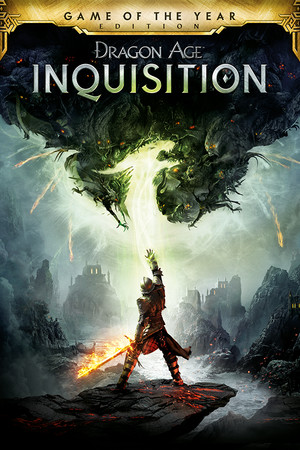
I've replayed this one more times than I care to admit, and every run the same contradiction hits me around hour three: the dungeon you just fought through looks suspiciously identical to the last one, and yet I cannot stop talking to Varric. That split reaction has defined Dragon Age II since its rushed 2011 release, and the Ultimate Edition - which bundles the base game with all three expansions (The Exiled Prince, Legacy, and Mark of the Assassin), the Black Emporium shop, both all-class item packs, the full armory bundle, and a high-resolution texture pack - gives you every reason to sit with that contradiction for a long time. The core pitch is a decade-spanning rise-to-power story told through an unreliable narrator frame, with Varric recounting Hawke's life under interrogation. That structural choice does real narrative work: it justifies time jumps, gives the whole thing a noir-tinged momentum, and lets BioWare build a cast you actually live with rather than recruit for a single grand quest. Companions like Merrill, Isabela, and Aveline develop across multiple acts through approval-and-rivalry systems that reward paying attention to their dialogue, not just siding with them on everything. Friendship and rivalry are both valid paths, and both unlock unique character content. For people who care whether choices matter on a relationship level, this is the most granular companion writing BioWare shipped in the original trilogy. Playing a mage amplifies all of it, since the central mage-templar conflict in Kirkwall runs directly through your dialogue options in ways that hit differently depending on your class. Combat sits closer to action-RPG than the tactical overhead of Origins. You pick from three classes - warrior, rogue, or mage - and build out ability trees that open up real specialization by mid-game. Mages get crowd control, force combos, and blood magic paths; warriors go two-handed or sword-and-shield with threat management; rogues split between archery and dual-wield with stealth openers. The ability to pause and issue individual orders to your party is still there on PC, and the game rewards it on Hard and Nightmare. Friendly fire is absent on lower settings, which purists will note, but the higher difficulties bring back the strategic weight. One genuine weakness: you cannot change companion armor directly, only purchase upgrades at vendors, which strips some of the customization depth you might expect from the genre. The problems are real and worth naming honestly. Map reuse is genuinely embarrassing in the context of a 50-hour RPG - the same cave layout resurfaces with different enemy placements so many times it becomes a running joke by act two. The third act's pacing stumbles as the mage-templar conflict accelerates toward a finale that the game's scope cannot quite match. Side quests too often amount to fetch runs through those identical corridors, which is a shame when the writing attached to them is frequently better than the mundane combat loop that bookends it. The lack of a clear central antagonist until late also leaves some players feeling unmoored between acts. What the Ultimate Edition gets right is value density. The Legacy expansion in particular extends Hawke's family history into some of the best-designed content in the package, and Mark of the Assassin adds Tallis, a companion with her own distinct combat style, in a self-contained heist scenario. If you are planning to play Dragon Age: Inquisition, the events and decisions here carry forward in ways that actually matter to that game's setup. Play the mage class on your first run - the story hits harder and the build variety holds up well past the point where the dungeons start to blur together.

RPGs
Tags
System Requirements
Minimum
- OS
- Windows Vista with SP3, SP2 or windows 7
- Memory
- 1 GB RAM
- DirectX
- Version 9.0c
- Storage
- 7 GB available space
- Graphics
- ATI Radeon HD 2600 Pro 256 MB; NVIDIA GeForce 7900 GS 256 MB cards
- Processor
- Intel Core 2 Duo (or equivalent) running at 1.8 GHz or greater; AMD Athlon 64 X2 (or equivalent) running at 1.8 GHz or greater
- Sound Card
- Direct X 9.0c Compatible Sound Card Windows Experience Index: 4.5
Recommended
- OS
- Windows Vista with SP3, SP2 or windows 7
- Memory
- 2 GB RAM
- DirectX
- Version 11
- Storage
- 7 GB available space
- Graphics
- ATI 3850 512 MB or greater; NVIDIA 8800 GTS 512 MB or greater
- Processor
- Intel Core 2 Quad 2.4 GHz Processor or equivalent; AMD Phenom II X3 Triple core 2.8 GHz or equivalent
Keep exploring
Community Discussion
Be the first to comment on Dragon Age II: Ultimate Edition.
Reviews & Ratings
Game Info
- Developer
- BioWare
- Publisher
- Electronic Arts
- Release Date
- Jun 4, 2020