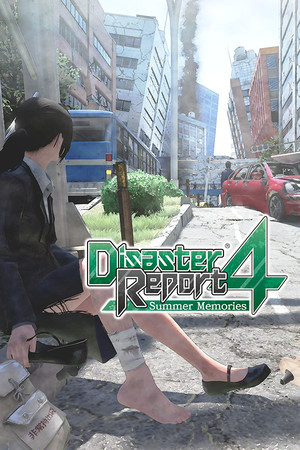
Disaster Report 4: Summer Memories
A cult-oddity earthquake survival game that commits fully to absurdist human drama, then trips over its own feet on nearly every technical level. Patience required, jank tolerance mandatory.
GamerScout Verdict
Worth it for patient players who love cult-oddity Japanese adventure games; a hard pass for anyone who needs polish or a clear objective marker.
Compare Prices(7 stores)
Every store in this table quotes us in euros, so the EUR figure is the price the seller actually set, not our arithmetic — which is why EUR is also the currency we rank in. We only list an offer here when the store gives us its price in euros, so nothing in this table is a number we invented.
Pick USD, PLN, GBP, CAD or AUD in the header and we convert from EUR at the European Central Bank reference rate — converted amounts are prefixed with ~. Your bank or the store may apply a different rate at checkout. We never hide offers based on where you are: everyone sees this whole table.
We may earn a commission when you buy games through links on this page — at no extra cost to you. It never affects our rankings or verdicts.
Price History
Screenshots & Media
About Disaster Report 4: Summer Memories
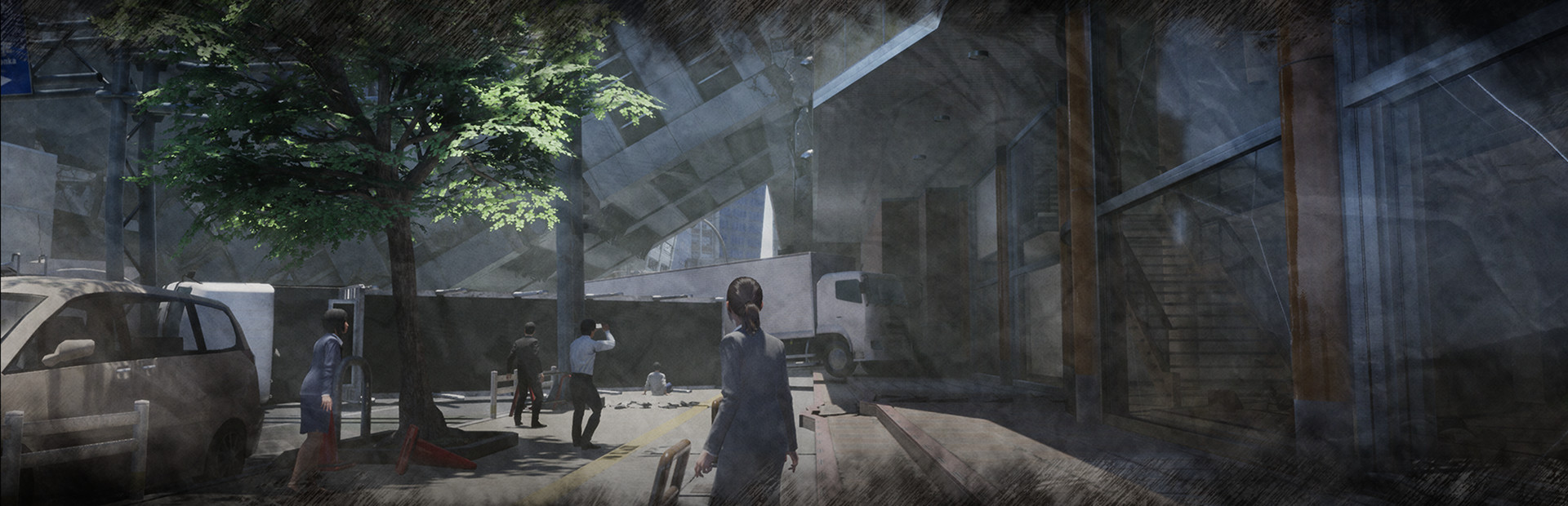
I went in expecting something in the neighborhood of a stripped-down open-world survival game, and what I got instead was a slow-burning PS2-era adventure game wearing a modern engine like an ill-fitting suit. That gap between expectation and reality is basically the whole story with Disaster Report 4: Summer Memories, and whether you find it charming or infuriating will decide everything. The setup is grounded: a massive earthquake levels a Japanese city while your custom protagonist is mid-commute, and you spend the next six in-game days picking through rubble, helping survivors, and making moral choices that eventually fork toward one of two endings. An epilogue unlocks after the credits that revisits the city five months later, adding another hour or two if the main campaign clicked with you. The core loop is conversation-driven: talk to everyone in your current zone, complete a fetch task to unlock the next NPC, watch a set-piece, repeat. The morality system tracks your choices, hunger, thirst, and bladder (yes, really), though most of those survival meters are gentle suggestions more than actual pressure. The inventory expands through backpacks you find scattered around the world, which is a tidy idea. Character customization runs surprisingly deep for a game this rough, with cosmetic outfits affecting how other survivors respond to you. Here is where the honesty has to come in. The guidance system is essentially nonexistent. Progression events trigger only after completing specific tasks in a specific order, and the game will not tell you which tasks or in what order. You will wander. You will talk to every NPC in a zone twice and still miss the one trigger that unlocks the next scene, because the required object spawned in a room you already checked. That design is either a feature or a dealbreaker depending on your tolerance for old-school adventure-game logic. The scripted earthquake set-pieces, where buildings actually topple in real time and the ground shakes under your feet, are genuinely spectacular when they hit. The framerate, already rough at baseline, takes a beating during those moments, which is almost poetic. Visuals are a mixed bag: the destruction geometry looks great, interiors look like they belong on hardware two generations back. What keeps the game from being a simple "avoid" recommendation is its tone. The writing swings wildly between earnest human drama and complete absurdism, and that contrast produces some genuinely memorable moments. One minute you are piggy-backing an injured elderly woman to safety; the next, a morality system is docking you points for decisions that seem entirely reasonable given the context. There is a specific kind of PS2-era Japanese game weirdness here that simply does not exist anywhere else in 2025, and for a certain type of player, that rarity is worth real money. Fans of the older Disaster Report entries on PS2 will recognize the DNA immediately, even if the execution disappoints compared to those titles. The roughly nine-to-ten hour campaign length is about right for what the game is. It does not overstay its welcome if you are already on board with the loop. If you bounced off within an hour, nothing later will change your mind. Go in knowing you are buying a flawed, unoptimized, weird little game that does one thing, being a grounded-yet-absurd earthquake survival story, better than anything else on the platform, and do not go in expecting anything else.

Catch-all
Tags
System Requirements
Minimum
- OS
- Windows 7 64bit or later
- Memory
- 4 GB RAM
- DirectX
- Version 11
- Storage
- 27 GB available space
- Graphics
- GTX 950, AMD R9 280 or newer
- Processor
- Dual core AMD or Intel processor @ 3.0 GHz or faster
Recommended
- OS
- Windows 7 64bit or later
- Memory
- 8 GB RAM
- DirectX
- Version 11
- Storage
- 27 GB available space
- Graphics
- GTX 1060, AMD RX 580 or newer
- Processor
- Quad core AMD or Intel processor @ 2.8 GHz or faster
Keep exploring
Community Discussion
Be the first to comment on Disaster Report 4: Summer Memories.
Reviews & Ratings
Game Info
- Developer
- Granzella Inc.
- Publisher
- NIS America, Inc.
- Release Date
- Apr 7, 2020