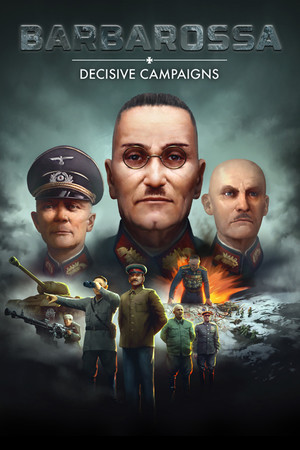
Decisive Campaigns: Barbarossa
If you think hex-and-counter wargames stop at moving divisions around a map, Barbarossa will correct that assumption in about twenty minutes and keep you second-guessing yourself for a hundred hours more.
GamerScout Verdict
Best for wargame veterans and patient newcomers who want operational command politics layered on top of a sharp Eastern Front hex game.
Compare Prices(5 stores)
Every store in this table quotes us in euros, so the EUR figure is the price the seller actually set, not our arithmetic — which is why EUR is also the currency we rank in. We only list an offer here when the store gives us its price in euros, so nothing in this table is a number we invented.
Pick USD, PLN, GBP, CAD or AUD in the header and we convert from EUR at the European Central Bank reference rate — converted amounts are prefixed with ~. Your bank or the store may apply a different rate at checkout. We never hide offers based on where you are: everyone sees this whole table.
We may earn a commission when you buy games through links on this page — at no extra cost to you. It never affects our rankings or verdicts.
Price History
Screenshots & Media
About Decisive Campaigns: Barbarossa
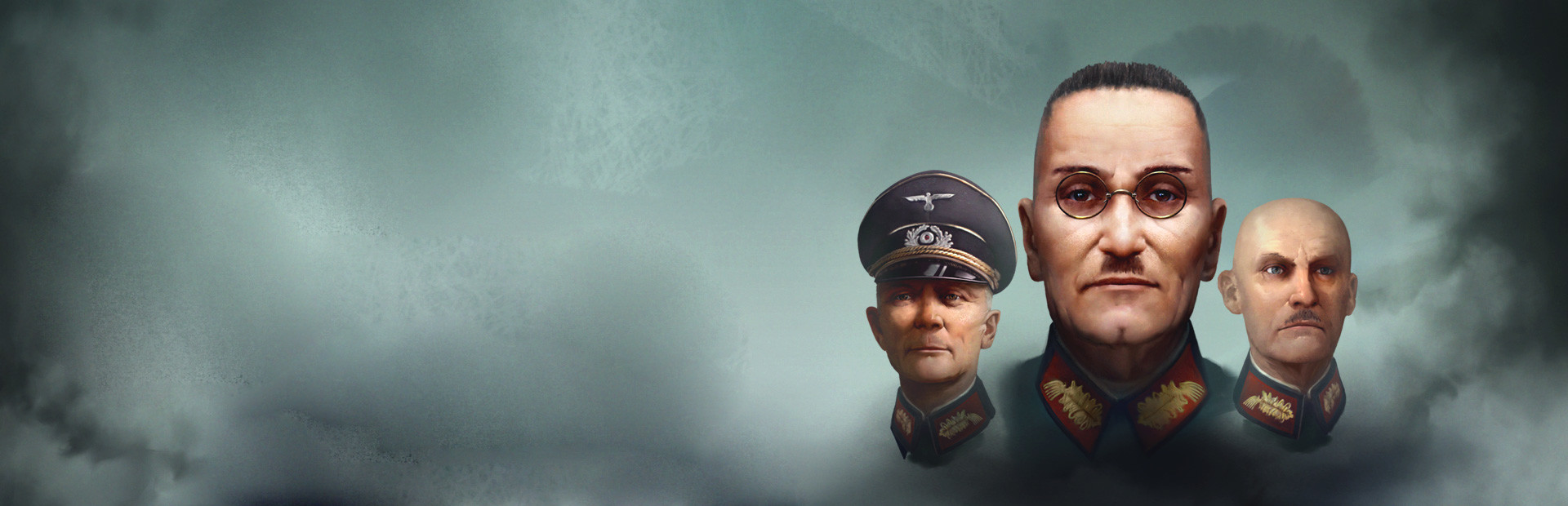
I have a soft spot for wargames that make you feel the weight of command rather than just the arithmetic of combat, and Decisive Campaigns: Barbarossa hits that nerve harder than almost anything else in the genre. The third entry in VR Designs' Decisive Campaigns series, it covers the German invasion of the Soviet Union from June 1941 through to February 1942 at divisional scale, with 30-kilometre hexes and four-day turns. On paper that sounds like standard fare. In practice, the management layer grafted on top changes everything about how the game actually plays. The hex-and-counter foundation is competent and familiar if you have spent time with wargames. Units have action points for movement and combat, HQ proximity governs supply and morale, and overextending your panzer spearheads without converting the Soviet rail gauge first will leave your armour stranded and under-supplied. Air power and artillery enter the picture through a card system: you spend them to blitz a sector, protect a flank, switch a formation between Blitz, Offensive, and Defensive stances, or call in Luftwaffe support. That card economy is tight by design and forces constant triage. The pure wargame layer is solid, if not dramatically innovative compared to Gary Grigsby territory, but it forms a sensible chassis. What separates Barbarossa from its peers is the RPG-inflected political system wrapped around all of that. Playing the Germans means stepping into the shoes of Franz Halder, Chief of the General Staff, not some omnipotent AI overlord. Subordinates have personalities. They drag their feet when annoyed. Hitler overrides your operational decisions at the worst moments, and whether you lean into his directives or push back costs you political capital either way. The semi-randomised decision events that fire each turn range from propaganda photo shoots and Geneva Convention choices all the way to rail conversion logistics and officer commendations. Every choice ripples back into the field in ways that take several playthroughs to fully trace. The Soviet side mirrors this pressure through Stalin's paranoia, the weakness of his shattered command structure, and tools like Zhukov and Khrushchev deployed to prop up failing army HQs. Crucially, the political layer can be disabled entirely for a cleaner wargame experience, which makes the game accessible to genre newcomers who want to dip in before swimming in the deep end. The learning curve is real and worth naming honestly. The UI is functional rather than pretty, the manual is dense, and your first German campaign will likely end with Army Group Centre stalled east of Smolensk while you puzzle out why your supply lines collapsed. Built-in video tutorials and extensive tooltips flatten that curve considerably, and the Matrix forums still show active discussion years after release, with community-made scenarios and a mod construction set keeping the title alive well past its initial run. The AI has earned genuine respect from the wargaming community: it punishes overconfidence and rewards considered play. Multiplayer runs on the PBEM++ system Matrix uses across its catalogue, serviceable if not flashy. The graphics are purely functional, the battle animations minimal, and the audio loop will become wallpaper within the first session. None of that matters much when you are forty minutes deep into deciding whether to redeploy a panzer group from Army Group South to Centre and what that will do to your relationship with von Rundstedt. The replayability is high by design: one handcrafted campaign built for depth rather than scenario breadth, and the semi-randomised decision system means no two runs play identically. If you want something with the decision density of a Paradox game but focused on a single, specific historical operation at operational scale, Barbarossa occupies a lane that very few titles compete in.

Strategy & simulation
Tags
System Requirements
Minimum
- OS
- OS: Windows Vista, Windows 7, Windows 8, Windows 10
- Memory
- 1 GB RAM
- Storage
- 424 MB available space
- Graphics
- Video/Graphics: 8MB video memory
- Processor
- 1.5 GHZ Processor or Equivalent (Running the game in higher resolution requires more processing power.)
- Sound Card
- Sound: DirectX Compatible Sound Card
Keep exploring
Community Discussion
Be the first to comment on Decisive Campaigns: Barbarossa.
Reviews & Ratings
No ratings available
Game Info
- Developer
- VR Designs
- Publisher
- Matrix Games
- Release Date
- Apr 29, 2016