Dear Esther (Landmark Edition)
Walk a haunted Hebridean island while a fractured letter is read aloud. Dear Esther is mood, grief, and landscape, not a game in the traditional sense, and proud of it.
GamerScout Verdict
Built for players who want mood, grief, and landscape over mechanics - a foundational walking sim that earns its quiet ending.
Compare Prices(8 stores)
Every store in this table quotes us in euros, so the EUR figure is the price the seller actually set, not our arithmetic — which is why EUR is also the currency we rank in. We only list an offer here when the store gives us its price in euros, so nothing in this table is a number we invented.
Pick USD, PLN, GBP, CAD or AUD in the header and we convert from EUR at the European Central Bank reference rate — converted amounts are prefixed with ~. Your bank or the store may apply a different rate at checkout. We never hide offers based on where you are: everyone sees this whole table.
We may earn a commission when you buy games through links on this page — at no extra cost to you. It never affects our rankings or verdicts.
Price History
Screenshots & Media
About Dear Esther (Landmark Edition)
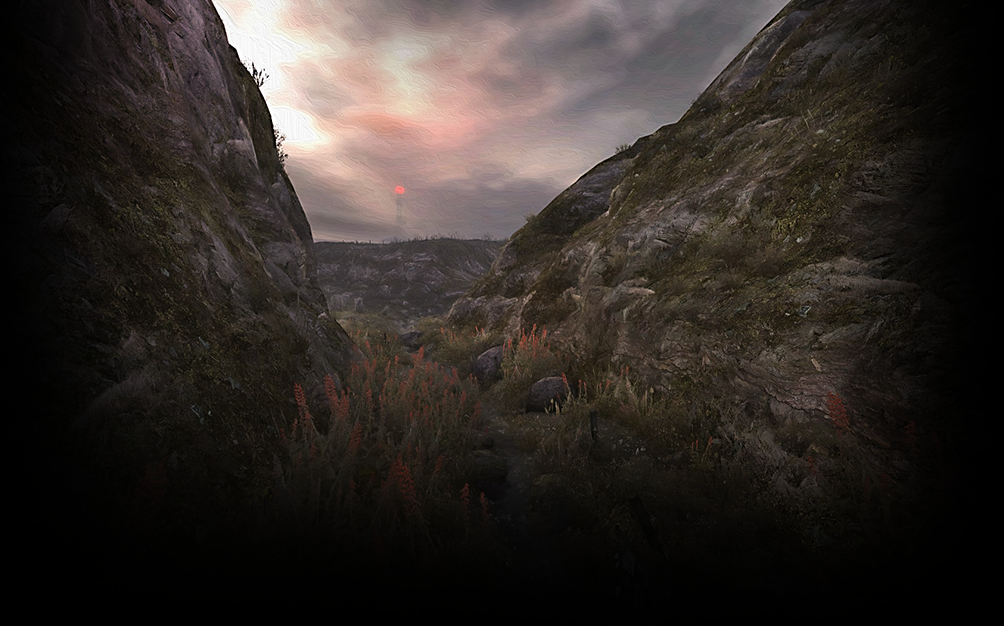
Dear Esther is the kind of experience that genuinely splits a room. Strip away the debate about whether it qualifies as a "game" and what you have is a first-person walk across a desolate, rain-soaked Hebridean island, punctuated by fragmented voice-over readings of a letter addressed to someone named Esther. There are no puzzles, no inventory, no combat, no fail state. You move forward. The island speaks back. That's the whole structure, and for a certain kind of player, it is exactly enough. The Landmark Edition is the definitive version of the original 2012 release, rebuilt with updated visuals and a remastered score by Jessica Curry. That score deserves its own paragraph. It is genuinely one of the most carefully constructed soundscapes in indie games, sparse strings that swell at exactly the right moment, silence used as punctuation rather than absence. Walking through a sea cave while the music shifts beneath you is the kind of thing that sticks. The island itself is beautifully rendered: crumbling cottages, rusted shipwrecks, chalk drawings, antenna towers. Every visual detail feels placed with intention. The Chinese Room understood that if you remove interactivity, everything else has to carry double the weight, and the art direction largely holds up that bargain. The voice-over narration is randomised across playthroughs. Fragments of letters, medical notes, and oblique references to car crashes and grief cycle in different combinations each time you walk the island, which is an elegant way to reward a second visit without demanding one. The writing is literary in the best and occasionally the most frustrating sense: poetic, elliptical, never quite spelling out what happened. Some players find this affecting. Others find it opaque to the point of irritation. Both reactions are legitimate. If you go in expecting a clear narrative payoff, the Mixed review score on Steam will start making sense around the 90-minute mark. Runtime is roughly 90 minutes to two hours for a single pass. That brevity is not a flaw. Dear Esther knows exactly when it ends, and the final section earns the emotional register it is aiming for. The pacing in the middle stretch does drag in places, particularly a long exterior plateau that feels slightly under-furnished compared to the cave sequences. But the slow walk is the point. This is not ambient wallpaper; it is asking you to pay attention, to sit inside grief and landscape without a quest marker pulling you forward. Whether that feels meditative or tedious depends entirely on the mood you bring to it. This is a game for players who already have a soft spot for walking sims and narrative-first experiences, Proteus, Firewatch, What Remains of Edith Finch territory. It is also one of the foundational texts of that whole genre, which matters historically even if the form has been refined by others since. If you have never tried a walking sim and are curious whether the format speaks to you, Dear Esther is a fair entry point precisely because it commits so completely to its own logic. If you need a control scheme and a feedback loop, it will feel empty. Know which category you fall into before you sit down with it.

Indie & narrative
Tags
System Requirements
Minimum
- Processor
- Intel Core 2 Duo E4600 (2 * 2400), AMD Athlon X2 4200+ (2 * 2200) or equivalent
- Memory
- 2 GB RAM
- Graphics
- NVIDIA GeForce 7600GT (256 MB), AMD Radeon X1600 XT (256 MB)
- Storage
- 2 G…
Recommended
- Processor
- Intel Core 2 Duo E7300 (2 * 2660), AMD A8-3850 (4 * 2900) or equivalent
- Memory
- 4 GB RAM
- Graphics
- NVIDIA GeForce GTX 560 Ti (1024 MB), AMD Radeon HD7770 (102…
Keep exploring
Community Discussion
Be the first to comment on Dear Esther (Landmark Edition).
Reviews & Ratings
Game Info
- Developer
- The Chinese Room
- Publisher
- Curve Digital
- Release Date
- Feb 14, 2017