Creeper World 3: Arc Eternal
Forget everything you know about tower defense: this one simulates a hostile fluid eating your base alive, and your only answer is a spreadsheet-worthy chain of collectors, blasters, mortars, and split-second terraforming calls.
GamerScout Verdict
Essential for strategy players who want a genuinely novel enemy system and hundreds of hours of community-built content to back it up.
Compare Prices(5 stores)
Every store in this table quotes us in euros, so the EUR figure is the price the seller actually set, not our arithmetic — which is why EUR is also the currency we rank in. We only list an offer here when the store gives us its price in euros, so nothing in this table is a number we invented.
Pick USD, PLN, GBP, CAD or AUD in the header and we convert from EUR at the European Central Bank reference rate — converted amounts are prefixed with ~. Your bank or the store may apply a different rate at checkout. We never hide offers based on where you are: everyone sees this whole table.
We may earn a commission when you buy games through links on this page — at no extra cost to you. It never affects our rankings or verdicts.
Price History
Screenshots & Media
About Creeper World 3: Arc Eternal
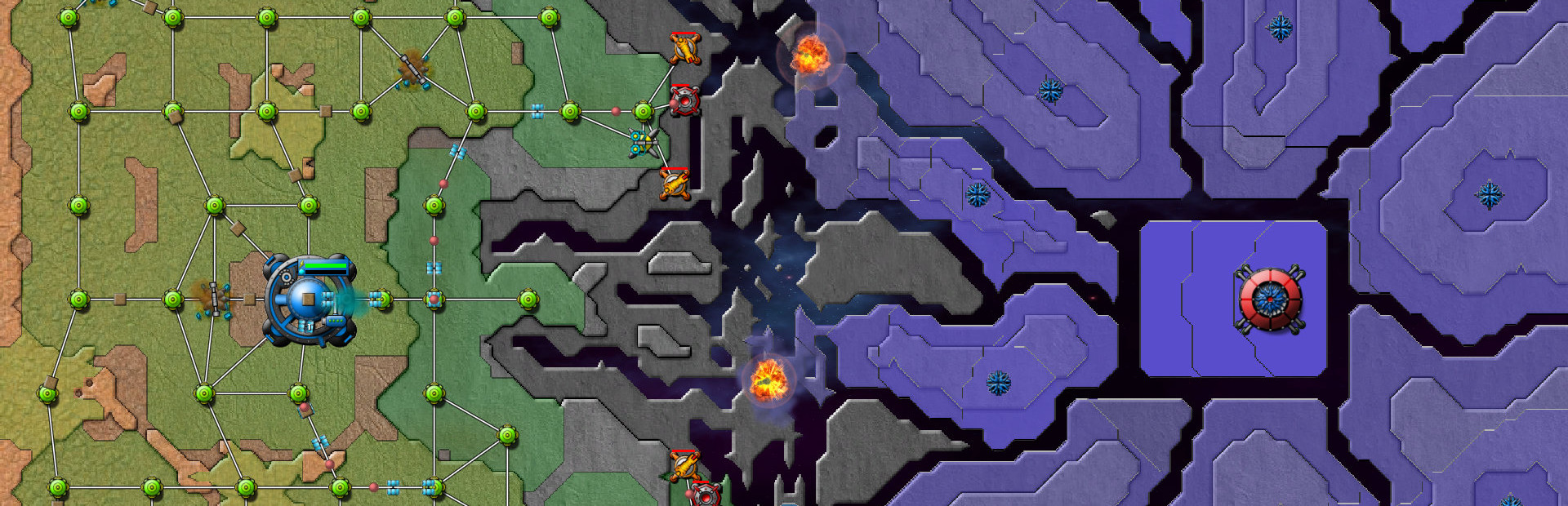
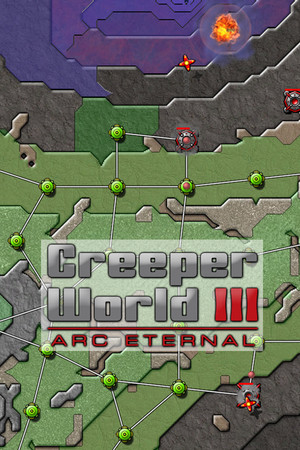
I've sunk embarrassing hours into Creeper World 3, and the thing that keeps pulling me back is how cleanly it sidesteps the genre it superficially resembles. Calling it tower defense is a category error that does the strategic depth a disservice. The enemy here is not a column of units marching down a lane. It is a physics-simulated fluid that pours from emitters, fills low-lying terrain, and silently drowns your collectors the moment your energy budget slips. Your brain shifts into a different mode entirely: reading elevation contours, projecting flow paths, rationing energy packets across a network of relay nodes before a single weapon gets placed. That cognitive rhythm is unlike anything else in the strategy genre right now. The mechanical toolkit grows steadily across the Arc Eternal campaign, which spans nine star systems and roughly fifty missions. Early maps hand you blasters and mortars, then layer in sprayers for anti-creeper production, Guppies for air-dropping packets past flooded zones, a Forge for researching aether-fueled upgrades, and TERP terraforming nodes that literally reshape the battlefield. Each new tool reframes how you think about the maps that came before it. The campaign's pacing as a tutorial is genuinely well-constructed: every mission is built around one or two new systems, and the learning curve respects the player enough to let them experiment rather than scripting a single correct answer. Newcomers willing to play through those early planets in order will find themselves competent by the midpoint without ever hitting a wall that feels arbitrary. That is rarer than it should be in this genre. Post-campaign is where the hours truly vanish. The Prospector Zone offers procedurally generated maps seeded by the Dial Map Device, which lets you tweak dozens of constraints and share addresses with other players. Tormented Space is the endgame gauntlet, stacked with maps that make the story missions look like warm-ups. Colonial Space is the community hub, an active database of player-scripted levels using the built-in CRPL language, which is expressive enough that some creators have shipped entirely custom enemy types and mechanics on top of the base engine. The mod-adjacent ecosystem here punches well above what you typically see from a solo indie developer. The honest criticism is that the core winning pattern does not change as much as the growing toolkit implies. Secure a foothold, expand collectors, push weapons forward incrementally, drop a nullifier on the emitter, repeat. Players who need scenario variety baked into every mission rather than emerging from terrain differences will hit a repetitive feeling before the campaign ends. The main storyline also wraps up without a lot of the wild curveball scenarios the community maps deliver, with the notable exception of the final two missions, which suddenly and effectively shift the rules. The graphics are functional pixel-art from 2014, which is worth flagging only because the screenshots will undersell what playing it actually feels like. For a strategy-focused player who cares about decision density, energy economy math, and a community that keeps producing content over a decade after release, this is a deep well with a very low floor for entry and a ceiling that Tormented Space makes genuinely hard to find.

Strategy & simulation
Tags
System Requirements
Minimum
- OS
- Windows XP
- Memory
- 1 GB RAM
- DirectX
- Version 9.0c
- Storage
- 500 MB available space
- Graphics
- Shader Model 2.0 or better
- Processor
- Single Core 2 GHz
Recommended
- OS
- Windows 7 or later
- Memory
- 4 GB RAM
- DirectX
- Version 9.0c
- Storage
- 1 GB available space
- Processor
- Dual Core 2Ghz
Keep exploring
Community Discussion
Be the first to comment on Creeper World 3: Arc Eternal.
Reviews & Ratings
No ratings available
Game Info
- Developer
- Knuckle Cracker
- Publisher
- Knuckle Cracker
- Release Date
- Mar 27, 2014