Compare Particle Fleet: Emergence prices across 50+ stores and find the best deal. Developed by Knuckle Cracker. Published by Knuckle Cracker. Released on 9/29/2016. Available on PC, Mac, Linux. Genres: Indie, Simulation, Strategy.

Physics-driven fleet combat where the enemy doesn't follow a script - it flows, bounces, and overwhelms. Worth every hour if you can handle asymmetric pressure.

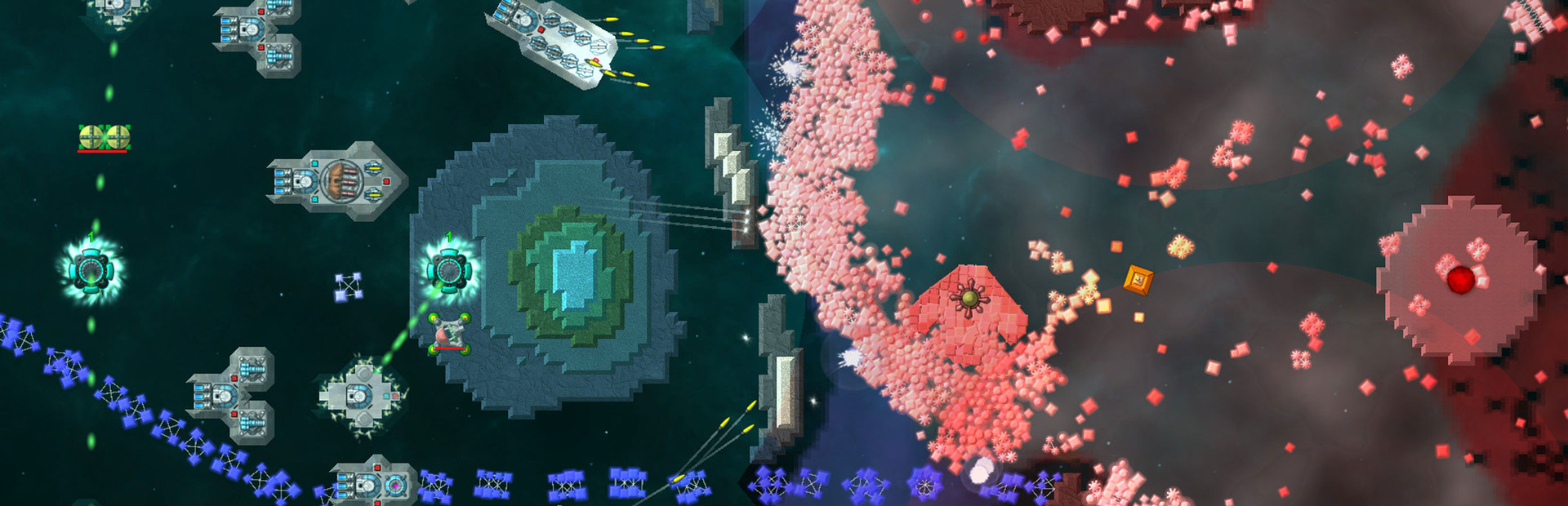
My spreadsheet instincts lit up the moment I realised the Particulate in this game isn't a scripted wave system pretending to be smart - it's a real-time physics simulation. Particle Fleet: Emergence sits at a genuinely unusual intersection: part RTS, part tower defense, part ship-design sandbox. You command a fleet of partially destructible, self-repairing ships against an enemy that moves more like fluid dynamics than an opponent following waypoints. That core premise alone separates it from nearly everything else on the strategy shelf, and for a certain kind of player - the kind who reads ability tooltips before touching a unit - it clicks immediately. The 16-mission story campaign does its job as a mechanical tutorial, introducing enemy variants gradually: standard Particulate swarms, Stunners, the static barrier called Struct, the terrain-driven Emergent, and the more aggressive Doppels. Each new enemy type typically arrives alongside a new ship plan you can collect and add to your roster, which keeps the pacing feeling deliberate rather than arbitrary. Energy sources are the strategic currency here - capturing them funds new ship construction and keeps your existing fleet self-repairing, so territorial control matters in a way that feels genuinely consequential. Where the campaign stumbles is in overall challenge; early and mid missions lean easy, and the story text won't win any awards. The difficulty ceiling only rises meaningfully in the final stretch, and the real test comes after you leave the campaign behind. That post-campaign space is where Particle Fleet earns its longevity. The Simulacrum mode generates procedural skirmish maps with a deep parameter set, and the built-in ship designer lets you build custom hulls and field them in any mission. There's a community map exchange where user-submitted levels push the mechanics much harder than the main campaign does, and the level editor supports a scripting language capable of genuinely complex scenario construction. The solo developer behind Knuckle Cracker has historically been responsive to bug reports and community suggestions, which means the game launched in a reasonably solid state and received targeted post-launch fixes. The graphics are strictly retro-2D pixel work - nobody is buying a KC game for visuals - but the simulation itself produces genuinely spectacular-looking particle collisions that carry their own visual appeal. The honest caveats: if your primary attachment to the Creeper World series was the base-building loop, Particle Fleet removes most of that. You build ships, not static installations, and the fleet management can feel fiddly when micromanaging several units at once. Sound design is thin, with a small pool of effects that wear out their welcome by mid-campaign. A minority of players find the strategic layer too streamlined once the initial novelty of the physics enemy fades. Those are real concerns, not nitpicks. But for a player who prioritises decision-making around resource denial, fleet composition, and managing an asymmetric threat, the depth is there - you just have to get past the campaign to find it. Steam's 92% positive rating across over a thousand reviews is a reliable signal that the audience who fits this game's frequency tends to stay loyal to it. Diego, Scout Team

Particle Fleet: Emergence
IndieSimulationStrategy

Particle Fleet: Emergence

Sep 29, 2016Knuckle Cracker
GamerScout Says

Physics-driven fleet combat where the enemy doesn't follow a script - it flows, bounces, and overwhelms. Worth every hour if you can handle asymmetric pressure.

PCMacLinux
Best Price Available
0.00
at N/A
Historical low: $9.46

Compare Prices(0 stores)

Loading prices...

We may earn a commission when you buy games through links on this page — at no extra cost to you. It never affects our rankings or verdicts.

Screenshots & Media

Screenshot

About Particle Fleet: Emergence

My spreadsheet instincts lit up the moment I realised the Particulate in this game isn't a scripted wave system pretending to be smart - it's a real-time physics simulation. Particle Fleet: Emergence sits at a genuinely unusual intersection: part RTS, part tower defense, part ship-design sandbox. You command a fleet of partially destructible, self-repairing ships against an enemy that moves more like fluid dynamics than an opponent following waypoints. That core premise alone separates it from nearly everything else on the strategy shelf, and for a certain kind of player - the kind who reads ability tooltips before touching a unit - it clicks immediately. The 16-mission story campaign does its job as a mechanical tutorial, introducing enemy variants gradually: standard Particulate swarms, Stunners, the static barrier called Struct, the terrain-driven Emergent, and the more aggressive Doppels. Each new enemy type typically arrives alongside a new ship plan you can collect and add to your roster, which keeps the pacing feeling deliberate rather than arbitrary. Energy sources are the strategic currency here - capturing them funds new ship construction and keeps your existing fleet self-repairing, so territorial control matters in a way that feels genuinely consequential. Where the campaign stumbles is in overall challenge; early and mid missions lean easy, and the story text won't win any awards. The difficulty ceiling only rises meaningfully in the final stretch, and the real test comes after you leave the campaign behind. That post-campaign space is where Particle Fleet earns its longevity. The Simulacrum mode generates procedural skirmish maps with a deep parameter set, and the built-in ship designer lets you build custom hulls and field them in any mission. There's a community map exchange where user-submitted levels push the mechanics much harder than the main campaign does, and the level editor supports a scripting language capable of genuinely complex scenario construction. The solo developer behind Knuckle Cracker has historically been responsive to bug reports and community suggestions, which means the game launched in a reasonably solid state and received targeted post-launch fixes. The graphics are strictly retro-2D pixel work - nobody is buying a KC game for visuals - but the simulation itself produces genuinely spectacular-looking particle collisions that carry their own visual appeal. The honest caveats: if your primary attachment to the Creeper World series was the base-building loop, Particle Fleet removes most of that. You build ships, not static installations, and the fleet management can feel fiddly when micromanaging several units at once. Sound design is thin, with a small pool of effects that wear out their welcome by mid-campaign. A minority of players find the strategic layer too streamlined once the initial novelty of the physics enemy fades. Those are real concerns, not nitpicks. But for a player who prioritises decision-making around resource denial, fleet composition, and managing an asymmetric threat, the depth is there - you just have to get past the campaign to find it. Steam's 92% positive rating across over a thousand reviews is a reliable signal that the audience who fits this game's frequency tends to stay loyal to it. Diego, Scout Team

Tags

singleplayerachievementscloud-savestier:indiePhysics SimulationShip DesignerAsymmetric RTSCommunity MapsReal-Time with PauseFleet ManagementProcedural SkirmishPost-Campaign Depth

Steam Deck & Linux

Steam Deck PlayableProtonDB Platinum

Valve rates this game Steam Deck Playable. Runs flawlessly on Linux out of the box. Based on 6 ProtonDB community reports.

System Requirements

Minimum

OS
Windows 7 or later
Memory
3 GB RAM
DirectX
Version 9.0c
Storage
2 GB available space
Processor
Dual Core 2Ghz

Recommended

OS
Windows 7 or later
Memory
4 GB RAM
DirectX
Version 9.0c
Network
Broadband Internet connection
Storage
4 GB available space
Processor
Quad Core 2Ghz

Community Discussion

Be the first to comment on Particle Fleet: Emergence.

Reviews & Ratings

No ratings available

Game Info

Developer
Knuckle Cracker
Publisher
Knuckle Cracker
Release Date
Sep 29, 2016

Price Alert

Get notified when the price drops below your target!

Create Alert

Price History

2026-06-139.46(lowest)
2026-06-129.46(lowest)
2026-06-119.46(lowest)
2026-06-109.46(lowest)
2026-06-099.46(lowest)
2026-06-089.46(lowest)

More from Knuckle Cracker

Buy smarter: helpful guides

Looking for more? See games like Particle Fleet: Emergence

Frequently asked questions about Particle Fleet: Emergence

How much does Particle Fleet: Emergence cost?

Particle Fleet: Emergence pricing changes often and varies by store, edition and region. The live price table on this page compares the cheapest in-stock key and store offers across 50+ verified shops, so you always see the current lowest price before you buy.

Where can I buy Particle Fleet: Emergence cheapest?

Compare Particle Fleet: Emergence prices across every verified store in the price table on this page. We list the cheapest in-stock key and store offers, updated regularly, so you always see the best current deal before you buy.

What platforms is Particle Fleet: Emergence available on?

Particle Fleet: Emergence is available on PC, Mac, Linux.

When was Particle Fleet: Emergence released?

Particle Fleet: Emergence was released on 29 September 2016.

Who developed Particle Fleet: Emergence?

Particle Fleet: Emergence was developed by Knuckle Cracker.