
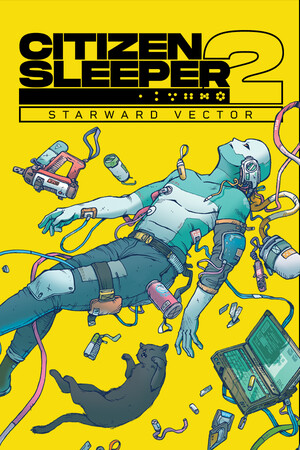
Citizen Sleeper 2: Starward Vector
A malfunctioning android, a pursuing gang lord, and five dice rolled at the start of every day: Starward Vector asks whether found family can hold together when the odds keep breaking against you.
GamerScout Verdict
Built for patient readers who want their dice rolls to carry emotional weight, not just tactical outcomes.
Compare Prices(7 stores)
Every store in this table quotes us in euros, so the EUR figure is the price the seller actually set, not our arithmetic — which is why EUR is also the currency we rank in. We only list an offer here when the store gives us its price in euros, so nothing in this table is a number we invented.
Pick USD, PLN, GBP, CAD or AUD in the header and we convert from EUR at the European Central Bank reference rate — converted amounts are prefixed with ~. Your bank or the store may apply a different rate at checkout. We never hide offers based on where you are: everyone sees this whole table.
We may earn a commission when you buy games through links on this page — at no extra cost to you. It never affects our rankings or verdicts.
Price History
Screenshots & Media
About Citizen Sleeper 2: Starward Vector
I kept thinking about Citizen Sleeper 2 between sessions, which for a text-heavy RPG that runs around twelve hours is a stronger endorsement than any score. Solo developer Gareth Damian Martin has built something genuinely difficult to categorise: the skeleton is a tabletop dice-allocation game, the flesh is a grounded cyberpunk visual novel, and the soul is closer to Becky Chambers or Firefly than to anything else in the RPG catalogue. You pick one of three classes at the start - Operator for interface and hacking work, Extractor for physical endurance, Machinist for repairs and engineering - and those choices quietly shape every risk you take for the rest of the run. Each in-game cycle hands you five six-sided dice, and you slot them into actions across the hub settlements of the Starward Belt. High rolls open clean outcomes; low rolls in dangerous actions can break dice outright, leaving you with even fewer options next cycle. It is a pressure system that feels exactly right for a story about a body falling apart. The big structural addition over the first game is Contracts. These are self-contained high-risk missions that pull you away from the comfort of hub exploration and into focused, countdown-clock scenarios: salvaging a derelict, a risky heist, asteroid surveys, confronting the criminal Laine who is constantly on your trail. You bring up to two crew members, each carrying their own two action dice and distinct skill sets. Serafin is your first companion, specialised in Engage and Endure. Later you can recruit characters like Nia, a sharp Intuit specialist found in Flotsam, or Juni, an Interface expert locked behind completing the Shipmind Wreck job. Contracts also carry a Stress meter of their own: negative outcomes fill it, and crisis points trigger escalating complications before full failure. The resource loop around contracts - fuel to travel, supplies to sustain cycles on site - means every departure requires genuine planning rather than casual exploration. That logistical tension is where the game earns its reputation for making you feel consistently close to disaster. The world itself is richer and more varied than the single-station setting of the first game. Hub locations across the Belt each have their own visual character and cast of NPCs with full story arcs, and the mostly subdued, carefully textured soundtrack by Amos Roddy keeps the atmosphere desolate without being oppressive. The writing is the centrepiece, and it mostly holds up. Where some players found the original's writing more emotionally resonant, this sequel trades some of that intimacy for scope and thematic weight around camaraderie, systemic crisis, and what solidarity actually costs under corporate collapse. The morally grey ethical framing means there is rarely a clean choice, which suits the dice system well: you are often picking the least bad option with whatever numbers you rolled. There are real criticisms worth sitting with. Some reviewers felt the ending does not pay off the crew relationships built across the journey - the climax arrives and departs without fully using the weight of those bonds. The map UI is genuinely clunky, and selecting crew dice during contracts is less smooth than the rest of the interaction design. A minority of players found the dice loop monotonous across a full run, and anyone expecting voiced dialogue or branching outcomes that meaningfully depend on crew pairings will find the interplay shallower than the premise suggests. The game is also intensely text-heavy; if you struggle with unvoiced prose for long sessions, that friction is real and will not disappear. For the reader who devoured the first Citizen Sleeper, or who loves the cadence of slow-burn tabletop fiction, Starward Vector is a considered and handcrafted twelve hours that knows exactly when to stop. The opening cycles can feel slow while the systems click into place, but the patience is worth it. This is one of those rare games where the mechanics and the themes are the same conversation.

Indie & narrative
Tags
System Requirements
Minimum
- OS
- Windows 10
- Memory
- 4 GB RAM
- DirectX
- Version 11
- Storage
- 2 GB available space
- Graphics
- DirectX 11 compatible GPU
- Processor
- Requires a 64-bit processor and operating system
Recommended
Requires a 64-bit processor and operating system
Keep exploring
Community Discussion
Be the first to comment on Citizen Sleeper 2: Starward Vector.
Reviews & Ratings
Game Info
- Developer
- Jump Over The Age
- Publisher
- Fellow Traveller
- Release Date
- Jan 31, 2025