
Chainsaw Warrior: Lords of the Night (Classic)
A digital conversion of Games Workshop's 1987 solo board game that respects the source material enough to keep the brutal dice variance but adds enough new decision points to make each run feel like a genuine puzzle.
GamerScout Verdict
Best for tabletop-adjacent strategy fans who want short, punishing runs with genuine loadout decisions and can stomach heavy dice variance.
Compare Prices(2 stores)
Every store in this table quotes us in euros, so the EUR figure is the price the seller actually set, not our arithmetic — which is why EUR is also the currency we rank in. We only list an offer here when the store gives us its price in euros, so nothing in this table is a number we invented.
Pick USD, PLN, GBP, CAD or AUD in the header and we convert from EUR at the European Central Bank reference rate — converted amounts are prefixed with ~. Your bank or the store may apply a different rate at checkout. We never hide offers based on where you are: everyone sees this whole table.
We may earn a commission when you buy games through links on this page — at no extra cost to you. It never affects our rankings or verdicts.
Price History
Screenshots & Media
About Chainsaw Warrior: Lords of the Night (Classic)
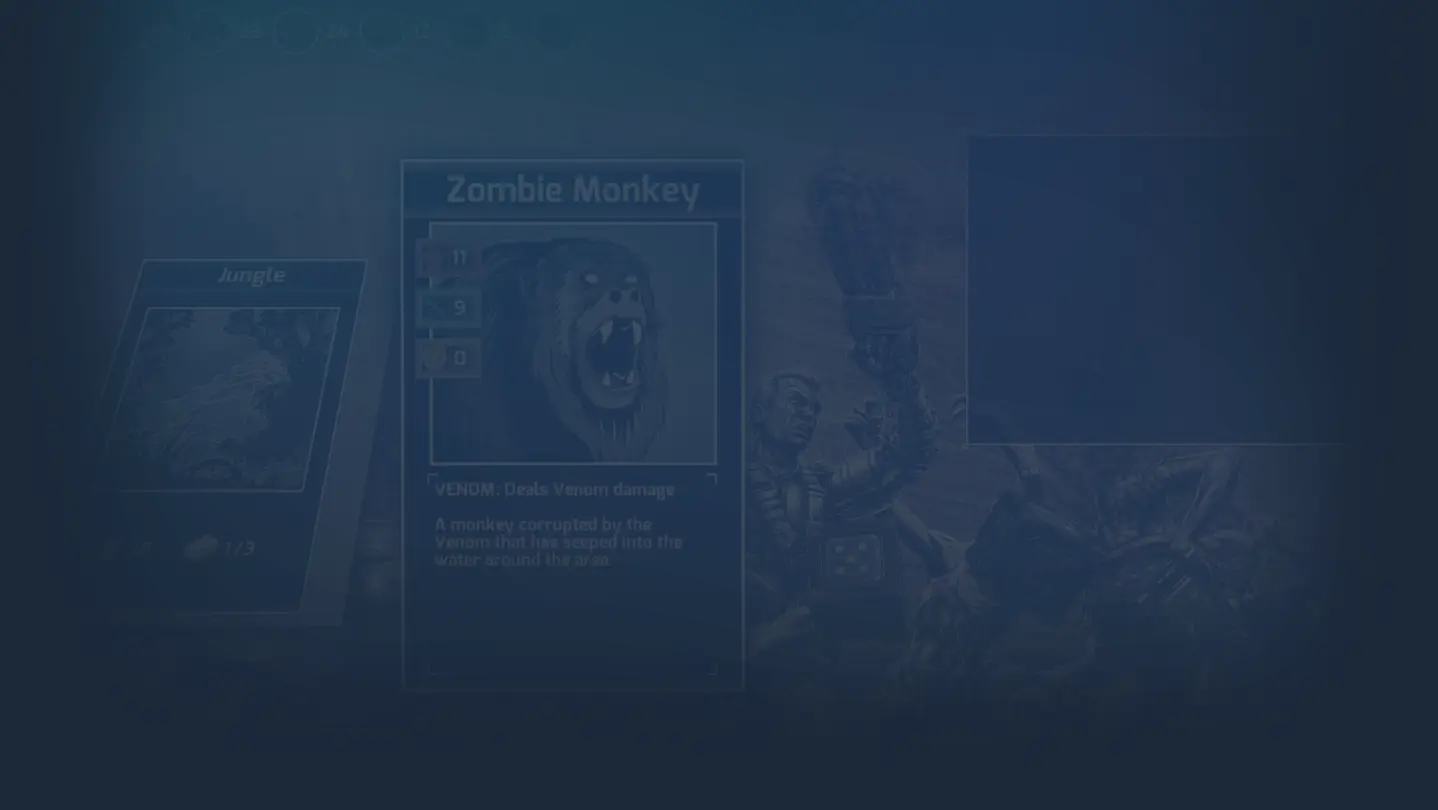
My first honest reaction to Lords of the Night was surprise that a card-driven, dice-resolved board game adaptation could produce genuine strategic tension on a PC screen. Strip away the Aztec zombie theming and what you have is a tightly scoped risk-management exercise: you get sixty minutes of in-game time to fight through three sequential decks, Jungle, Lost City, and Pyramid, reach the entity called Darkness, and end it with a Laser Lance or an Implosion Vest before the clock or your own hit points kill the run. Every card flip is a forced decision with incomplete information, which is exactly the kind of situation I find interesting. The character setup is where the strategy actually begins. Your Chainsaw Warrior's attributes, Hand-to-Hand combat, Marksmanship, Reflex, plus separate tracks for venom and radiation tolerance, are partially randomised at the start. Lords of the Night softens that randomisation compared to the first game, which works in your favour as a newcomer. The loadout phase is the real pre-run puzzle: you pick from a pool of weapons and items (chainsaw variants, a Combat Shotgun, the Reaper, a Flamethrower, net traps, targeting systems, armour) while managing a hard equipment point limit. The critical constraint is ammo. Certain enemies, including mini-bosses with unique mechanics, can only be killed by specific heavy or special weapons, so burning your Flamethrower charges on early-zone chaff is the kind of mistake that ends a run quietly two decks later. Supply drops scattered through the card decks partially mitigate bad early decisions, but do not fully bail you out. Combat itself is dicier than a strategy purist like me would prefer. Each encounter resolves through stat comparisons and dice rolls, which means the skill expression lives almost entirely in loadout choices and resource conservation rather than in moment-to-moment combat tactics. That fidelity to the 1987 board game is also the game's main weakness: critics and community players alike noted that the nested menu structure (you confirm melee actions through multiple button layers every fight) feels like the board game's physical card sequence pasted directly onto a screen rather than redesigned for a digital interface. The tutorial has been flagged as inconsistent, and some mechanical rules, particularly around ranged combat and the new enemy abilities, go under-explained. First-timers should expect to lose a run or two purely to rule confusion rather than poor decision-making. Where Lords of the Night genuinely improves on its predecessor is breadth of content and replayability. Three run phases with distinct enemy decks, new mini-boss types with specific tactical requirements, Aztec god blessings earned from hidden temples, and multiple possible endings give each session something different to react to. Runs stay short, typically under an hour, so the high death rate never becomes punishing in the time sense. There is no mod ecosystem to speak of, no post-launch community content, and Auroch Digital's publishing rights lapsed in 2021, which means no future patches. What you see is what you get, permanently. This is a game for players who like tabletop-adjacent single-player experiences and can tolerate meaningful luck variance in exchange for genuine pre-run planning depth. If you need reactive skill expression in your strategy games, this will frustrate you. If you played the original Chainsaw Warrior or enjoy Games Workshop's cult history, Lords of the Night is the cleaner, better-explained entry point and worth the time investment for a few sessions of tense card-flip decision-making.

Strategy & simulation
Tags
System Requirements
Minimum
- OS
- Windows XP SP3
- Memory
- 1 GB RAM
- Storage
- 400 MB available space
- Graphics
- Direct X 9.0c/OpenGL 2.1 compatible card
- Processor
- Intel 1.6GHz Processor or equivalent
- Sound Card
- FMOD compatible sound card
Recommended
- OS
- Windows 7
- Memory
- 2 GB RAM
- Storage
- 500 MB available space
- Graphics
- Direct X 9.0c/OpenGL 2.1 compatible card
- Processor
- Dual Core 2.0 or equivalent
- Sound Card
- FMOD compatible sound card
Keep exploring
Community Discussion
Be the first to comment on Chainsaw Warrior: Lords of the Night (Classic).
Reviews & Ratings
No ratings available
Game Info
- Developer
- Auroch Digital
- Publisher
- Auroch Digital
- Release Date
- Feb 17, 2015