Bomber Crew
FTL's crisis-management loop relocated to a WWII Lancaster, with permadeath stakes high enough to make every fuel-tank switch feel genuinely consequential.
GamerScout Verdict
Recommended for FTL fans and micromanagement lovers who can stomach a brutal mid-campaign wipe and start over smarter.
Compare Prices(10 stores)
Every store in this table quotes us in euros, so the EUR figure is the price the seller actually set, not our arithmetic — which is why EUR is also the currency we rank in. We only list an offer here when the store gives us its price in euros, so nothing in this table is a number we invented.
Pick USD, PLN, GBP, CAD or AUD in the header and we convert from EUR at the European Central Bank reference rate — converted amounts are prefixed with ~. Your bank or the store may apply a different rate at checkout. We never hide offers based on where you are: everyone sees this whole table.
We may earn a commission when you buy games through links on this page — at no extra cost to you. It never affects our rankings or verdicts.
Price History
Screenshots & Media
About Bomber Crew
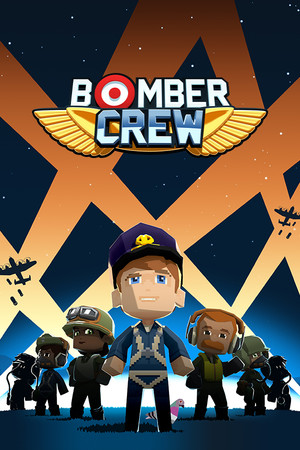
I have a spreadsheet for most strategy games I pick up. Bomber Crew is one of the few that made me close it after an hour because no column could capture the specific panic of watching my tail gunner bleed out while my navigator missed the bomb-run window and my engineer was still wrestling with a fuel-tank switch on the wrong side of the aircraft. That chaos is the pitch, and for the right kind of player, it is absolutely the product. The game puts you in command of a seven-person Lancaster crew on bombing missions over occupied Europe. You are not flying the plane, you are conducting it, clicking crew members to their stations, ordering the pilot to altitude, tasking the navigator to plot custom waypoints around flak corridors, and personally lining up the bomb sight when the target comes into view. The seven roles, pilot, flight engineer, bomb aimer, radio operator, navigator, and two gunners, all level up independently, and at certain thresholds you assign a secondary specialization: a radio operator who cross-trains as a navigator, a gunner who can patch engines. That cross-training system is where the real strategic texture lives, because a well-specialized crew handles a crisis that a raw team simply cannot survive. Upgrade decisions for the Lancaster itself add another layer. You are weighing dorsal and ventral turret configurations, choosing between heavier armor plating and the fuel savings that keep you airborne on longer sorties, and deciding whether your budget goes toward a radar upgrade or better oxygen equipment for high-altitude runs. The progression structure is roguelite in all the ways that matter. Crew members are procedurally generated with individual backstories, and permadeath is permanent, full stop. Complete enough standard missions and a Critical Mission unlocks, which gates the next campaign stage. The catch that some players bounce off is the consequence of a late-game wipe: your replacement crew starts at low level, and grinding them back to competency before they can survive the mission tier you were already on is a real loop that can feel like a treadmill. The game does not clearly signal when you should cut losses and restart, which is a genuine design gap. The tutorial covers the basics, crew movement, first aid, gear deployment, landing procedures, but deliberately leaves advanced mechanics like manual fuel routing and flak-avoidance waypointing for players to discover themselves. That friction is intentional, and it works for the same reason FTL's opacity worked, but it will frustrate players who expect a comprehensive onboarding. Challenge Mode deserves a specific call-out for anyone eyeing replayability after the campaign. It swaps the persistent campaign stakes for randomized mission runs with in-flight power-up drops for fuel and repairs, which removes the grind-after-wipe problem entirely and keeps the mid-air crisis management, which is the strongest part of the game, front and center. The USAAF DLC shifts the setting from RAF Lancaster operations to an American bomber variant with its own campaign context, adding meaningful content rather than just cosmetic padding. The Secret Weapons DLC introduces winter environments with active temperature management, where high altitude literally kills insufficiently equipped crew, and jet-powered enemy interceptors that demand faster turret reactions than anything in the base game. The narrative in all of this is thin; the story is almost entirely implied by the stakes, not told. That is a reasonable trade for a game built around systems. At 88 percent positive across more than fifteen thousand Steam reviews, the community verdict is consistent: the game earns its difficulty. The PC version, with mouse-and-keyboard control, is the platform this was built for. Controller support exists and works, but directing crew precisely across the fuselage during a three-simultaneous-threat moment benefits from a cursor. If you respect your fuel gauge, think in contingencies, and do not mind the occasional run that ends in a fireball you probably deserved, Bomber Crew has more staying power than its modest price would suggest.

Strategy & simulation
Tags
System Requirements
Minimum
- Processor
- Intel Core i3-530 (4 * 3000) or equivalent
- Memory
- 2 GB RAM
- Graphics
- Geforce 9800 GT (1024 MB)
- Storage
- 500 MB available space
Recommended
- Processor
- Intel Core i3-6300 (2*3800) or equivalent
- Memory
- 2 GB RAM
- Graphics
- GeForce GTX 560 Ti (1024 MB)
- Storage
- 500 MB available space
DLC & Add-ons for Bomber Crew4
Expansions, DLC packs and add-on content for this game. Click any item to see store offers.
Keep exploring
Community Discussion
Be the first to comment on Bomber Crew.
Reviews & Ratings
Game Info
- Developer
- Runner Duck
- Publisher
- Curve Games
- Release Date
- Oct 19, 2017