Bloodsports.TV
Warcraft 3 hero defense nostalgia hits hard here, but only if you bring friends. Solo sessions dry up fast; a full five-player squad is where this arena brawler actually clicks.
GamerScout Verdict
Best for squads of two to five who want a focused co-op session, not a long-term live-service commitment.
Compare Prices(0 stores)
Loading prices...
We may earn a commission when you buy games through links on this page — at no extra cost to you. It never affects our rankings or verdicts.
Price History
Screenshots & Media
About Bloodsports.TV
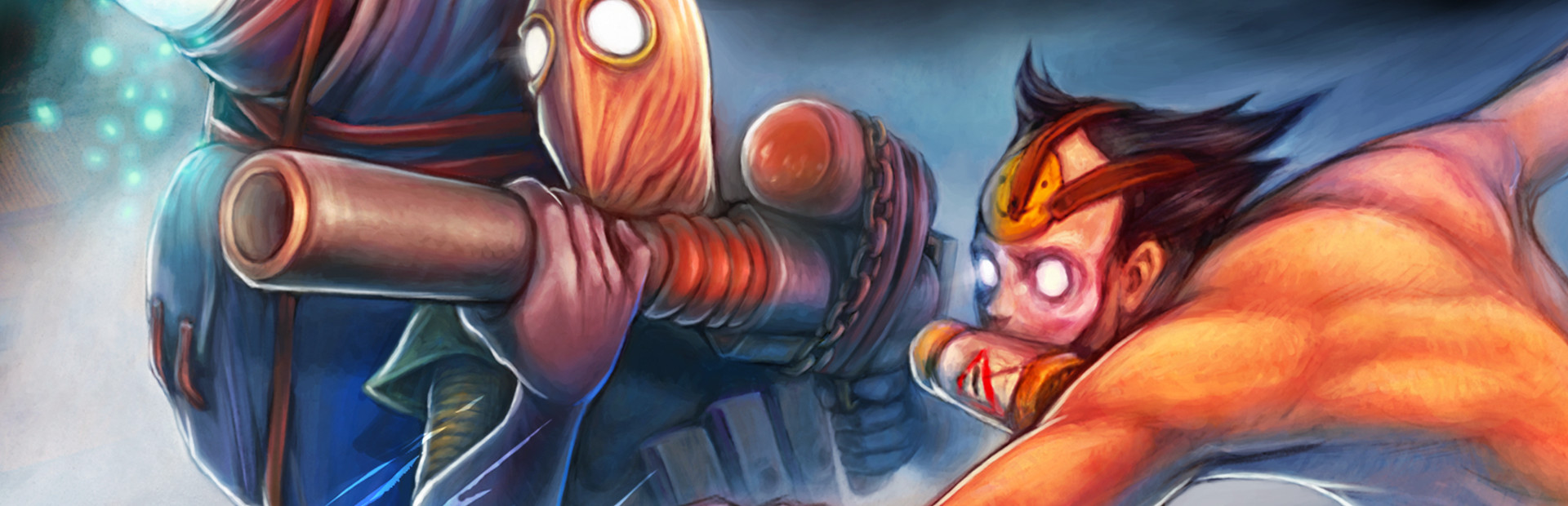
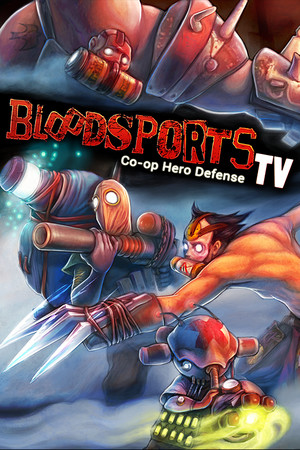
My first instinct when loading Bloodsports.TV was to treat it like a MOBA and start optimizing a lane rotation. That instinct is wrong, and the game is better for it. This is a purely cooperative, top-down wave-defense brawler set in the post-apocalyptic Krater universe, and the absence of any PvP pressure is a genuine design choice, not a limitation. You pick one of eight gladiators spread across four roles, specifically the Bruiser (tank), Slayer (short-range DPS), Regulator (crowd control via ranged projectiles and stuns), and Medikus (healer), then hold a Missile Silo against ten escalating waves of increasingly hostile villagers, rocket-launching lunatics, and specialist counter-units like the Stonecutter, who targets your Bruiser directly. Boss waves land at rounds four, seven, and ten. Between waves you get a brief window to hit the arena shop, spend on gear from a pool of over 90 items, and level up your gladiator's abilities in-session. The item called the Ultra Bludgeonizer, which converts any character's auto-attack into a stun, is exactly the kind of build-enabling quirk that makes the shop interesting. From a pure decision-architecture standpoint, the game is lighter than it looks on paper. The four-class team composition (tank, DPS, CC, healer) is the skeleton of a good comp, but the ceiling on tactical variance is low. By the third run on any given arena, enemy spawn patterns are fully memorized and you shift from reactive play into executing a known script. The Path to Glory challenge system adds some cross-session texture, offering class-specific milestones like absorbing a set amount of damage or reviving teammates a certain number of times, and the Grandmaster challenge, which requires completing all four class trees, grants a permanent cross-class passive bonus that genuinely rewards players who invest time across all roles. The Endless Mode and the APOCALYMPICS difficulty tier exist for crews that want a real stress test, but the skill expression floor stays modest by design. The six arenas each have a distinct footprint and require slightly different positioning habits, though the cell-shaded Borderlands-adjacent art style does most of the heavy lifting in making the maps feel varied. Difficulty scales dynamically with player count, which means a duo session is technically playable and not a misery, but the sweet spot is clearly a full five-player lobby. Critics at launch were uniform on this point: solo play becomes repetitive quickly, and the game's social energy is its actual engine. The announcer's post-apocalyptic commentary and the synth soundtrack loop in a way that reviewers consistently flagged as grating over long sessions, which is a real caveat for anyone planning extended solo grinding. Here is the honest positioning for 2025. The player base is thin. Finding a pickup lobby is not guaranteed, and the game has no mod ecosystem to speak of, which matters to someone like me who grades longevity partly on community-generated content. If you can assemble a reliable group of two to four friends, the short round structure makes it an ideal filler between longer sessions. The tutorial offers beginner, advanced, and pro tracks, so onboarding a MOBA-averse friend is feasible. The content ceiling is real, the long-term hook is limited, and the AI variety runs dry on repeated playthroughs. Call it a good weekend game, not a game-of-the-year contender.

Strategy & simulation
Tags
System Requirements
Minimum
- OS
- Windows Vista*, Windows 7, Windows 8
- Memory
- 2 GB RAM
- DirectX
- Version 10
- Storage
- 2 GB available space
- Graphics
- Radeon HD 5450 (1 GB) or GeForce GT 430 (1 GB)
- Processor
- Intel Core 2 Duo E4600 or AMD Athlon 64 X2 4800+
Recommended
- OS
- Windows 7 or higher
- DirectX
- Version 11
- Network
- Broadband Internet connection
- Storage
- 2 GB available space
- Graphics
- Radeon HD 6950 (1GB) or Geforce GTX560 (1GB)+
- Processor
- Intel Core i5 650 or AMD Phenom II X4 830+
Keep exploring
Community Discussion
Be the first to comment on Bloodsports.TV.
Reviews & Ratings
Game Info
- Developer
- Toadman Interactive
- Publisher
- Fatshark
- Release Date
- Mar 30, 2015