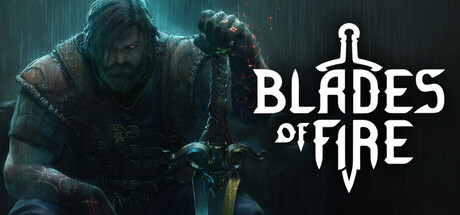
Blades of Fire
The forge is the hook and the heart here: if physically hammering out your own blade before every major fight sounds more compelling than looting a chest, MercurySteam built this one squarely for you.
GamerScout Verdict
Best for action game players who want weapon crafting as a genuine skill, not a loot treadmill, and can tolerate patchy navigation.
Compare Prices(9 stores)
Every store in this table quotes us in euros, so the EUR figure is the price the seller actually set, not our arithmetic — which is why EUR is also the currency we rank in. We only list an offer here when the store gives us its price in euros, so nothing in this table is a number we invented.
Pick USD, PLN, GBP, CAD or AUD in the header and we convert from EUR at the European Central Bank reference rate — converted amounts are prefixed with ~. Your bank or the store may apply a different rate at checkout. We never hide offers based on where you are: everyone sees this whole table.
We may earn a commission when you buy games through links on this page — at no extra cost to you. It never affects our rankings or verdicts.
Price History
Screenshots & Media
About Blades of Fire
I went into Blades of Fire expecting a serviceable God of War clone with a crafting veneer slapped on top. What I found instead was a game where the crafting IS the progression system, full stop. There are no traditional levels to grind. Your power comes from the weapons you make at the Forge of the Gods, accessed through anvils scattered across the world. You pick a weapon family from seven options including spears, greatswords, twin blades, daggers, and polearms, then select a Forge Scroll schematic, choose your materials across blade, edge, core, guard, and pommel slots, and physically hammer the iron into shape against a chalk outline on the anvil, adjusting strike strength, width, and tilt to nail the profile in as few hits as possible. The stars you earn from that process determine how many times the weapon can be repaired before it's gone for good. It sounds like a minigame; it plays like a skill you genuinely develop over the course of a fifty-hour run. Combat feeds directly into that loop in a smart way. Enemies are colour-coded when you lock on: green means your current weapon has the right damage type, orange means marginal, red means go forge something else before you embarrass yourself. Attacks map to four face buttons representing directional strikes, and you can target specific body parts. Parrying, blocking, and dodging are all load-bearing mechanics, not optional extras, and boss encounters in particular demand you use everything the system teaches you. It is not a fast game. Button-mashing will get you killed quickly, and the deliberate pace is either the whole appeal or an immediate dealbreaker depending on your temperament. Where the game earns its mixed critical reception is in the areas outside the forge and the boss arenas. Navigation is a recurring frustration: the maps are vertical and winding, objective markers help only intermittently, and several reviewers across publications flagged the same experience of running in circles looking for a door or a hidden passage. The companion Adso, a young scholar who documents your journey and can be summoned for enemy intel, is a genuinely likeable character and a clever way to surface lore without mandatory cutscenes. But the larger world-building around him tends toward clutter rather than atmosphere, and the mid-game pacing loses focus in ways that the opening chapters conceal well. Some players also found the forging minigame lost its novelty once the novelty of learning it wore off, though the ability to skip re-forging a previously mastered weapon blueprint does ease that friction considerably. Weapon durability can feel punishing early on when materials are tight, though the economy smooths out as you start trading spent blades with the NPC who exchanges them for specific resources of your choosing. The PC release arrives as Version 2.0, which adds New Game Plus, Boss Revival Mode for replaying boss fights and unlocking spell-infused weapon abilities, Elements Transmutation for changing material types mid-playthrough, and Photo Mode. The technical side is solid: good HDR implementation, no shader compilation stutters, and a reportedly well-optimised port. The level design, when it cooperates, is excellent, and the soundtrack by Oscar Araujo is a genuine standout. Character models have a last-gen quality to them that some reviewers flagged, but the creature design and environmental vistas largely hold up. At a Metacritic score of 73, this is a game critics found genuinely interesting but uneven, and the Steam user base sitting around 74 percent positive broadly agrees: the forge is brilliant, the navigation can be maddening, and the overall experience is something only a specific kind of player will call essential. If you want a dark fantasy action game where weapon crafting is a mechanical skill you master rather than a menu you optimise, and where combat rewards patience and preparation over aggression, Blades of Fire delivers that in a way nothing else currently does. If you need tight waypointing, fast traversal, or a traditional loot ladder, you will be fighting the game instead of the enemies.

Catch-all
Tags
System Requirements
Minimum
- OS
- Windows 10
- Memory
- 8 GB RAM
- DirectX
- Version 12
- Storage
- 54 GB available space
- Graphics
- NVIDIA GeForce GTX 960, 4GB or Radeon R9 380, 4GB
- Processor
- Intel core i5-3470 or AMD Ryzen 5 1400
Recommended
- OS
- Windows 10
- Memory
- 16 GB RAM
- DirectX
- Version 12
- Storage
- 54 GB available space
- Graphics
- NVIDIA GeForce RTX 4070 SUPER, 12GB or AMD Radeon RX 6800 XT, 16GB
- Processor
- Intel Core i7-11700KF or AMD Ryzen 5800X
DLC & Add-ons for Blades of Fire1
Expansions, DLC packs and add-on content for this game. Click any item to see store offers.
Keep exploring
Community Discussion
Be the first to comment on Blades of Fire.
Reviews & Ratings
Game Info
- Developer
- MercurySteam
- Publisher
- 505 Games
- Release Date
- May 14, 2026