Avernum 2: Crystal Souls
Sixty-plus hours of dense underground RPG with three concurrent main quests, action-point combat, and more skill-tree decisions than most modern CRPGs will dare give you. Old-school by design, not by accident.
GamerScout Verdict
Best for patient CRPG players who want tactical party combat, deep skill trees, and a world that takes 60-plus hours to exhaust.
Compare Prices(0 stores)
Loading prices...
We may earn a commission when you buy games through links on this page — at no extra cost to you. It never affects our rankings or verdicts.
Price History
Screenshots & Media
About Avernum 2: Crystal Souls
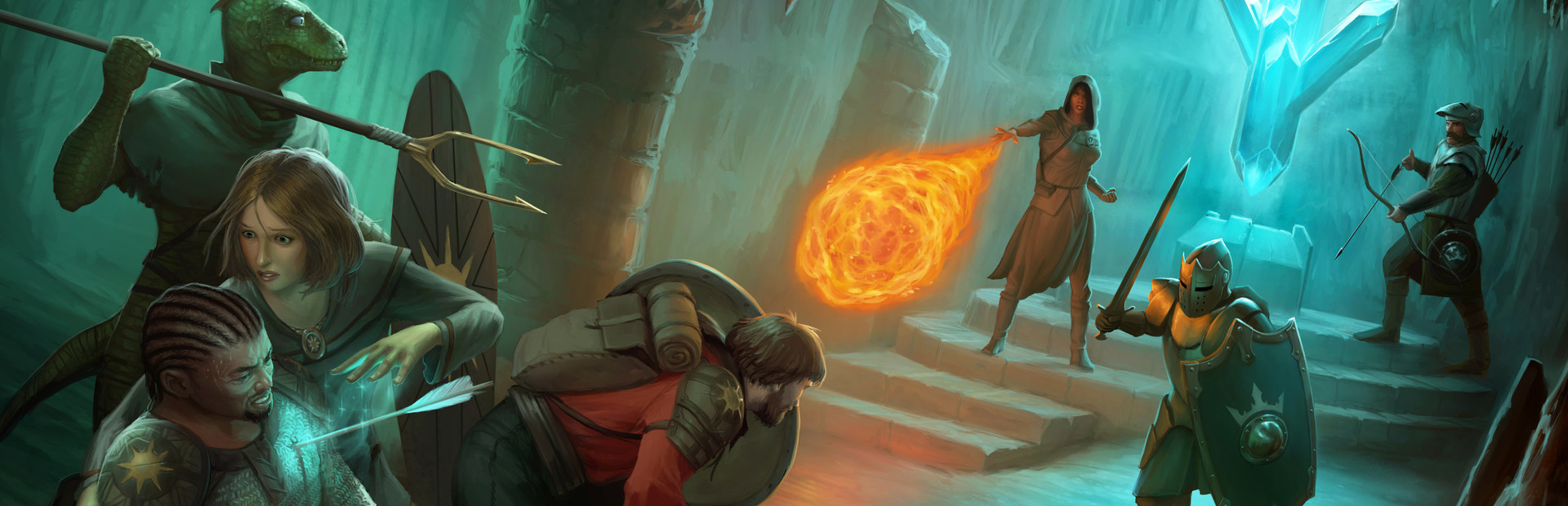
I keep a mental tier list of RPGs that respect the player's intelligence, and Avernum 2: Crystal Souls sits comfortably near the top of it despite visuals that haven't aged particularly well. This is a remake of a 1996 shareware game, and Spiderweb Software made a deliberate choice not to sand off every rough edge, which means the interface will fight you occasionally and the inventory management gets laborious fast. That's the price of admission. What you get in return is a dense, carefully constructed underground world that rewards systematic thinking in a way that most modern RPGs simply don't. The structure will feel familiar if you've played Avernum: Escape from the Pit, but Crystal Souls adds real mechanical weight to the sequel setup. You control a four-character party, assembling them from three races, including the feline Nephilim and the reptile Slitherakai, each carrying slight racial bonuses that occasionally shift NPC dialogue. Class selection feeds into per-character skill trees that are, per community consensus, wide enough to enable genuinely distinct party builds without being so sprawling that you're paralyzed at the level-up screen. Combat flips to turn-based the moment an enemy enters range, with action points governing movement and ability use. Spell progression works differently than most RPGs: mages and priests don't auto-learn spells on level up, they find NPC trainers scattered across the world who teach spells like Fireblast, Lightning Spray, Summon Aid, and Capture Soul. That last one lets you trap a powerful enemy's essence into a soul crystal and summon it later, which is the kind of corner-case tactical depth that keeps build theory interesting deep into the late game. Positioning matters too, since keeping a physically fragile mage behind a melee line is not optional on higher difficulties. The three parallel main quests are the structural backbone worth understanding before you buy. You need to recover the three stolen Crystal Souls from the ancient Vahnatai race, destroy the Empire's invasion portal before the numerical advantage becomes insurmountable, and eventually eliminate Garzahd, the Empire's field commander. None of these resolve quickly, and completing any one of them is a legitimate win condition rather than a consolation prize. Side quests layer on top of that scaffolding thickly: reputation gating controls access to key NPCs including Avernum's king, and quest-turn-ins require physically finding the right NPC rather than using a fast-travel shortcut, because the warp pylon network only covers a fraction of the map. That design choice is either atmospheric world-building or tedious backtracking depending on your tolerance, and honest reviewers are split on it. The fast travel scarcity hurts most in the late game when your quest log is full and you're hauling loot across a cave system the size of a small continent. For newcomers worried about the learning curve: the game eases you in more gracefully than its reputation suggests. The opening hours at Fort Ganrick function as an extended tutorial with low-stakes combat and manageable quest complexity before the world fully opens. Difficulty sliders are adjustable mid-playthrough, which is genuinely newcomer-friendly and not something every Spiderweb title has historically offered. The writing quality is a consistent bright spot, with NPC dialogue that reflects the underground setting in specific and often clever ways. The dialogue choice system is the weakest link on the narrative side, since most branching paths converge quickly regardless of what you pick, and there is limited puzzle variety for thief or mage builds hoping for out-of-combat utility. Character models don't update to reflect equipment changes, a cosmetic omission that some players find deflating after finding a rare artifact. At a Metacritic of 78, Crystal Souls sits slightly below the conversation-starter tier but well above filler. The ceiling here is high if you are the right player: someone who maps dungeons mentally, thinks about spell school synergies, and doesn't need a waypoint marker to feel oriented. It won't convert action-RPG players, and the dated UI requires patience that not everyone has. But for a strategy-minded CRPG fan who prefers deliberate, text-heavy adventure with genuine tactical combat and a world that actually changes between acts, this is exactly the kind of game that gets played in long weekend sessions and remembered for years.

Strategy & simulation
Tags
System Requirements
Minimum
- OS
- Vista
- Memory
- 512 MB RAM
- Storage
- 500 MB available space
- Graphics
- OpenGL-compatible
- Processor
- 800 MhZ processor
Keep exploring
Community Discussion
Be the first to comment on Avernum 2: Crystal Souls.
Reviews & Ratings
Game Info
- Developer
- Spiderweb Software
- Publisher
- Spiderweb Software
- Release Date
- Jan 14, 2015