
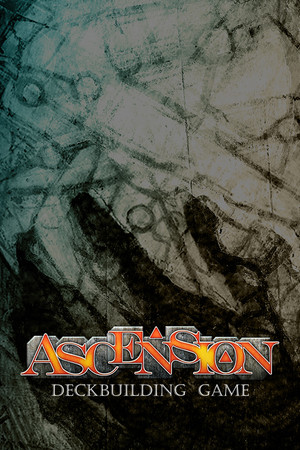
Ascension: Deckbuilding Game
One of the purest deckbuilders ever made, packed with nine expansions worth of cards, but the PC port carries enough rough edges to make tabletop fans wince.
GamerScout Verdict
Best for players who want a no-frills deckbuilding fundamentals course with serious card variety; avoid if you need a campaign or polished PC UI.
Compare Prices(7 stores)
Every store in this table quotes us in euros, so the EUR figure is the price the seller actually set, not our arithmetic — which is why EUR is also the currency we rank in. We only list an offer here when the store gives us its price in euros, so nothing in this table is a number we invented.
Pick USD, PLN, GBP, CAD or AUD in the header and we convert from EUR at the European Central Bank reference rate — converted amounts are prefixed with ~. Your bank or the store may apply a different rate at checkout. We never hide offers based on where you are: everyone sees this whole table.
We may earn a commission when you buy games through links on this page — at no extra cost to you. It never affects our rankings or verdicts.
Price History
Screenshots & Media
About Ascension: Deckbuilding Game
I keep a mental shortlist of games that teach deckbuilding fundamentals better than any tutorial video could, and Ascension sits near the top of it. The core loop is almost aggressively stripped back: each turn you draw five cards, spend blue Runes to recruit heroes and constructs from a shared center row, spend red Power to defeat monsters, and accumulate Honor until the pool runs out. That is the whole game. No hand-building between rounds, no side decks, no complex stack mechanics. What you get instead is a clean decision space where every card acquisition either sharpens your engine or pollutes your deck with dead weight, and recognising the difference early is where the real skill lives. The PC release bundles in nine full expansion sets including Return of the Fallen, Storm of Souls, Rise of Vigil, Dreamscape, and War of Shadows, plus five promo packs, totalling well over 600 cards. Each expansion layers in a distinct mechanic: Rise of Vigil adds Energy Crystals as a third resource that randomly appears beneath center-row cards and powers faction-specific abilities, while Dreamscape introduces Insight as a currency for a personal card market that runs parallel to the shared row. Dawn of Champions brings Champion cards that shift allegiance between factions based on player actions. Mixing sets multiplies the viable build paths considerably, and figuring out which combinations produce reliable honor engines versus chaotic piles of mediocre cards is the kind of problem I will happily spend an evening on. For newcomers, the learning curve is surprisingly gentle. The base tutorial covers core mechanics competently, and each expansion ships with an in-game rulebook you can consult mid-match. Starting with just the base set and adding one expansion at a time is the right approach, and even a first session against the AI at default difficulty will likely end with you understanding exactly why you lost and what to do differently. The AI offers two difficulty modes, and the harder setting is genuinely punishing early on because it understands when to contest your center-row targets rather than blindly optimising its own engine. The criticisms are real, though, and worth naming clearly. The PC build is essentially the mobile version with minimal platform adaptation, which reviewers flagged at launch and which still shows in the UI scaling and card readability at certain resolutions. There is no single-player campaign to give context or structured progression. Multiplayer lobbies rely on the host to manually start games, which creates friction for online sessions with strangers. The honor pool has been a persistent community complaint in online play, with longtime players arguing it ends games too quickly when expansion cards are mixed in. A community mod on Nexus has patched the pool size for those willing to go looking. None of these issues kill the game, but they do mean the experience is better as a focused solo or async session than as an impromptu online lobby. If you have never touched a deckbuilder and want the genre explained by the game itself rather than a YouTube explainer, Ascension is still one of the clearest entry points available on PC. If you are already deep in the genre and want the full card library to experiment with, the bundle of expansions here represents serious content depth. Just come in knowing it is a digital board game port, not a bespoke PC title.

Strategy & simulation
Tags
System Requirements
Minimum
- OS
- Windows 7 SP1+
- Memory
- 1 GB RAM
- Storage
- 1 GB available space
- Processor
- 1 GHz
- Sound Card
- Any
Keep exploring
Community Discussion
Be the first to comment on Ascension: Deckbuilding Game.
Reviews & Ratings
No ratings available
Game Info
- Developer
- Playdek, Inc.
- Publisher
- Playdek, Inc.
- Release Date
- Dec 16, 2014


